What's inside
As an Amazon Associate I earn from qualifying purchases. This post may contain affiliate links at no extra cost to you.
A cordless drill can make a clean opening in a plastic electrical box, but the drill is rarely the deciding factor. A sharp bit, low speed, and a box that is held securely matter more. Most ordinary 12-volt drills have enough power for this job; paying for a heavy hammer drill usually adds weight, not useful performance.
As an Amazon Associate we earn from qualifying purchases at no extra cost to you.


What we cover
What to buy for plastic boxes
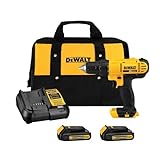
For occasional work, choose a 12V cordless drill/driver with a variable-speed trigger, a clutch, and a 3/8-inch or 1/2-inch chuck. Its compact size is handy inside cabinets and tight framing. A 1/2-inch chuck gives more flexibility for larger bits, but a 3/8-inch chuck is sufficient for common pilot holes and smaller step bits.
A 18V or 20V drill/driver is a better choice if you also drill wood, install anchors, or make holes regularly. It handles larger bits with less strain and typically has a larger battery. For a few holes in thin plastic, though, it offers no important advantage over a sound 12V drill.
Drill options at a glance
| Type | Plastic-box work | Trade-off |
|---|---|---|
| 12V drill/driver | Good for occasional holes and tight spaces | Less reserve with large bits or other demanding jobs |
| 18V/20V drill/driver | Good general-purpose choice; handles larger bits more comfortably | Often heavier and more expensive than this job requires |
| Hammer drill | Use it in drill mode, with hammering turned off | Hammer action is unnecessary and can crack or damage plastic |
| Impact driver | Poor choice for controlled hole-making | Pulsing torque can grab a bit, tear plastic, or make the tool hard to control |
Choose the bit for the hole
For a small hole, use a sharp standard twist bit and start with a pilot hole if the final bit is large. A step bit can make a clean round opening in thin plastic, especially when you need to enlarge an existing hole gradually. Stop as soon as the opening reaches the required diameter; the next step can remove too much material.
For a cable, conduit, or connector opening, check the box markings and the fitting manufacturer’s instructions rather than guessing from the nominal fitting size. The required hole diameter may not match the fitting’s stated trade size. A hole saw can work for a larger opening, but it is easier to catch and chatter than a small twist bit. Use light pressure and support the box from behind if possible.
A dull bit, excessive speed, or pushing hard can melt plastic, leave a ragged edge, or cause the bit to break through suddenly. If the plastic starts to smear, stop and let the bit cool. Replace a worn bit instead of trying to force it.
A controlled drilling method
First, make sure the box is not connected to live wiring. If it is installed, switch off the correct circuit and verify it is de-energized with an appropriate tester before drilling. Avoid drilling into an installed box with conductors inside: a bit can nick insulation even if the circuit is off. When there is any doubt about the wiring or the required opening, stop and consult a qualified electrician.
Mark the hole and clamp or hold the box so it cannot spin. Keep your hands away from the bit’s path. Set the drill to its low-speed range and use the trigger gently. A practical starting point is about 300–600 rpm for a larger bit or step bit; for a small twist bit, a little faster may work if the plastic cuts cleanly. These are starting points, not a substitute for the bit maker’s guidance. Let the cutting edge do the work rather than leaning into the drill.
Keep the drill square to the surface. Break through with light pressure, then release the trigger instead of allowing the bit to plunge into the box. Deburr the edge with a utility knife or suitable deburring tool, taking care not to enlarge the opening or leave sharp plastic around a cable. Use a listed connector or fitting that matches the box and wiring method; a raw hole is not a substitute for a required cable clamp.
Common mistakes and when to spend more
Hammer mode is for masonry, not plastic. Its repeated blows can crack a box or make the bit skate. A clutch setting is useful for driving screws, but it is not a speed control; switch to the drill setting for drilling. An impact driver’s hammering action is also different from a drill’s hammer mode, but its rapid impacts still make it a poor tool for careful holes in plastic.
Buy a more powerful drill only if the rest of your work justifies it. If you already own a drill/driver, there is usually no reason to replace it for this task. Spend the money on a sharp, correctly sized bit, a stable way to secure the box, or a spare battery if your current one is unreliable. A compact 12V drill is the sensible low-cost choice for occasional box work; an 18V/20V drill is worth its extra size and cost when it will also handle frequent wood drilling and fastening.