What's inside
As an Amazon Associate I earn from qualifying purchases. This post may contain affiliate links at no extra cost to you.
Long screws put more stress on a driver bit than short cabinet screws do. The bit has to stay seated while the fastener cuts through wood, and the impact driver delivers repeated twists that can round off a poor-fitting tip or snap a brittle one. The best choice is usually a correctly sized, impact-rated bit—not simply the most expensive bit on the shelf.
As an Amazon Associate we earn from qualifying purchases at no extra cost to you.

What we cover
Choose the right tip before choosing a brand
Match the bit to the screw head exactly. A Phillips bit that is too small can cam out; one that is too large may not reach the bottom of the recess. For common construction screws, check the packaging for the required drive type and size. Torx-style star drives are common on long structural and exterior screws because they offer more contact than a typical Phillips drive. Square-drive screws also hold a bit securely when the size is right.
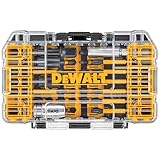
For a frequent long-screw job, buy a small set of impact-rated bits in the screw’s drive type. A mixed set is useful if you work with several fasteners, but there is little value in buying a large assortment full of sizes you will not use.
Bit types compared
| Bit type | Best use | Trade-off |
|---|---|---|
| Standard insert bit | Occasional short or moderate-length screws | Inexpensive, but can wear or break sooner under repeated impacts |
| Impact-rated torsion bit | Long screws and regular impact-driver use | Costs more; torsion features do not prevent stripping from a bad fit |
| Long impact-rated bit | Recessed or obstructed fasteners | More reach, but extra length can flex and make alignment harder |
| Magnetic bit holder with insert bit | Quick bit changes and keeping a screw on the tip | Adds length and another connection that can wobble or wear |
When impact-rated bits are worth it
Impact-rated bits are designed to tolerate the sharp torque pulses an impact driver produces. Many use a torsion zone—a narrower or specially shaped section that flexes slightly under load. That can reduce stress at the bit’s tip and shank, but it is not a guarantee against breakage. A poorly seated bit, an incorrect size, or a screw that binds can still damage the drive recess or bit.
If you drive long screws only a few times a year, a correctly sized standard bit may be adequate. For decking, framing, or other repeated fastening, choose impact-rated bits in the exact Torx or star size you need. Replace a tip when its corners look rounded or it no longer sits firmly in the screw. Continuing with a worn bit is a cheap way to ruin screw heads and waste time.
Bit length, holders, and control
Use the shortest bit that gives you clear access to the screw. A longer bit is handy when driving into a corner or past an obstruction, but it has more room to flex and makes it easier to start at an angle. A short insert bit gives the most compact setup. A magnetic holder adds reach and helps retain a screw, but the extra joint can introduce wobble; check that the bit locks securely and that the holder is rated for impact use.
Long screws are also easier to control with a bit that fits the recess deeply and a driver held square to the work. If the bit keeps slipping, stop and check the drive size, screw condition, and alignment instead of pushing harder. More pressure may help maintain contact, but it cannot fix a mismatched bit.
Drive long screws without stripping them
Start slowly, keeping the driver in line with the screw. Once the threads have started straight, increase speed while maintaining firm, steady pressure. Ease off as the head approaches the surface. An impact driver can seat a long screw quickly, but repeated hammering after the head is flush can chew up the recess, overdrive the fastener, or split the material.
In dense hardwood, near an edge, or with a particularly large screw, drill a pilot hole sized for the screw’s core rather than its outside thread diameter. The appropriate size depends on the screw and wood; check the fastener maker’s guidance when available. A pilot hole reduces resistance and the chance of splitting, though too large a hole can reduce holding strength. For treated lumber or other tough material, follow the screw manufacturer’s instructions rather than assuming the driver needs more power.
Keep a spare of the correct bit size nearby for a large batch. If one screw strips, stop before the damage gets worse. A fresh bit may still engage; if the recess is already rounded, use an appropriate screw extractor or another removal method rather than forcing the driver.
What to buy
For most homeowners, the practical setup is one or two impact-rated bits that match the screws on the job, plus a holder only if access or screw retention calls for it. A compact impact-bit set with a magnetic holder suits mixed repair work, but a single replacement bit is often the better buy when you already know the drive size. Do not choose by color, packaging claims, or bit count alone: fit, condition, and correct technique matter more than a large assortment.