What's inside
As an Amazon Associate I earn from qualifying purchases. This post may contain affiliate links at no extra cost to you.
Phillips screws are easy to drive until the bit starts climbing out of the recess. With an impact driver, that can happen fast: the bit chews the screw head, slips across the workpiece, or snaps. The right bit helps, but fit and technique matter just as much. For most jobs, buy a quality Phillips bit in the correct size, keep firm pressure on the driver, and slow down before the screw seats.
As an Amazon Associate we earn from qualifying purchases at no extra cost to you.



What we cover
Why Phillips Bits Slip
A Phillips recess is shaped to let the bit cam out under high torque. That design can help avoid overtightening in some applications, but it makes worn screws and poor-fitting bits frustrating to drive. An impact driver adds short, forceful rotational blows; if the bit is not seated securely, those blows can push it up and out of the recess.
Common causes include using a PH2 bit in a PH1 or PH3 screw, driving with a rounded bit, starting at an angle, or applying too little forward pressure. Paint, dirt, and damage in the recess also prevent full engagement. A screw can look like the familiar “medium” Phillips size and still need a different bit, so test the fit before driving.
Choose the Right Bit for the Screw
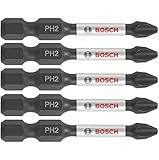
PH1, PH2, and PH3 are common sizes. PH2 handles many general-purpose wood and construction screws, but it is not a universal fit. The correct bit should sit fully in the recess with little side-to-side movement. If it rocks, wobbles, or only catches at the top, try another size rather than forcing it.
For routine work, a Phillips impact-bit set with PH1, PH2, and PH3 tips is more useful than a large assortment of rarely used bits. A set makes it easier to match the screw and replace a worn tip. If you drive only one screw type, buying a small pack of the exact size may cost less and leave fewer unused bits.
Bit Types Compared
| Bit type | Best for | Trade-off |
|---|---|---|
| Standard Phillips bit | Occasional driving and light-duty repairs | Inexpensive, but ordinary bits can wear or round sooner under repeated impacts |
| Impact-rated Phillips bit | Frequent use with an impact driver | Designed to handle impact loads, but it still slips if the size or technique is wrong |
| Phillips bit with a torsion zone | Repeated driving where the bit sees sharp torque pulses | Flex section can absorb some shock; it is not a cure for a damaged recess |
| Magnetic bit holder with Phillips bit | Holding screws in place during overhead or one-handed work | Improves screw retention, not the bit’s grip in the Phillips recess |
For regular impact-driver use, choose impact-rated Phillips bits with a torsion section if the price difference is modest. They can last longer under repeated impact than basic bits, though durability varies by brand and workload. If you only drive a few screws now and then, an ordinary bit is often fine—provided it fits well and is not worn.
Drive With Less Slippage
Before using the driver, clear debris from the recess and inspect the screw head. Seat the bit squarely and press forward firmly enough to keep it engaged, without leaning so hard that you cannot control the tool. Start slowly with the trigger, then increase speed once the screw has begun to bite. Back off again as the head approaches the surface.
Use a lower speed setting or a gentle trigger pull for small screws and soft wood. On an impact driver, a high setting can bury a screw head or strip the recess before you can react. If the screw is large or the material is hard, drill a pilot hole sized for the screw’s core diameter. A pilot hole reduces driving resistance, although it does not replace a well-fitting bit.
Keep the driver aligned with the screw axis. Angling the tool concentrates force on one side of the recess and makes cam-out more likely. If access makes straight driving difficult, reposition the work or use a suitable extension rather than trying to steer the screw at an angle.
When to Replace the Bit or Change Tools
Replace a Phillips bit when its points look rounded, chipped, or polished smooth, or when a previously secure fit starts wobbling. A worn tip is a common reason a fresh screw gets damaged. Do not keep testing it on valuable hardware; use a new bit before the recess is ruined.
If the screw head is already stripped, a larger Phillips bit is not automatically the answer. Try cleaning the recess and using a fresh bit that fits tightly. For stubborn screws, a manual screwdriver can provide steadier pressure at lower speed. A screw extractor may be needed if the recess is badly damaged; at that point, changing to a more expensive impact bit will not restore the screw head.
For a project with many Phillips screws, keep two fresh bits of the correct size nearby and replace them as soon as they begin to slip. That small spare-bit cost is usually cheaper than repairing a damaged workpiece or removing a stripped fastener.