Key takeaways
- A driller's guide to choosing an impact driver that can sink long structural screws without stalling, cam-out, or a burned-up trigger.
What's inside
As an Amazon Associate I earn from qualifying purchases. This post may contain affiliate links at no extra cost to you.
Sinking a 3-inch deck screw is easy. Sinking a 6-inch structural screw into doubled-up pressure treated framing, on the twentieth hole of the day, with the battery starting to sag, is a completely different job. That is where most drivers quit. So when people ask me for the best impact driver for long screws, I do not start with brand loyalty. I start with the two things that actually decide the outcome: sustained torque under load and how the tool behaves when the fastener stops moving freely.
I have spent a lot of years with a driver hanging off my belt, and I have watched more tools die from long fasteners than from anything else. Long screws are a marathon, not a sprint. The head has to stay engaged for eight or ten seconds of hammering, the motor has to shed heat, and the battery has to keep voltage up. Cheap kits do the first inch beautifully and then start smoking. Here is how I sort the contenders.
As an Amazon Associate we earn from qualifying purchases at no extra cost to you. Product prices and availability are accurate as of the date shown and are subject to change.



What Actually Matters When Screws Get Long
Peak torque numbers on the box are close to useless for this work. Any brushless driver in the current generation will claim a big number, and that number is measured in a burst. Long screws need torque that holds up over a long trigger pull, and that comes from motor size, electronics that do not throttle early, and a battery with enough cell capacity to avoid voltage sag.
The second factor is impact rate and how the tool ramps into it. A driver with 4,000 impacts per minute sounds impressive, but if it slams into full speed the instant you touch the trigger, you will strip a star drive recess or snap a small-gauge screw before it seats. The drivers I keep coming back to have a genuinely usable low speed mode, meaning something that creeps at a few hundred RPM with real control, not a token setting.
Third is the anvil and chuck. Long structural screws load the collet hard and sideways. A worn or sloppy quick-release chuck lets the bit wobble, the wobble chews the recess, and then you are extracting a stripped screw from inside a beam. If a driver’s chuck already feels loose in the store, walk away.
| Job Type | Fastener Length | What The Driver Needs | Class Of Tool |
|---|---|---|---|
| Deck boards, subfloor | 2 to 3 inches | Basic control, decent low speed | Compact 12V or 18V |
| Ledgers, joist hangers | 3 to 4 inches | Sustained mid torque, good heat handling | Full size 18V brushless |
| Structural screws, timber | 4 to 8 inches | High sustained torque, big battery | High torque 18V or 12mm hex |
| Overhead and tight bays | 3 to 5 inches | Short head length, low weight | Sub compact brushless |
The Impact Driver Categories I Actually Recommend
There are really three buckets worth your money, and the right one depends on how long “long” is for you.
The full size 18V brushless driver is the workhorse. DeWalt’s XR line, Milwaukee’s FUEL drivers, and Makita’s LXT brushless drivers all live here. Any of them will sink 4-inch to 5-inch screws all day if you pair them with a high capacity battery. This is where most people should shop, because the ecosystem matters more than the tool. Buy into whichever platform your other batteries already fit.
Then there is the high torque tier, sometimes marketed as a hydraulic driver or a mid-torque impact wrench with a hex adapter. For 6-inch and 8-inch timber screws, ledger fasteners, and repetitive structural work, this is the honest answer. A mid-torque impact wrench with a quality hex-to-square adapter will out-drive nearly any dedicated impact driver, and it will do it without cooking itself. It is heavier and less refined, and I would not use it for cabinet hardware, but for a run of forty structural screws it is not close.
The third bucket is the sub-compact brushless driver. These are not long-screw specialists, but if your long screws live in joist bays, under stairs, or over your head, a driver you can actually fit into the space beats a stronger one you cannot. I keep one purely for awkward positions.
Full Size 18V Brushless Impact Driver
This is the sweet spot for most people driving 3-inch to 5-inch screws. Buy the kit version with at least one high capacity battery, because a small 2.0Ah pack will sag long before the motor is the limiting factor. Stick with whatever battery platform you already own unless you have a strong reason to switch.
Best Impact Driver For Long Screws: How I Narrow It Down In The Store
I run through a short checklist, and it has nothing to do with the marketing on the case.
I check head length first. Anything under about 4.5 inches from chuck face to back of housing is genuinely useful in tight framing. I squeeze the trigger dry at the lowest speed setting and watch how gradually it comes on. I look for at least three speed modes plus some form of self-tapping or fastener control mode, because those modes are the difference between seating a screw flush and burying the head an eighth of an inch into a nice piece of cedar. I check the light placement, since a single LED next to the chuck throws a shadow of the bit right where you need to see. And I wiggle the chuck.
Battery choice deserves its own line. For long screws, a 4.0Ah or 5.0Ah pack is not about runtime, it is about voltage under load. More cells in parallel means less sag, which means the driver keeps hammering at full strength on screw number ten instead of tapering off. I have watched the same tool feel like two different drivers on a small pack versus a large one.
- ✔ Sustained torque instead of a peak burst number
- ✔ Multiple speed modes with a genuinely slow low setting
- ✔ Short head length for joist bays and overhead work
- ✔ Tight, clean quick-release chuck that holds long bits straight
- ✔ Fits a battery platform you already own
- ✘ Peak torque ratings on the box mean little for long fasteners
- ✘ Small batteries sag and make good tools feel weak
- ✘ High torque models are heavy and clumsy for light hardware
- ✘ Cheap bits will fail long before the tool does
Technique: Where Most Long Screws Actually Go Wrong
The tool matters less than what you do with it. I would rather hand a careful worker a midrange driver than give an impatient one the strongest tool on the shelf.
Pilot holes are not optional past about 4 inches in dense or dry lumber, and they are absolutely required near an edge or an end grain split. I drill a pilot roughly the diameter of the screw’s shank, not the threads, and I only drill through the piece being fastened when I want a proper clamping pull. In pressure treated southern yellow pine that has been sitting in the sun, skip the pilot and you will snap screws or split the board.
Bit choice ranks right beside the tool. Use an impact rated bit, and use a longer bit than feels necessary so the driver body clears the work. For star drive and square drive fasteners, buy the bits the fastener manufacturer specifies. Generic bits in a T25 recess are the number one cause of stripped structural screws I see.
On pressure, I lean into the driver hard and straight, right in line with the screw axis. An impact driver needs axial pressure to keep the bit seated while the anvil hammers. Ease off, and the bit skips in the recess and grinds the star points off. Start on the low mode until the threads bite, move to high for the long middle run, then drop back to low for the last half inch so you can feel the head seat instead of overdriving it.
Heat is the last thing. If the tool body gets hot enough to be uncomfortable, stop and swap batteries. That heat is in the motor and electronics, not just the pack, and repeated overheating is what kills drivers that should have lasted a decade.
Mid Torque Impact Wrench With Hex Adapter
If your daily work is 6-inch structural screws, ledger fasteners, or timber screws, this is the setup that will not fight you. Pair it with a quality square-to-hex adapter and impact rated bits. Heavier and louder than a driver, but it drives long fasteners without stalling or cooking.
Impact Rated Bit And Power Bit Set
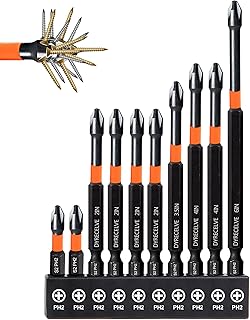
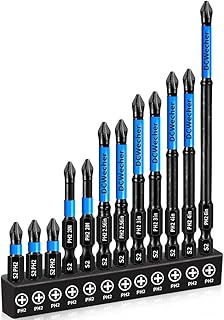
The single best value in this whole article. Long impact rated bits in T25, T30, and square drive will save more screws than any tool upgrade. Buy a set with 3-inch and 6-inch power bits so the driver body clears the workpiece on deep fasteners.
FAQ
Can an impact driver handle 6-inch structural screws? A good full size 18V brushless driver on a high capacity battery will do it, but it will work hard and heat up on a long run. If 6-inch screws are routine for you rather than occasional, a mid-torque impact wrench with a hex adapter is the better tool and will last longer.
Do I need a pilot hole for long screws? In most cases yes, once you get past roughly 4 inches, and always in dry, dense, or pressure treated lumber, and always near an edge or end. Size the pilot to the screw’s shank rather than the thread diameter so the threads still bite.
Why do my long screws keep stripping at the head? Almost always one of three things: a non-impact-rated or worn bit, the wrong bit size for the recess, or not enough straight-line pressure while the driver hammers. Fix the bit first, then the pressure, then blame the tool.
Long screws are a good test of a tool because they punish everything a spec sheet hides. Buy into a battery platform you already own, get a full size brushless driver with a real low speed mode, feed it a large pack, and spend the twenty dollars on proper impact bits. Do that and you will spend your afternoons driving screws instead of extracting them.
Check prices on Amazon →