What's inside
As an Amazon Associate I earn from qualifying purchases. This post may contain affiliate links at no extra cost to you.
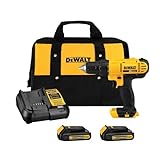
Shelf-pin holes look simple, but a small angle error can leave a shelf that rocks or sits visibly out of level. The drill matters less than having controllable speed, a straight guide, and a way to make every hole the same depth. For most cabinet work, a compact 12-volt drill is enough; a larger 18-volt model is useful if it will also handle tougher household jobs.
As an Amazon Associate we earn from qualifying purchases at no extra cost to you.


What we cover
What matters in a drill for shelf-pin holes
Typical shelf pins use holes about 5 mm or 1/4 inch in diameter. Those small bits cut quickly, so high torque is not the priority. A light drill with a variable-speed trigger is easier to control, especially when starting a hole in a finished panel. A clutch is useful for driving screws but does not set drilling depth; use a stop collar, depth stop, or taped mark for that.
Pay attention to the chuck. A keyless chuck that grips small bits securely is convenient, but very small bits can slip in a worn or poorly tightened chuck. Check that the bit runs straight before drilling a full row. A side handle is unnecessary for this task, and hammer mode should stay off: percussion can chip veneer, enlarge the entry, or damage a bit.
Which drill type to buy
A compact 12-volt drill is the sensible choice if cabinet hardware and light repairs are its main jobs. It is usually lighter and easier to keep square than a full-size drill. An 18-volt drill offers more power and battery capacity, but that advantage rarely improves a 5 mm shelf-pin hole. Choose one if you already own the battery platform or expect to drill larger holes and drive longer screws.
A basic corded drill can do the work and may be cheaper if you rarely drill holes away from an outlet. It is less convenient inside cabinets, where the cord can catch on doors and shelves. An impact driver is not a substitute: its hammering action is designed for fasteners, not precise holes. If you need a cordless tool, compare a compact 12-volt drill/driver with a standard 18-volt drill/driver based on the other work you will do with it.
Quick comparison
| Option | Best for | Trade-off |
|---|---|---|
| 12-volt drill/driver | Shelf pins, hinges, and light assembly | Less capacity for repeated large holes |
| 18-volt drill/driver | Cabinet work plus general repairs | Heavier than needed for small bits |
| Corded drill | Occasional low-cost use near an outlet | Cord is awkward inside a cabinet |
| Impact driver | Driving screws, not shelf-pin drilling | Poor choice for controlled, clean holes |
The guide and bit matter just as much
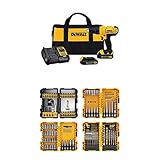
For a row of holes, a shelf-pin drilling jig is more valuable than extra drill power. A jig registers against the cabinet’s front edge and spaces holes consistently; many use a 32 mm spacing pattern, though the right pattern depends on your hardware and design. A fixed bushing also helps keep the bit perpendicular. Check that the jig suits your pin diameter before buying. A 5 mm shelf-pin drilling jig is a practical upgrade if you are making a full row or matching holes on both sides.
Use a sharp brad-point bit or a purpose-made shelf-pin bit in the size required by the pins. A brad point starts accurately and cuts a clean rim in wood-based panels. For a quick repair or just a few holes, a carefully measured setup and a regular sharp bit can be fine; a jig is not essential if you can clamp a straight guide and check the layout. Avoid forcing a dull bit. It heats up, wanders, and can tear the laminate around the opening.
How to drill clean, repeatable holes
First confirm the panel thickness and where the holes can safely go. Mark the row so it clears hinges, screws, and cabinet edges. On a narrow side, keep holes far enough from the front and back edges that the remaining material will not split or break out. Test the bit and depth on an offcut from the same material if available.
Set a depth stop so the hole is only as deep as needed for the pin, commonly around 10–12 mm, but check the pin length and panel thickness rather than relying on that figure. A strip of tape on the bit works as a visual limit, though a stop collar is more repeatable. Drill at low to moderate speed with light pressure. Let the cutting edges do the work, and withdraw the bit occasionally to clear dust.
Keep the drill perpendicular to the panel. A jig’s guide bushing helps, but you still need to hold the tool steadily. Drilling too fast or leaning on the drill can make the bit grab as it exits, especially in thin material. Stop if the bit begins to wander; continuing often turns one misplaced hole into an elongated one. Vacuum the dust, insert a pin, and check that it sits straight before drilling the rest.
What to prioritize when buying
For this specific job, prioritize low weight, smooth trigger control, a chuck that holds small bits, and batteries that fit tools you already own. Two batteries are convenient but not necessary for a few rows of holes; even a modest battery will usually last through this work. A brushless motor may improve runtime and tool life, but it is not a requirement for occasional shelf-pin drilling.
Spend first on a suitable bit and a reliable guide if accuracy matters. A more powerful drill will not correct a crooked hole, inconsistent spacing, or excessive depth. If you already have a working drill with a variable-speed trigger, keep it and buy the jig and bit instead. If starting from scratch, a compact cordless drill/driver is the most comfortable all-around choice, while a basic corded drill remains a reasonable low-cost option for infrequent use.