Key takeaways
- A driller's take on choosing an impact driver kit with battery: what the included packs and charger really tell you, which speed mode to use, and when to reach for a drill instead.
What's inside
As an Amazon Associate I earn from qualifying purchases. This post may contain affiliate links at no extra cost to you.
Most people go looking for an impact driver kit with battery for the same reason: the bare tool they were given has sat in a drawer since spring because the pack and charger never showed up. The driver is rarely the weak link. The batteries, the charger, and whether the package matches the rest of your shelf are what decide if the tool gets used or gets buried under extension cords.
I have made a living putting holes in things and turning fasteners, and the pattern never changes: a mid-tier kit with two healthy packs beats a flagship driver with one tired battery. Choose the package, not the torque number on the box.
As an Amazon Associate we earn from qualifying purchases at no extra cost to you. Product prices and availability are accurate as of the date shown and are subject to change.

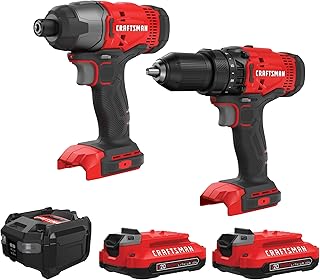


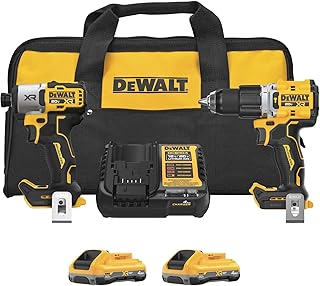


| Kit Type | What Is Usually Included | Best Fit |
|---|---|---|
| Compact 12V kit | Driver, two 2.0Ah packs, charger, bag | Cabinets, trim, electrical, overhead |
| 18V/20V two-battery kit | Brushless driver, 2.0Ah plus 4.0Ah, fast charger | General DIY, decks, most home projects |
| Drill and driver combo kit | Both tools, two packs, charger, bag | First real kit, no drill yet |
| Bare tool plus a pack | Tool only, battery to match | You already own the platform |
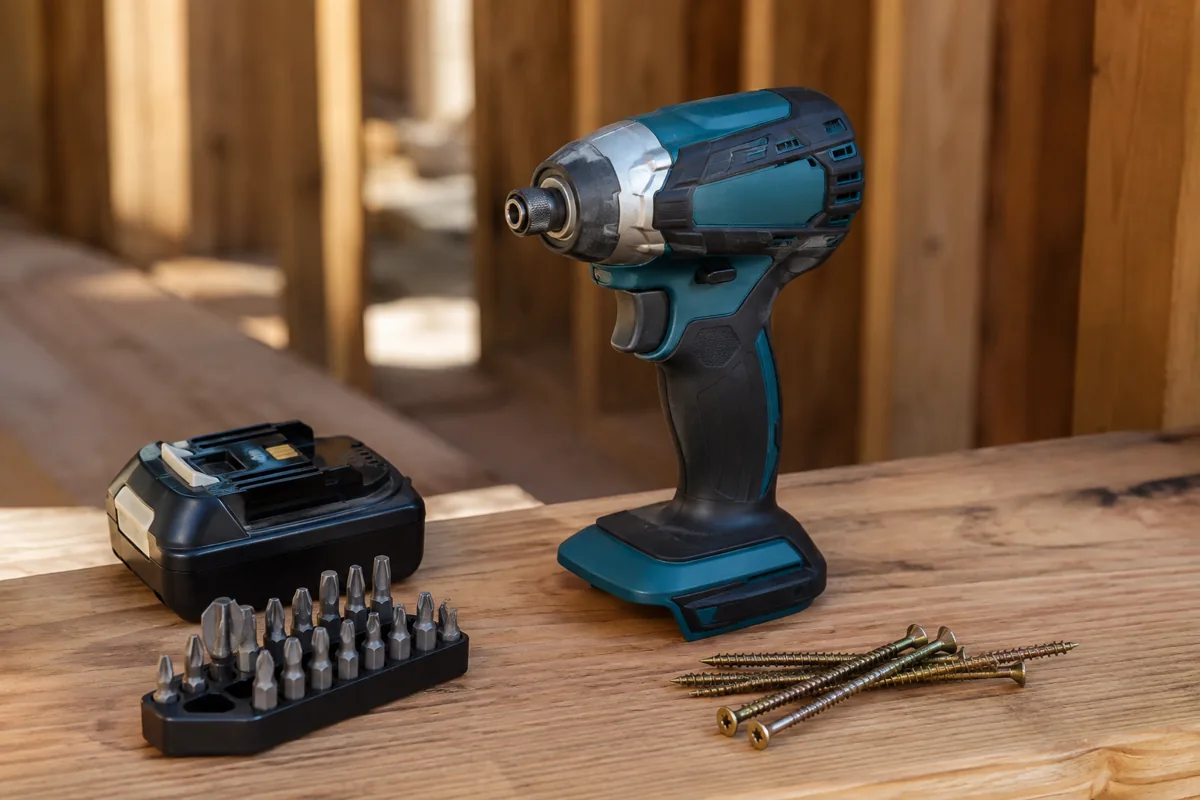
What You Actually Get in an Impact Driver Kit With Battery
Four things should be in the box: driver, two batteries, charger, and something to carry it in. Budget kits cut corners on the last three.
The charger is the part nobody reads about. A trickle charger that needs an hour and a half per pack turns a two-battery kit into a one-battery kit on a long afternoon. Look for the words fast or rapid charger; if the listing is vague about charge time, assume the slow one.
Battery pairing is the second tell. Two 1.5Ah packs is a marketing decision. Two 2.0Ah compacts is respectable for a driver. A 2.0Ah plus a 4.0Ah or 5.0Ah is the smart combination: one light pack for overhead work, one bigger for the weekend you hang a gate.
18V/20V brushless impact driver kit, two batteries
If you own one cordless tool, make it this configuration: brushless motor, multiple speed settings, one compact pack, one larger pack, and a fast charger. Filter by the brand you already own before you compare anything else.
Amp-Hours: The Number That Decides Your Afternoon
Impact drivers are easier on batteries than people expect. The tool works in bursts and the hammer mechanism does the heavy lifting, so a compact pack will drive a surprising number of screws. A drill boring one-inch holes with a self-feed bit empties that same pack in minutes.
Compact 2.0Ah packs keep the tool light at both ends, which you feel on a ladder with your arm overhead, aiming into a soffit. A 4.0Ah or 5.0Ah pack earns its keep on long structural screws and deck jobs, and the moment you add a circular saw to the platform. High-output packs are built for saws and grinders; a driver cannot use what they offer.
Brushless, Speed Modes, and Trigger Control
Brushless has trickled down to mid-priced kits, so take it. More runtime per charge, less heat, and a shorter head that fits between joists. Brushed drivers still drive screws; they just run warm and drink more.
Speed modes matter more than peak torque. Speed 1 for small screws, trim, and hardwood. Speed 2 for general deck and framing work. Speed 3 for long structural screws when finesse is not the point. Many lines add a self-tapping mode that creeps until the fastener bites, which is the difference between a clean hole in steel stud track and a screw chewing its own head off.
Then there is your finger, which no spec sheet covers. Crawl until the threads catch, come up to speed through the middle of the run, feather off as the head nears the surface, and stop the instant it pulls flush. Three extra bursts past flush is how you strip a head, snap a #8, or crush the fibers around a countersink.
- ✔ Two packs means one is always charged
- ✔ Charger, bits, and case cost less bundled
- ✔ Same battery fits the rest of the line later
- ✘ Included packs are often the smallest the brand sells
- ✘ Slow chargers hide in budget kits
- ✘ Switching brands later means buying batteries twice
Bits, Pilot Holes, and Pressure
Impact-rated bits only. Standard bits are hardened through and shatter under hammering, while impact-rated bits use a torsion zone behind the tip that twists a few degrees and absorbs the shock. Buy them by the ten pack; a fresh tip in the right size beats a worn tip in the perfect size.
Pilot holes are where the real technique sits. In softwood away from the ends, self-drilling deck screws go in bare. Within a couple inches of an end, drill a pilot about the diameter of the screw’s solid shank and boards stop splitting. In oak, maple, or anything with figure, always pilot, size it to the thread root so the threads still have wood to bite, and countersink flat heads instead of forcing them. Firm, steady pressure at moderate rpm cuts cleanest.
One limit, stated plainly: an impact driver is not a drill. Hex shank only, and it is fine for pilot holes and small twist bits in wood. For hole saws, spade bits, anything over about a quarter inch, or anything in steel, use a drill with a chuck and constant pressure. Hammering fights a cutting edge and work-hardens metal as you go.
Compact 12V impact driver kit for cabinets and overhead work
A 12V kit will not sink a 6-inch structural screw, but for cabinets, hinges, electrical boxes, and anything above shoulder height it is what you actually reach for. Wrist fatigue counts as a spec.
Pick the Platform, Not the Driver
This is the choice you live with. Today’s driver will be an average driver in five years, but the packs on your shelf decide which brand’s saws, lights, and blowers you buy for the next decade.
DeWalt XR and Milwaukee FUEL both have deep 18V and 20V lineups and sit on shelves at Home Depot, Lowe’s, and Amazon. Makita LXT has the widest tool count if the ergonomics suit you. Ryobi ONE+ is the value pick, a step behind on performance but strong on backward compatibility. Bosch and Metabo HPT are solid if you own a piece already.
No drill yet? Buy the two-tool combo kit. You pay a little more and get the drill, both packs, and the charger in one purchase, which beats assembling the same pieces later.
Impact Driver Kit With Battery FAQ
Can I drill holes with an impact driver? Small ones in wood, with hex-shank bits. Pilot holes and twist bits up to about a quarter inch are fine; beyond that, or in any metal, use a drill.
Do I really need two batteries? If you work in stretches longer than an hour, yes. One pack plus a slow charger means standing around waiting. Two packs and a fast charger means you never stop.
Is 12V enough, or should I go 18V? 12V handles cabinets, trim, electrical, and furniture assembly and weighs half as much. Step up to 18V or 20V if lag screws, ledgers, or decking are in your future.
Buy the kit whose batteries you will still want in two years, keep a spare on the charger, and stock impact-rated bits. The driver is the easy part.
Check prices on Amazon →