What's inside
As an Amazon Associate I earn from qualifying purchases. This post may contain affiliate links at no extra cost to you.
What we cover
Start with the wall, not the drill
A “mortarless” stone wall has stones stacked without mortar between them. That doesn’t mean every stone is loose, but it does mean you should treat the wall differently from a brick or concrete block surface. Drilling can split a thin stone, shake an unstable section, or loosen neighboring stones. If a stone shifts when you press it firmly by hand, don’t drill it. Choose another location or get advice from a mason.
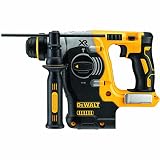
For a small hole in sound stone—such as for a light-duty outdoor fitting—a cordless rotary hammer is usually the best tool to buy or borrow. A conventional cordless hammer drill can work for an occasional hole in softer stone, but its impact action is less effective and can make the job slower. If the fitting could injure someone if it pulls free, have the wall assessed rather than relying on a drill and anchor to solve a weak-stone problem.
As an Amazon Associate we earn from qualifying purchases at no extra cost to you.



Choose the right tool
Hammer drills use a pair of toothed plates to create rapid impacts while the bit rotates. Rotary hammers use a piston mechanism that delivers stronger blows. That distinction matters in stone: a hammer drill is versatile for wood, metal, and occasional masonry; a rotary hammer is made for sustained drilling into masonry and is generally quicker with less pressure from the user.
For a few small holes, the lower cost and lighter weight of a cordless hammer drill kit may be enough, particularly in softer stone. For repeated holes or hard, dense stone, look at a cordless SDS-plus rotary hammer. SDS-plus bits lock into the chuck and slide slightly as the hammer mechanism works; a standard three-jaw chuck does not provide the same hammering action.
Which drill suits the job?
| Tool | Best use | Trade-off |
|---|---|---|
| Compact cordless hammer drill | A few small holes in softer stone; general household drilling | Slower in hard stone; needs a masonry-rated bit and steady handling |
| Full-size cordless hammer drill | Occasional larger holes and mixed drilling tasks | Heavier, but still less efficient than a rotary hammer in dense stone |
| Cordless SDS-plus rotary hammer | Several masonry holes or stubborn, hard stone | Higher cost; can chip or crack fragile stone if used carelessly |
Don’t choose by battery voltage alone. Compare the tool’s stated masonry capacity, weight, battery availability, and whether it accepts the bits you need. A 12-volt hammer drill can be handy for light work but may bog down sooner. A heavier 18- or 20-volt drill offers more reserve, though it won’t turn a poor bit or unstable stone into a safe drilling setup. Rotary hammers are commonly rated by impact energy; more energy is useful in tough masonry, but it also calls for a controlled touch on brittle stone.
Match the bit and anchor to the stone
Use a carbide-tipped masonry bit for a hammer drill, or the correct SDS-plus masonry bit for a rotary hammer. Check that the shank fits the tool and that the bit diameter matches the anchor maker’s instructions. A blunt or overheated bit cuts slowly, wanders, and encourages you to push too hard. Replace it if the carbide tip is visibly damaged or it no longer cuts cleanly.
Do not assume a plastic wall plug or masonry screw will hold securely in every stone. Stone varies in hardness, thickness, and internal cracks; an anchor that works in concrete may fail in a thin or friable piece. Choose an anchor intended for the material and load, and follow its specified hole diameter and depth. For a light fixture, a small masonry plug may be adequate in sound stone. For a heavy bracket, gate hardware, or anything overhead, get advice on the wall and fixing system before drilling.
Drill without loosening the wall
Pick a broad, solid-looking stone, away from edges, visible cracks, and joints between stones. Avoid drilling near the top of a loose-looking section. Mark the hole and check behind the wall for pipes or cables where relevant. Wear eye protection; stone dust and chips are unavoidable. A suitable dust mask is sensible, especially indoors. Keep others clear of the area.
Begin at low speed with the bit held square to the surface. If the tool has a no-hammer setting, use it briefly to make a shallow pilot mark, then engage hammer mode if needed. Let the tool do the cutting: excessive pressure can overheat the bit or dislodge the stone. Pull the bit out periodically to clear dust, and stop if the stone cracks, moves, or starts shedding material. Don’t force the hole deeper just to reach a planned anchor depth; reassess the fixing location instead.
When the hole is complete, clear out the dust as the anchor instructions specify. Dust left in the hole can keep an anchor from seating properly. Install the fixing without overtightening: a spinning plug, cracked stone, or a screw that keeps turning is a failed fixing, not a cue to apply more force. Move to sound stone or use a fixing system recommended for that material.
When the cheaper tool is enough
If you have only one or two small holes to drill and the stone is sound and relatively soft, renting or borrowing a rotary hammer may cost less than buying one. If the holes are occasional and you also need a general-purpose drill, a conventional cordless hammer drill is a reasonable compromise. For repeated work in hard stone, buying or renting the rotary hammer is the more practical choice—and safer than leaning hard on a drill that is struggling.
Whichever tool you choose, the wall is the limiting factor. If the stones shift, crumble, or crack during a test hole, stop. A more powerful drill can make a bad situation worse.