Key takeaways
- A driller's take on choosing an impact driver for automotive work, where control matters more than raw torque numbers.
What's inside
As an Amazon Associate I earn from qualifying purchases. This post may contain affiliate links at no extra cost to you.
Every mechanic I know has broken something with an impact driver. A stripped valve cover bolt, a snapped bracket screw, an oil pan drain plug that will never seal right again. That is not because impact drivers are bad tools, it is because most of them are sold on peak torque, and peak torque is the last thing you want near a threaded aluminum boss. Finding the best impact driver for mechanics is really about finding one that starts gently, ramps predictably, and stops when you tell it to.
I spend my working life drilling and driving, mostly in wood and steel, and the automotive guys I share a shop wall with keep borrowing my tools for exactly one reason: control. So this is a piece about what actually matters when you are working over a fender with your wrist at a bad angle, not a spec sheet beauty contest.
As an Amazon Associate we earn from qualifying purchases at no extra cost to you. Product prices and availability are accurate as of the date shown and are subject to change.


Impact driver or impact wrench? Get this right first
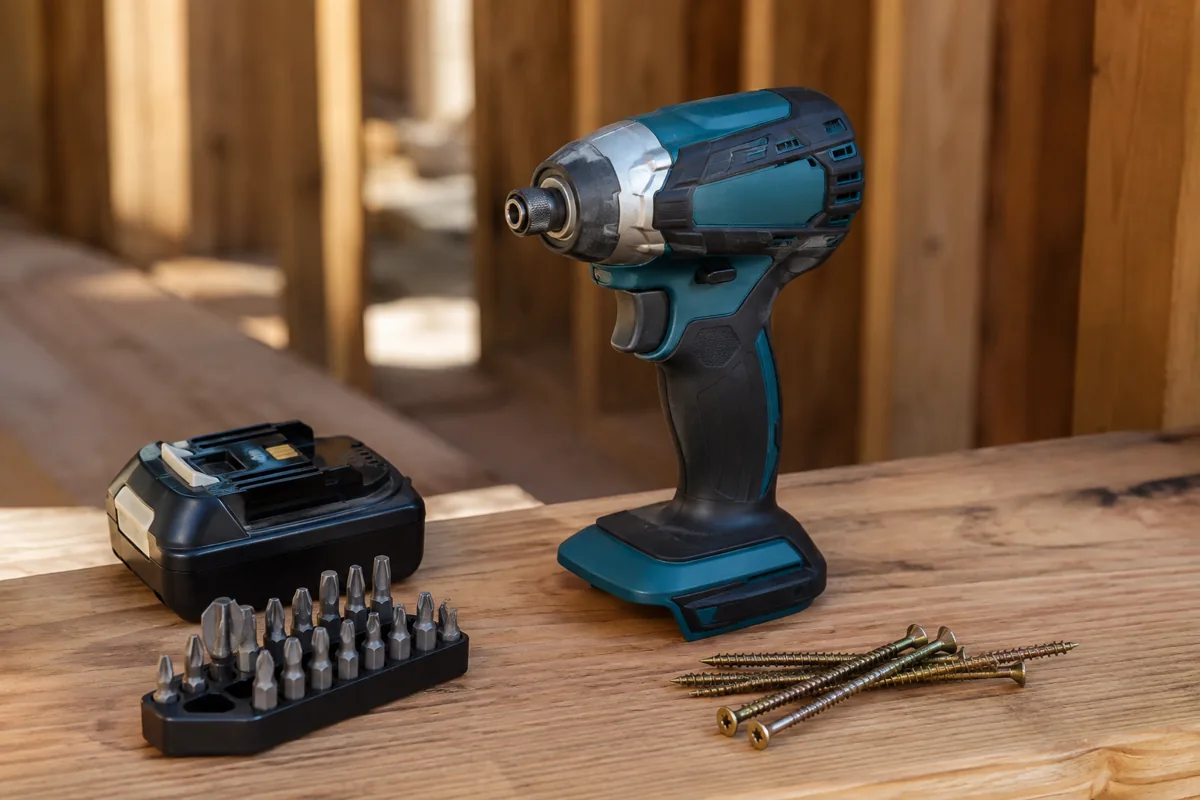
These are different tools and mixing them up is the single most common mistake I see. An impact driver has a 1/4-inch hex collet and is built for fasteners, screws, small bolts, self-tappers, sheet metal, interior trim, and the endless bolts that hold plastic to plastic. An impact wrench has a square drive, usually 3/8-inch or 1/2-inch, and is built for lug nuts, suspension bolts, and anything seized.
Most mechanics need both eventually. But if you only have room in the box for one, the impact driver is the tool you will reach for twenty times a day and the wrench is the one you reach for twice. The driver is lighter, shorter, fits behind things, and with a hex-to-square adapter it will run 3/8-inch sockets on anything up to moderate torque. It will not break a rusted control arm bolt loose, and you should not pretend it will.
What the size classes look like
| Class | Typical head length | Best use in the bay | Watch out for |
|---|---|---|---|
| Sub-compact 12V | Around 5 in | Interior, trim, brackets, sensors | Runs out of grunt on rusted 10 mm bolts |
| Compact 18V/20V brushless | 5.5 to 6.5 in | General shop driving, socket work | Easy to overdrive small fasteners |
| Full-size high torque | 6.5 to 7.5 in | Bolts that fight back | Too long for tight engine bays |
| 12V right-angle or stubby wrench | Very short | Behind exhaust, above transmissions | Limited torque range |
Why the best impact driver for mechanics is chosen on control, not torque
Manufacturers publish in-lbs figures that keep climbing every product cycle. Ignore the headline number for a moment and look at what happens in the first quarter second of a trigger pull. That is the moment that decides whether you seat a fastener or ruin it.
Three features do the real work here. First, a genuinely progressive trigger, meaning the tool creeps at 10 percent throttle instead of jumping straight into hammer mode. Second, multiple speed modes with a real low setting, ideally under 1,000 rpm, because low speed with impacts still available is exactly what you want on a stubborn but fragile bolt. Third, a self-tapping or precision mode that spins slow, detects the impact, and then backs off. On sheet metal screws and plastic clips that mode is worth more than 500 extra in-lbs.
The other thing nobody puts on the box is anti-kickback behavior and how the tool handles a sudden bind. Automotive fasteners bind constantly because threads are dirty and holes are rarely square to the fastener. A tool that keeps hammering blindly through a bind will round the hex before you can react.
Compact brushless impact driver (18V/20V class)
If you already own an 18V or 20V platform, buy the current compact brushless driver in that line rather than the biggest one. DeWalt XR, Milwaukee FUEL, and Makita LXT all offer a compact model with three or four speed modes, and the shorter head is worth more in a bay than the extra torque of the full-size version. Check the head length in the specs before you buy, since that single number decides how many jobs the tool can reach.
Head length, weight, and the tight-space problem
In woodworking I care about head length because of joist bays and cabinet interiors. Under a hood it matters more. The distance from the chuck face to the back of the housing determines whether you can get straight onto a bolt or whether you are fighting it at an angle with an extension.
My rule: measure the tightest bolt you regularly service, add half an inch for the socket, and buy a driver that fits. If the number comes out under about five inches, you are in 12V sub-compact territory or you need a right-angle attachment. Do not assume you will just use an extension. Every inch of extension you add costs you feel, and feel is how you avoid stripping things.
Weight matters differently than in construction. Nobody is driving three hundred deck screws overhead in a shop, but you are holding the tool at odd angles in awkward positions, often one-handed, often with your other hand steadying a part. Under three pounds with a compact battery is the comfortable range. Anything over four and your accuracy drops when you are stretched over a fender.
Grip, light, and belt hook
The LED ring around the collet is not a gimmick in automotive work, it is the difference between seeing the bolt head and guessing. Look for a light that stays on for a few seconds after the trigger releases and that circles the bit rather than shining from the foot of the tool, since a foot-mounted light gets shadowed by the socket. A belt hook that can move to either side is worth checking too, because you set the tool down on a fender at your peril.
Bits, adapters, and technique that saves fasteners
The tool is maybe half the equation. The other half is what you put in it and how you pull the trigger.
Use impact-rated bits, always. Standard hardened bits shatter in an impact driver, and a shattered Torx bit in a recessed bolt head is a bad afternoon. For automotive work you want a set heavy on Torx and Torx Plus, plus JIS-compatible Phillips if you touch Japanese vehicles, because a standard Phillips bit will cam out and chew a JIS screw head. Keep the bits short. A one-inch insert bit in a holder flexes less than a two-inch power bit and transmits impacts more directly.
For socket work, buy a proper impact-rated 1/4-inch hex to 3/8-inch square adapter, not the chrome one from the bargain bin. Chrome adapters crack. And use impact sockets, black and thick-walled, not chrome sockets that can split under hammering.
Technique, in order. Break the bolt loose in reverse at the lowest speed that will move it, and if the tool hammers more than about three seconds without turning, stop and go get a breaker bar. When installing, run the fastener down at low speed, then stop the driver before the head seats and finish with a hand ratchet or a torque wrench. On anything threading into aluminum, anything with a gasket, and anything torque-critical, the driver is a spinning tool, not a tightening tool. That habit alone will save you more money than any tool upgrade.
- ✔ Short head reaches bolts a wrench cannot
- ✔ Runs sockets with an impact adapter for moderate torque work
- ✔ Light enough for one-handed work at awkward angles
- ✔ Low-speed modes protect small and fragile fasteners
- ✘ Will not break seized suspension or lug fasteners
- ✘ Easy to overtighten if you use it as a final torque tool
- ✘ 1/4-inch hex bits and adapters are a wear item
- ✘ Cheap non-impact bits and sockets fail dangerously
Platform, batteries, and where the money goes
Buy into the battery system, not the tool. Over a few years you will own a driver, an impact wrench, a ratchet, a light, and probably an inflator, and having them share packs is worth more than any single tool advantage. The major 18V and 20V lines all have deep automotive selections now, and the 12V lines have gotten genuinely good for the tight-space tools.
On batteries, compact 2.0Ah packs are the right default for a driver because they keep the tool short and balanced. Keep two on the charger and skip the big packs unless you are running a grinder off the same system. Kits with two batteries and a charger almost always cost less than buying those pieces separately, so if you are starting fresh, start with a kit.
12V sub-compact impact driver
The most underrated tool in an automotive box. A 12V sub-compact driver reaches interior fasteners, sensor brackets, and anything behind a bulkhead where a full-size tool simply will not go. Do not expect it to fight rust, but for the hundred small fasteners in a day of trim and accessory work it is faster and far less likely to strip something.
Impact-rated bit and socket adapter set
Whatever driver you choose, budget for a real impact-rated bit set with strong Torx coverage and a forged hex-to-square adapter. This is the cheapest reliability upgrade you can make, and the failure mode of skipping it is a broken bit stuck in a fastener head.
FAQ
Can I use an impact driver to remove lug nuts? No, and I would not try. Lug nuts are typically torqued to 80 to 120 ft-lbs and are often seized, which is well past what a 1/4-inch hex driver should handle. Use a 1/2-inch impact wrench to remove and a torque wrench to install. Running lug nuts on with any impact tool is how you warp rotors and snap studs.
Do I need brushless, or is a brushed driver fine? Brushless is worth it for a tool you use daily. It runs cooler, lasts longer, gives you more work per charge, and the electronic control that enables good low-speed and precision modes generally comes with brushless designs. A brushed driver is fine as a backup or a truck tool.
What torque rating should I actually look for? Anything in the 1,500 to 1,800 in-lbs range in a compact 18V or 20V driver is more than enough for automotive fastener work, and 12V sub-compacts in the 900 to 1,300 in-lbs range cover interior and light work. Past that point you are buying capability you cannot safely use on the fasteners a driver is meant for, so spend the difference on speed modes, a shorter head, and better bits.
Pick the shortest, lightest brushless driver in a battery system you want to live with, add impact-rated bits and a forged socket adapter, and let a breaker bar or a proper impact wrench handle the fights. That combination will strip fewer threads than any amount of extra torque.
Check prices on Amazon →