What's inside
As an Amazon Associate I earn from qualifying purchases. This post may contain affiliate links at no extra cost to you.
What we cover
The short answer
For a few small holes in ordinary brick or concrete each year, a good cordless hammer drill is usually enough. It costs less, uses the same battery platform as your driver, and handles wood, metal, and screws as well as masonry. Expect slower drilling and more effort, especially in hard concrete.
A rotary hammer is the better tool when holes are larger, deeper, numerous, or going into hard concrete. Its hammer mechanism delivers stronger blows without relying on you to push hard. That makes drilling quicker and less tiring, but it is a bigger expense for a tool that may sit unused.
As an Amazon Associate we earn from qualifying purchases at no extra cost to you.


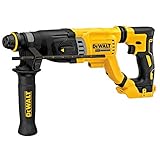
How the tools work
A cordless hammer drill spins the bit and adds rapid, short impacts. The action comes from two ridged plates vibrating against each other, so the tool needs firm pressure to keep the impacts working. Use a carbide-tipped masonry bit with a round shank or a compatible hex shank. Most hammer drills also have a standard three-jaw chuck.
A rotary hammer uses a piston mechanism to strike the bit. The blows are stronger, so the tool can make progress in concrete with less pressure. Most use SDS-Plus bits, which slide into the chuck and move slightly as they are struck. Many rotary hammers offer rotation-only and hammer-drill modes; some also have a chipping mode for light demolition.
Which one fits the job?
| Job or factor | Cordless hammer drill | Rotary hammer |
|---|---|---|
| Small anchor holes, roughly 1/4 inch | Usually suitable for a handful of holes | Fast, but often more tool than the job needs |
| Several 3/8-inch holes in hard concrete | Can be slow; heat and user fatigue become factors | Generally the easier choice |
| Large holes or many holes | Often impractical or slow | Designed for sustained masonry drilling |
| Wood, metal, and driving screws | Versatile, with a chuck for common bits | Usually needs a separate chuck or another drill |
| Bits and carrying weight | Common masonry bits; typically more compact | SDS-Plus bits; typically larger and heavier |
When a hammer drill is enough
Choose a hammer drill if you mainly need holes for light-duty wall anchors, such as mounting a small shelf or curtain hardware. For a few 1/4-inch holes in brick or softer masonry, it is a sensible, lower-cost option. A hammer drill can also be the better purchase if you need one cordless tool for general drilling and fastening.
For a tool-only purchase, a cordless hammer drill can make sense if you already own batteries in that brand’s platform. Check the chuck capacity, speed settings, and whether the tool has a side handle. A side handle improves control when a bit catches.
Do not judge the tool only by its advertised voltage or maximum torque. Those figures do not tell you how quickly it will drill concrete. A compact drill may manage an occasional hole but bog down in dense aggregate. If progress stops, leaning harder is not the fix: it can overheat the bit, wear the drill, or twist your wrist if the bit binds.
When a rotary hammer is worth it
Choose a rotary hammer if you regularly drill into concrete, need holes larger than about 3/8 inch, or have more than a handful of holes to make. It is also preferable for hard poured concrete, where a hammer drill may take several times longer or struggle to advance. The difference is especially noticeable with deeper holes, such as those needed for longer concrete anchors.
A compact SDS-Plus model is enough for most household anchor and mounting work. A cordless SDS-Plus rotary hammer avoids a cord and is convenient if you already own compatible batteries. Cordless models cost more than many hammer drills, and battery capacity matters: repeated concrete drilling can drain a small pack quickly. For a one-off job, borrowing or renting may cost less than buying.
Rotary hammers are not automatically better for every hole. Their SDS-Plus chuck does not hold ordinary round-shank bits directly, and an adapter chuck can add wobble. They are bulkier for overhead work and less convenient for routine screwdriving. Use rotation-only mode for suitable non-masonry tasks, but do not assume one tool replaces a regular drill in every situation.
Drill the hole right
Before drilling, check for wires and plumbing, and choose an anchor before choosing the bit. The hole diameter and depth must match the anchor instructions; many common plastic anchors call for a 1/4-inch or 5/16-inch hole, but sizes vary. Mark the depth on the bit with tape or use a depth stop. Drill slightly deeper than the anchor length so dust does not prevent it from seating.
Start slowly to keep the bit from skating, then use hammer mode with steady, moderate pressure. Pull the bit out occasionally to clear dust, particularly in a deep hole. If the drill stops cutting, withdraw the bit and clear the hole rather than forcing it. Keep the tool straight; a tilted hole can make an anchor fit poorly or leave a fixture sitting unevenly.
Wear eye protection. Concrete and masonry dust is harmful to breathe, so use dust collection or a suitable respirator and follow the tool and anchor makers’ safety instructions. If the hole is for a critical load, such as a handrail or overhead fixture, follow the specified anchor type and installation procedure rather than relying on a generic wall plug.
A practical buying decision
If you already own a capable cordless hammer drill and expect to make only a few small holes, try it first with a fresh, sharp masonry bit. That is the cheapest reasonable route. If the job involves hard concrete, many holes, or large diameters, step up to a rotary hammer—or rent one—instead of spending time and bits fighting the wrong tool.
For occasional homeowners, the dividing line is not simply “brick versus concrete.” It is the combination of material hardness, hole size, and how many holes you need. A hammer drill covers light, infrequent work. A rotary hammer earns its space when concrete drilling stops being an occasional nuisance and becomes a repeated task.