What's inside
As an Amazon Associate I earn from qualifying purchases. This post may contain affiliate links at no extra cost to you.
For a few small holes in brick, a drill driver may be enough. For repeated holes, larger anchors, or hard brick, a hammer drill is usually the better tool because it combines rotation with short blows that help the masonry bit cut. The right choice depends on the brick, the hole diameter, and how many holes you need—not just the tool’s maximum torque.
As an Amazon Associate we earn from qualifying purchases at no extra cost to you.



What we cover
Choose by hole size and brick type
A standard drill driver rotates the bit but does not hammer. With a sharp masonry bit and steady pressure, it can drill small holes—often around 3/16 inch or 1/4 inch—in softer brick or mortar. It is slower in dense brick, though, and leaning harder on it is not a substitute for hammer action. Excess pressure can overheat the bit, stall the drill, or make the hole wander.
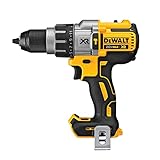
A hammer drill adds axial impacts while the bit turns. That makes it more effective for common masonry-anchor holes, often 1/4 to 3/8 inch, and for drilling several holes in succession. A cordless hammer drill kit is a practical choice if masonry work is regular rather than occasional.
Brick varies considerably. Soft, older brick may drill readily without hammer action. Dense, hard-fired brick can make a drill driver painfully slow even with a fresh bit. Mortar is usually easier to drill than brick, but placing an anchor in mortar is not always appropriate: it can crumble, and the joint may not be strong enough for the load. Follow the anchor maker’s instructions about where to drill.
Drill driver vs. hammer drill
| Factor | Drill driver | Hammer drill |
|---|---|---|
| Small holes in soft brick | Often adequate for a few holes | Faster, but may be more tool than needed |
| Hard brick or multiple holes | Slow; greater risk of overheating or wandering | Usually the better choice |
| Control near finished surfaces | Gentle, with no hammering | Can chip the face if started aggressively |
| Typical setup | Masonry bit in the chuck | Masonry bit; hammer mode selected for masonry |
| Cost and versatility | Lower-cost option for light-duty drilling and screws | More capable in masonry; hammer mode can be switched off |
If you already own a drill driver and need two small holes in soft brick, try it before buying another tool. If it barely advances after several seconds of firm, controlled drilling, stop rather than forcing it. A hammer drill is a sensible upgrade for repeated anchor installation. For larger or deeper holes, a rotary hammer may be more suitable than either tool, though it is often unnecessary for ordinary small wall anchors.
Use the right bit and settings
Use a masonry bit with a carbide tip, matched to the anchor’s specified hole diameter. A wood or metal bit is the wrong choice: it can overheat, dull quickly, and produce a poor hole. Check the anchor packaging for diameter and minimum embedment depth. Do not guess based on the screw size; the pilot hole is sized for the anchor, not the screw.
On a hammer drill, use hammer mode for brick and a low-to-medium speed that lets the bit cut without excessive heat. Start slowly to keep the tip from skating, then increase speed once the hole is established. Keep the drill aligned with the wall. A leaning hole can leave an anchor loose even when the diameter is correct. If the tool has a depth stop, set it; otherwise mark the bit with tape, allowing a little extra depth for dust.
Drill dust packs into the bottom of a blind hole and can stop an anchor from seating fully. Withdraw the bit occasionally to clear debris, then clean the hole with a suitable brush or vacuum. Wear eye protection and a dust mask. If the drill binds, stop and release the trigger; do not twist your wrist against a jammed bit.
Install the anchor without damaging the brick
Mark the hole and check for wiring or pipes before drilling. Keep a reasonable distance from the brick’s edge and from other holes; the anchor manufacturer’s guidance takes priority, but drilling close to an edge raises the chance of cracking or spalling. If the brick face is fragile, begin without hammer action for the first few millimetres, then switch to hammer mode if needed. On some drills, a brief pilot made in rotary mode helps keep the bit centered.
Drill to the required depth, clear the dust, and test-fit the anchor. It should enter firmly but not require blows hard enough to crush the brick around it. If the hole is oversized, the anchor may spin or pull out under load. Do not solve that by using a larger screw unless the anchor instructions allow it; choose a suitable replacement anchor or relocate the hole.
For light items, a correctly sized masonry plug and screw may be enough. Heavier shelves, cabinets, or anything that could injure someone if it falls need anchors rated for the substrate and load, with the specified hole depth and spacing. A masonry anchor assortment for brick can be handy, but check each anchor’s stated material and load limits rather than treating the assortment as one-size-fits-all.
What to buy for occasional work
For one or two small holes in soft brick, keep the drill driver you own and use a sharp carbide masonry bit. That is the cheaper, less bulky option, and it can be entirely adequate. For hard brick, holes larger than roughly 1/4 inch, or a run of several anchors, a hammer drill saves time and reduces the temptation to force the tool. Look for a model with a selectable hammer mode, a side handle, and a clutch for ordinary screwdriving; hammering should be off when driving screws.
Whichever tool you choose, the bit, hole size, and anchor matter as much as the drill. A fresh masonry bit and a clean, correctly sized hole will outperform brute force—and prevent the loose anchor that turns a quick installation into a repair.