Key takeaways
- Practical router maintenance tips from a driller who lives with one: collet care, pitch removal, bearing checks, and the ten minute shutdown routine that keeps cuts clean.
What's inside
As an Amazon Associate I earn from qualifying purchases. This post may contain affiliate links at no extra cost to you.
A router that starts leaving burn marks, chatter lines, or a dado that mysteriously deepens halfway across the board is usually not worn out. It is dirty. Most of the router maintenance tips that actually matter cost ten minutes, a nylon brush, and a can of compressed air, and they come down to the same habits I use on a drill chuck: keep the clamping surfaces clean, keep grit away from the bearings, and quit pretending that leaning harder on a wrench fixes a slipping cutter.
Routers are harder on themselves than most shop tools. They spin fast, they make the finest dust in the building, and they pull their own cooling air straight through the motor. That dust rides the airflow over the armature and settles into the bearings. It is why two identical routers can be worlds apart after five years of the same weekend work.
As an Amazon Associate we earn from qualifying purchases at no extra cost to you. Product prices and availability are accurate as of the date shown and are subject to change.


| Job | How often | What it prevents |
|---|---|---|
| Blow out the motor vents | After every dusty session | Overheating, cooked bearings |
| Clean the collet and nut | Every few bit changes | Bit creep, chatter, scored shanks |
| Free up bit guide bearings | Whenever one feels gritty | Burned edges, seized bearings |
| Wax the base and columns | Monthly in a damp shop | Sticky depth changes, rust |
| Fit a new collet | Every two or three hard years | A bell-mouthed grip on the shank |
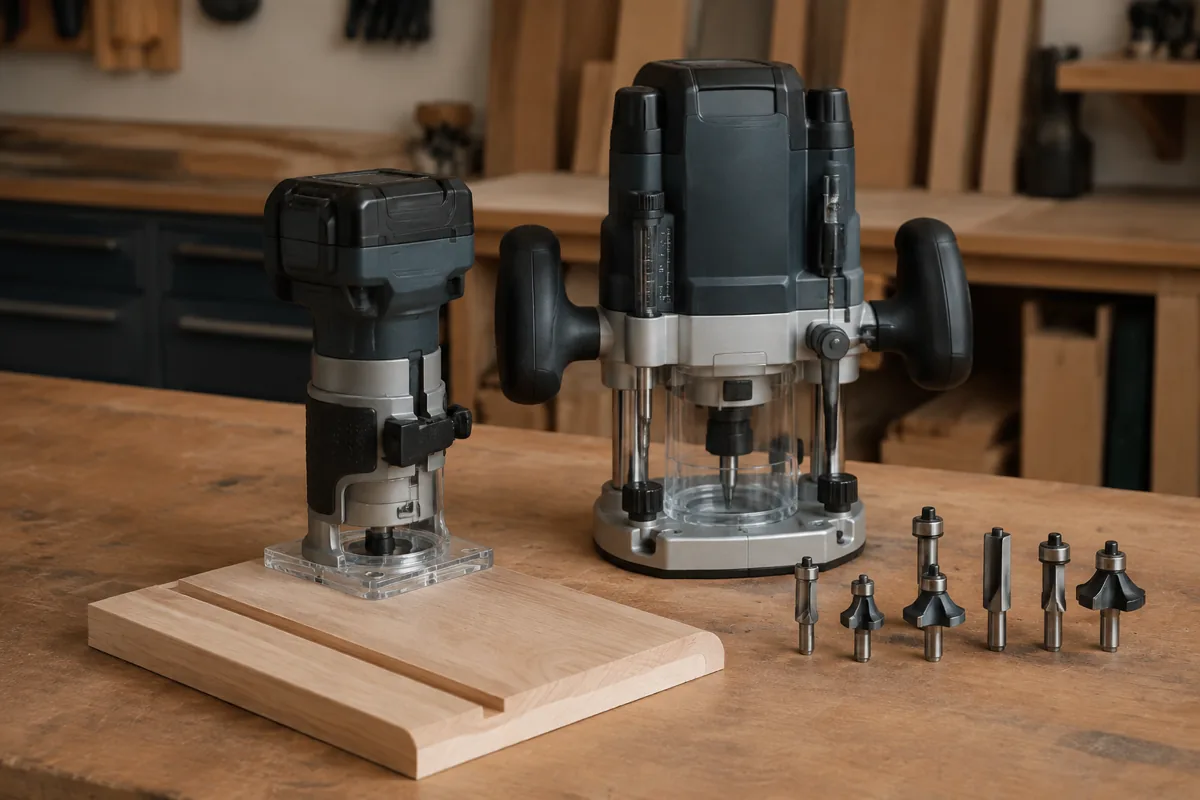
Router Maintenance Tips That Start At The Collet
The collet is the only thing holding a cutter that turns 20,000 times a minute, and it is the part most people ignore. Take the nut off, back the collet out of it, and wipe the bore and the taper with a rag, then a brass or nylon brush. Nothing abrasive on those tapered surfaces, ever. And do not oil the inside of a collet. Oil plus fine dust makes lapping compound, and an oiled bore lets a shank climb out under load.
Seating matters as much as cleaning. Cover at least three quarters of the collet with shank, do not bottom the bit out, leave roughly an eighth of an inch of clearance underneath, and never clamp on the relief undercut just below the cutter. Snug the nut with one firm pull on the wrench. If you have to stand on it, the collet is dirty or finished. Two symptoms say finished: a dark scored ring on the shank of every bit you run, and cut depth that creeps deeper as you feed. Collets are wear items, same as drill chuck jaws.
Replacement Router Collets and Collet Nuts
Order by your exact router model rather than shank size alone, because collet tapers are brand specific. On a tired router this is one of the few parts swaps that improves cut quality the same afternoon.
Bit Care: Pitch, Carbide And Guide Bearings
Baked-on pitch is not cosmetic. Resin on the flute raises friction, friction raises heat, and heat is what dulls carbide and scorches maple. Soak the cutter in a blade and bit cleaner or a strong citrus degreaser, scrub with a nylon brush, dry it completely, then add a dry film lube. Skip the lye-based oven cleaner trick that circulates online. It works on steel and it is unkind to the braze holding carbide teeth on.
Guide bearings get their own check. Spin each one with a fingernail before the bit goes in. Gritty or dragging means pull the retaining screw, degrease it, dry it, then add a drop of dry lubricant instead of grease. Any bearing that will not free up gets replaced cheaply. A dragging bearing burnishes and then burns the edge it rides against, which is how a scorched template line ends up blamed on the bit. Store bits shank down in a drilled block too, not loose in a drawer.
Blade and Bit Resin Cleaner
One bottle lasts years and does double duty on table saw blades. Look for a formula labeled safe for carbide, use a shallow tray so only the cutting end soaks, and follow with a dry lube in a damp shop.
Base, Depth Mechanism And Motor
Paste wax is the cheapest maintenance in the shop. A thin coat on the sub-base makes the router glide instead of skid, and it keeps rust off the columns of a plunge base. Brush the depth threads and rack clean, then use a dry PTFE or silicone lube on them, because grease holds dust and eventually turns a fine adjuster into a stiff mess. Check the base for flat after any drop, since a cupped sub-base tips the bit and lets bearing-guided cuts wander.
For the motor, unplug it and blow the intake vents with moderate compressed air, moving air the direction the fan does. Do not jam a vacuum nozzle in there and do not blast the armature hard enough to spin it up. Load kills more routers than dust, though. Take an eighth of an inch per pass in hardwood, run big panel-raising bits at the low end of the speed dial, and keep small straight bits near the top. Burn marks are a feed and speed problem far more often than a dull bit problem.
Brushes, Cords And The Electrical Side
On a brushed router those inspection caps exist for a reason. Pull the brushes, compare them to the wear limit in the manual, replace them in pairs, and run the tool with no bit for a few minutes so they seat on the commutator. Heavy sparking or power cutting in and out points straight at brushes.
Brushless cordless trim routers from the DeWalt XR, Milwaukee FUEL and Makita LXT lines take brushes off the list, but they still want clear vents and clean, dry battery contacts. On corded tools, flex the whole cord and look hard at the strain relief. A nicked cord gets replaced, not taped.
Dry PTFE Lube and Paste Wax
A dry PTFE spray and a can of paste wax cover nearly everything above. Dry lubricants are the right choice anywhere dust lands, which on a router is everywhere.
My Ten Minute Shutdown Routine
Unplug. Pull the bit and wipe the shank. Brush the collet bore and the nut. Blow the vents. Wipe and wax the sub-base if it dragged. Back the depth adjustment off so the plunge spring is not sitting compressed. Then leave the collet nut finger tight with no bit in it, because storing a nut torqued down on an empty collet is a fine way to take the spring out of it.
- ✔ Cleaner cuts and fewer burns with no change in technique
- ✔ Bits and collets last years longer
- ✔ You catch a bad bearing before it ruins a workpiece
- ✔ Costs a few dollars a year
- ✘ It only pays off as a habit, not as an annual event
- ✘ Compressed air is a convenience not every shop has
- ✘ A bell-mouthed collet has to be bought, not cleaned
Router Maintenance FAQ
How often should I clean the collet? Every few bit changes for hobby work, and every session if you are cutting MDF or plywood all day. Thirty seconds with a brush, and it is the highest-value item on this list.
Can I spray WD-40 on my router? Use it to wipe rust off the base or a bit body, then wipe it dry. Keep it out of the collet, off guide bearings, and away from the motor, since anything oily in a collet promotes slipping.
Do I replace a bad guide bearing or the whole bit? Replace the bearing if the carbide is still sharp. They come out with one screw, though you need the right bore and outside diameter. If the edge is chipped, replace the bit.
Clean collet, clear vents, free bearings, waxed base, and passes light enough that the motor is not screaming. Five habits, and a mid-priced router will outlast the shop it sits in.
Check prices on Amazon →