We research everything we recommend. When you buy through our links, we may earn a commission. As an Amazon Associate we earn from qualifying purchases.
Best Bench Grinder Accessories and Rests: Five Upgrades
Compare the best bench grinder accessories and tool rests by fit, adjustment and jig coverage, from the Oneway Wolverine system to the Mudder dresser set.
Compare the best bench grinder accessories and tool rests by fit, adjustment and jig coverage, from the Oneway Wolverine system to the Mudder dresser set.
If you want one answer up front: the Oneway Wolverine Grinding Jig is the strongest default in this group, because its two under-wheel bases carry a sliding V-arm on one side and a flat platform on the other, so gouges, skews, scrapers and parting tools all meet the wheel at an angle set by the hardware rather than by the operator’s wrists, and the geometry repeats every time the tool goes back to the grinder. If the work is flat bench tools more than turning tools, the considered alternative is the Veritas-style platform rest pattern, represented here by two slotted-platform rests, and if the grinder already belongs to the Tormek jig ecosystem, the Tormek BGM-100 mounting set is the bridge that puts those jigs on a dry bench grinder. The Peachtree Pro Grind is the fullest single-box system for 8-inch grinders, the VEVOR tool rest is the budget platform, and the Mudder dresser set covers the other half of grinder upkeep, the wheel itself.
One boundary before the picks, because this category is easy to buy wrong. None of the five is a grinder, and none of them sharpens anything by itself: a tool rest supports the tool at a fixed angle, a jig holds the tool so the angle survives the pass, and a dresser maintains the wheel that both of them depend on. The second boundary is fit. Every rest and jig here is built around the two standard wheel sizes, 6 inch and 8 inch, and each one mounts in its own way, under the wheel, on a board in front of the grinder, or on a platform the buyer builds, so the mounting geometry matters as much as the headline compatibility. One stock note belongs up front as well: the Tormek pick rests on a tracker record whose Amazon-sold price row currently stands empty, with third-party offers tracked instead, and the VEVOR pick’s maker store page showed the rest out of stock when crawled, so those two carry a confirm-the-live-offer note in their sections and in the checks section rather than a smoothed-over summary.
As an Amazon Associate, we earn from qualifying purchases.
What to Look for in Bench Grinder Accessories and Rests
Oneway Wolverine Grinding Jig
Peachtree Woodworking Supply Pro Grind Sharpening System
Tormek BGM-100 Bench Grinder Mounting Set
VEVOR Bench Grinder Tool Rest PJ-1133
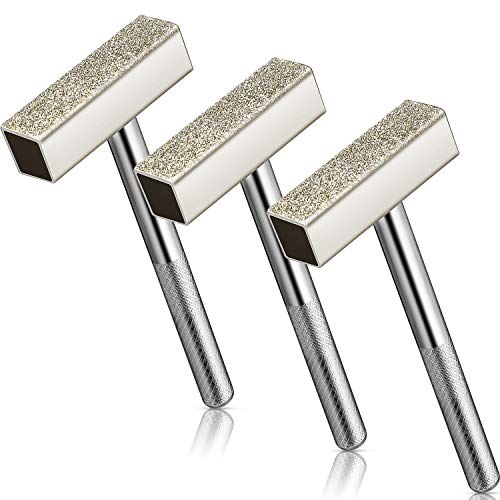
Mudder 3 Pieces Grinding Wheel Dresser
Which Bench Grinder Accessory Fits Your Work
Checks and Safety Notes
Frequently Asked Questions
Conclusion
Product and ASIN Reference
Quick Answer
Buy the Oneway Wolverine Grinding Jig if one system has to make a bench grinder repeatable: two bases that mount under the wheels, a V-arm for gouge handles, a flat platform for skews and scrapers, and a long upgrade path of attachments from the same maker. Buy the Peachtree Pro Grind if the grinder is an 8-inch model and the preference is everything in one box, because its Multi-Grind jig for fingernail and side grinds ships included alongside its platform, tool rest bar and setup blocks. Buy the Tormek BGM-100 if Tormek jigs are already on the shelf, because it mounts the maker’s universal support on a bench grinder so the same jigs and settings serve both machines. Buy the VEVOR tool rest when the need is a single adjustable platform for chisels and plane irons at the budget tier. Buy the Mudder dresser set whichever rest is chosen, because a glazed or grooved wheel defeats every jig in this guide and the dresser is what brings the wheel back.
Quick Comparison
Accessory
Tier
Type
Grinder Fit
Defining Feature
Oneway Wolverine Grinding Jig
Premium
Under-wheel jig system, V-arm and platform
6 in and 8 in wheels
Repeatable bevel geometry for turning tools
Peachtree Pro Grind Sharpening System
Premium
Full jig system with platform and Multi-Grind jig
8 in grinders
Gouge jig included in the box
Tormek BGM-100 Bench Grinder Mounting Set
Mid-range
Mounting set for a universal support bar
6 in to 10 in wheels
Runs Tormek jigs on a dry grinder
VEVOR Bench Grinder Tool Rest PJ-1133
Budget
Adjustable platform rest with miter slide
6 in and 8 in grinders
Platform tilts from 0 to 90 degrees
Mudder 3 Pieces Grinding Wheel Dresser
Budget
Flat diamond dressing pads, set of 3
Bench grinder wheels
80-grit diamond face for truing and cleaning
What to Look for in Bench Grinder Accessories and Rests
A rest supports, a jig repeats, and the difference decides the purchase. A tool rest is a platform: it holds the tool at a set angle while the operator’s hands control the pass, which is exactly right for chisels, plane irons, mower blades and the general run of flat work. A jig goes further and captures the tool itself, a gouge clamped in a pivoting holder or a handle seated in a V-arm pocket, so the bevel angle is produced by the fixture’s geometry and can be reproduced next week without re-measuring. Turning tools are the case that forces the distinction, because a bowl gouge’s fingernail profile is a compound curve no platform can generate freehand with any consistency, while a bench chisel needs nothing more than a flat, rigid, correctly angled surface. Buyers should name their tool set first: flat tools point to a platform rest, turning tools point to a jig system, and a mixed shop is what the two-sided systems in this guide exist for.
Mounting geometry is the real compatibility question. The listings all say 6 inch and 8 inch, but the five picks here mount three different ways. The Wolverine’s bases slide under the grinder itself and bolt to the bench or a board, with the grinder’s wheel center height setting whether the arms reach correctly. The platform rests bolt to the bench in front of the wheel, or to a board shared with the grinder, and their working height is set by that board. The Tormek set mounts its support beside the wheel on a platform the buyer builds, with a height-adjustable block covering the range of grinder sizes. A rest that cannot be positioned so its platform sits at the right height and distance relative to the wheel centerline will not hold its rated angles whatever its listing claims, so the mounting plan belongs in the purchase decision, not after it.
Adjustment range means little without a lock that holds. Every platform rest here tilts, slides or both, and the specification that matters is what happens under load: a platform that creeps a degree during a pass produces a faceted bevel, and a sliding arm that drifts changes the grind mid-tool. The systems answer the problem differently, cam locks on the Peachtree bases, ratchet handles on the VEVOR rest, the Wolverine’s sliding arms clamped in their bases, the Tormek support’s micro-adjust thread for fine height changes. Buyers comparing rests should weigh the locking hardware as heavily as the platform size, and should treat any rest whose angle is set by friction alone, with no positive lock, as a touch-up tool rather than a sharpening system.
Jig coverage is a list of named tools, not a promise. Each system in this guide covers a stated set: the Wolverine’s V-arm takes gouge handles for conventional grinds and its platform takes skews, scrapers and parting tools, while the fingernail grind needs the maker’s Vari-Grind attachment, sold separately. The Peachtree system’s Multi-Grind jig covers fingernail, side and standard grinds on tools up to 1.125 inches in diameter out of the box. The Tormek set covers nothing by itself at all: it is a mount, and its coverage is whatever Tormek jigs the buyer adds to its support bar, the gouge jig, multi jig and tool rest from that maker’s line. Reading the coverage as a checklist against the tools actually owned is the step that prevents the common failure in this category, a well-made system that cannot hold the one tool it was bought for.
The wheel is the fifth accessory, and it wears. A grinding wheel glazes over with embedded metal, grooves under narrow tools, and runs out of true, and no rest or jig can produce a clean bevel on a wheel in that condition. Dressing is the maintenance that restores it: a diamond dresser drawn across the face strips the loaded surface, exposes fresh abrasive and flattens the profile. The Mudder set in this guide is that tool, a flat diamond pad worked across the wheel on the rest. Buyers planning a sharpening station should budget the dresser alongside the rest from the start, and should note that the premium alternative, a wheel in cubic boron nitride, is a wheel purchase rather than an accessory and sits outside this guide’s pool entirely.
Slow speed and wheel choice sit behind every pick here. Most of these systems were designed around slow-speed grinders, near half the revolutions of a standard bench grinder, because high-speed steel edges overheat quickly on a fast, dry wheel and a jig’s repeatability is wasted if each pass blues the edge. The Peachtree maker recommends its system for slow-speed grinders with 8-inch wheels in terms, and the turning coverage of the Wolverine and Tormek systems assumes the same pairing in the published guidance around them. None of that makes a standard-speed grinder unusable, but it makes light pressure and frequent cooling part of the technique, and buyers choosing a grinder to go under these accessories should read slow speed as the intended match.
1. Oneway Wolverine Grinding Jig
Top Pick
1. Oneway Wolverine Grinding Jig
Model: Wolverine Grinding Jig
Tier: Premium
Format: Under-wheel jig system with two bases, V-arm and platform
The Wolverine is the default pick: the turning world’s standard grinding jig, built as two bases that mount to the bench or a board under each wheel of a 6-inch or 8-inch grinder, with a sliding arm working in each base. One arm ends in the V-shaped pocket that gives the system its method: the butt of a gouge handle seats in the pocket at a set distance from the wheel, so the bevel angle is fixed by the arm’s extension and repeats exactly when the setup is left alone. The other side carries the flat platform, angled for skews, scrapers, parting tools and roughing gouges ground straight across. Between the two arms the system covers the standard turning tool set with no attachment purchases at all, and its limits are equally well defined: the fingernail and side grinds that modern bowl gouges use need the maker’s Vari-Grind attachment, which clamps the gouge and pivots in the V-arm, and that attachment is a separate purchase the base kit does not include. Two disclosures belong to this pick. The listing data reviewed showed the jig offered through third-party sellers and the Amazon Resale channel rather than a standard Amazon-sold offer, so confirm the seller and the live offer on the listing before ordering. And the maker’s published data reviewed states no warranty term for the base jig, which the Specs block records rather than fills in.
2. Peachtree Woodworking Supply Pro Grind Sharpening System
Runner-Up
2. Peachtree Woodworking Supply Pro Grind Sharpening System
Model: 7575
Tier: Premium
Format: Complete jig system with bases, bar, platform and gouge jig
Grinder fit: 8 in grinders; the maker recommends slow-speed models
The Pro Grind is the fullest box in this guide: a complete sharpening system for 8-inch grinders from a woodworking supply maker, built on two quick cam locking bases whose sliding support arms lock by cam rather than by knob friction. The contents list is the argument. A 27-inch Multi-Grind bar spans the bases, a 3 x 5 inch platform with a miter slot handles flat tools, and the Multi-Grind jig that rides the bar shapes fingernail, side and standard grinds on turning tools up to 1.125 inches in diameter, which is the capability the Wolverine charges extra for. Around those core pieces the maker packs the setup problem as well as the grinding problem: two projection setup blocks, a Quad angle setting jig, a magnetic micro bevel setup block and four mounting glide blocks, five jigs and gauges in all, each preset for a stated angle and tool type per the maker’s description. The maker’s own recommendation bounds the fit honestly: the system is recommended for slow-speed grinders with 8-inch wheels, so owners of 6-inch grinders should read this as an 8-inch system rather than a universal one. The documentation limit matches the Wolverine’s: the listing data reviewed states no warranty term, recorded as not stated below.
3. Tormek BGM-100 Bench Grinder Mounting Set
3. Tormek BGM-100 Bench Grinder Mounting Set
Model: BGM-100
Tier: Mid-range
Format: Mounting set for a universal support bar; no jig included
Grinder fit: Wheel diameters from 150 mm (6 in) to 250 mm (10 in)
The BGM-100 is the bridge pick, and it should be bought only by readers who already own, or firmly intend to own, Tormek jigs. The set itself contains no jig at all: it is a mounting set that installs the maker’s universal support, a horizontal bar with a micro-adjust height thread, beside the wheel of a bench grinder, so the jigs built for the maker’s water-cooled sharpeners clamp onto the dry grinder and work there. The package is a horizontal base, the universal support with micro adjust, a height adjustable block covering 56 to 89 mm of mounting height, hardware and feet for the platform the buyer builds to carry it, since the set mounts on a self-made wooden platform or directly on the bench. Fit is the widest in this guide, grinders with wheel diameters from 150 mm, 6 inches, to 250 mm, 10 inches, mounted on the left or right side of the wheel, with a second set covering the other side. The coverage it unlocks is the maker’s jig line, the gouge jig, the multi jig and the tool rest, plus the turning tool setter that makes settings transferable between the bench grinder and the water-cooled machine, which is the system’s real argument: rough shaping done fast on the dry wheel, with the same jig settings carried to the fine stone. None of those jigs is included, and the stock disclosure is the standing one for tracker-based picks: the camelcamelcamel record behind this set shows its Amazon-sold price row standing empty, its last Amazon price years old, with third-party new offers tracked into February 2026 in its place, so that record establishes the listing without establishing a current Amazon-sold offer; confirm the seller and the offer on the listing before ordering, as the checks section sets out.
4. VEVOR Bench Grinder Tool Rest PJ-1133
4. VEVOR Bench Grinder Tool Rest PJ-1133
Model: PJ-1133
Tier: Budget
Format: Adjustable platform tool rest with flat miter slide
Construction: Aluminum alloy, per the maker’s manual
The VEVOR rest is the platform pick at the budget tier: a bench-mounted replacement rest in aluminum alloy for 6-inch and 8-inch grinders, built around a platform that rotates from 0 to 90 degrees and locks with ratchet handles on both sides. The platform slides forward and back to set the gap to the wheel and the included flat miter slide travels left and right across it, carrying blades and chisels up to 2.5 inches wide through the pass so the edge meets fresh wheel across its whole width instead of grooving one spot. That combination, tilt, reach and a sliding carrier, is the Veritas pattern executed at the budget tier, and it suits the flat-tool workload, bench chisels, plane irons, mower blades and knives, that a platform rest exists for; it makes no attempt at turning tools, and buyers with gouges should read the two systems above instead. The maker’s manual is unusually complete for the tier and supplies the figures the Specs block prints, including the 1.5-pound weight, and it also bounds the pick honestly in two places: it provides no warranty information at all, directing buyers to the retailer, and the maker’s own store page showed this rest out of stock when crawled, so the Amazon offer should be confirmed live before ordering rather than assumed from the listing’s existence.
The Mudder set is the wheel-care pick, and the only one of the five that touches the wheel rather than the tool: three flat diamond-coated dressing pads, worked across the spinning wheel’s face on the tool rest to strip embedded metal, break a glazed surface back to fresh abrasive, and flatten grooves and high spots out of the profile. The listing’s product information puts the abrasive at 80 grit, medium, in a flat coated face, which is the format for truing a bench grinder wheel rather than the single-point diamond used on precision surface grinders, and the three-piece count is practical rather than generous, since a dresser is a consumable whose face loads and wears with use. Two documentation notes belong here. The dimensions in the listing’s product information, 4.72 x 3.35 inches at 5.3 ounces, describe the set as listed rather than a single pad’s working face, and the Specs block attributes them that way rather than presenting them as one pad’s measurements. And the listing data reviewed states no warranty term. Bought alongside any rest in this guide, this is the pick that keeps the other four honest, because every angle a jig sets is ground on the wheel this tool maintains.
Which Bench Grinder Accessory Fits Your Work
For turning tools ground regularly, the Oneway Wolverine is the default: the V-arm and platform cover the standard tool set, the setup repeats without measurement, and the maker’s attachment line, the Vari-Grind above all, extends it to fingernail grinds when bowl work demands them. For the same turning workload on an 8-inch grinder with everything in one purchase, the Peachtree Pro Grind is the pick, bought for its included Multi-Grind jig and its cam-locking bases, with its 8-inch, slow-speed fit understood. For a shop already invested in Tormek jigs, the BGM-100 is the fit, and for no other shop: it is a mount in search of jigs, bought to move an existing system onto a dry wheel and to carry settings between two machines. For flat bench tools at the budget tier, the VEVOR rest is the pick, a tilting, sliding platform that covers chisels and plane irons properly and makes no claim beyond them. For the wheel itself, the Mudder dresser set is the pick regardless of which rest is chosen. Two honest boundaries close the section. None of the five fits a grinder outside the stated wheel sizes, the platform rests and jig bases alike assume the standard 6-inch and 8-inch machines, the Tormek set’s 10-inch ceiling aside. And none of the five hones: grinding sets the bevel, and the final edge still belongs to a stone, a strop or a water-cooled sharpener downstream of everything in this guide.
Checks and Safety Notes
Three checks belong with any of the five. First, the recall check: no bench grinder rest, jig or dresser in this guide, and none from Oneway, Peachtree, Tormek, VEVOR or Mudder, appears in the CPSC recall data reviewed. The nearest standing actions for this site involve different product classes from other makers: the recalled Dremel MICRO 8050 rotary tool and the Bosch Type 1 cut-off wheel recall, numbered 05-046, both concern powered cutting tools rather than the unpowered rests and jigs here, neither covers any pick in this guide, and both belong in this section only as the standing reminder that the exact model is what a two-minute search at saferproducts.gov settles before ordering. Second, the offer check: the Tormek pick rests on a tracker record whose Amazon-sold price row stands empty, with third-party offers tracked instead, the Wolverine’s listing data showed third-party and Amazon Resale offers, and the VEVOR maker’s own store page showed the rest out of stock when crawled, so none of those three records by itself establishes a live Amazon-sold offer; confirm the seller, the model and the offer on the listing ordered, for those three picks above all. Third, the setup check, which is a safety check on a grinder: keep the work rest adjusted to within 1/8 inch of the wheel, the standard maximum gap, so a tool cannot jam between rest and wheel and wedge the wheel apart; keep the spark guard close to the wheel as well, dress a wheel that rings hollow or shows cracks out of service rather than back into use, and never grind on the side of a wheel not rated for side grinding. Eye protection is not optional at a dry grinder, a face shield over glasses is the better standard for dressing work, and a freshly dressed wheel should be re-checked for its rest gap before the first tool touches it, because dressing changes the wheel’s diameter and the gap with it.
Frequently Asked Questions
Do these accessories fit both 6-inch and 8-inch bench grinders?
Mostly, with one exception that matters. The Wolverine bases and the VEVOR rest are both published for 6-inch and 8-inch grinders, and the Tormek mounting set covers the widest range in the guide, wheels from 6 to 10 inches, because its height-adjustable block absorbs the size difference. The Peachtree Pro Grind is the exception: it is built for 8-inch grinders and its maker recommends slow-speed 8-inch models in terms, so a 6-inch grinder owner should not buy it on the assumption that smaller is automatically covered. In every case the wheel size is only half the fit question, because the rest or base also has to mount at the right height relative to the wheel centerline, on the bench, a board or a built platform, and that mounting plan should be settled before ordering.
Do I need a jig, or is a better tool rest enough?
It depends entirely on the tools being ground. For flat tools, chisels, plane irons, mower blades, axes and knives, a rigid platform rest that tilts and locks is enough, because the bevel is a single flat angle and the operator’s hands can hold it against a good platform; the VEVOR rest in this guide exists for exactly that work. For turning tools the answer changes, because a bowl gouge’s fingernail profile is a swept curve produced by pivoting the tool as it crosses the wheel, and no platform holds that motion to a repeatable shape. That is jig work, the Wolverine’s V-arm and Vari-Grind attachment or the Peachtree Multi-Grind jig, and turners who try to substitute a platform for it get a different grind on every pass.
What does a wheel dresser do that a tool rest cannot?
It maintains the wheel, which the rest only positions tools against. A grinding wheel in service loads with embedded metal, glazes until it skates instead of cutting, and grooves where narrow tools run, and each of those faults defeats the rest in a different way: a glazed wheel overheats edges, a grooved wheel grinds the groove’s shape into every bevel. A diamond dresser drawn across the face on the rest strips the loaded layer, exposes fresh abrasive and flattens the profile back to true, which is why the Mudder set is in this guide beside the rests rather than in a separate one. Dressing is also a consumable routine, not a repair: a wheel dressed lightly and often outlasts one dressed hard and rarely, and the rest gap has to be reset afterward because the wheel’s diameter shrinks with every pass.
Can Tormek jigs really work on a bench grinder?
Yes, through the mounting set in this guide, and the arrangement is the maker’s own design rather than an improvisation. The BGM-100 installs the same universal support bar the water-cooled machines use, at bench grinder height, so the maker’s gouge jig, multi jig and tool rest clamp onto it and work on the dry wheel, and the turning tool setter keeps the jig settings identical between the two machines. The working pattern the system is built for is shaping on the fast dry wheel, then finishing on the water-cooled stone without resetting a single jig. The boundary is that the set includes no jig and no wheel: it is a mount, priced and sold as one, and it earns its cost only in a shop that already owns the jigs or is buying into that maker’s line deliberately.
Conclusion
The five picks divide first by what they hold and only then by quality, because a bench grinder accessory is bought for the reference it gives the tool, and the references here are three different things: a platform for flat work, a jig for turning profiles, and a dresser for the wheel underneath both. The Oneway Wolverine is the considered default, the standard turning jig with the deepest attachment line. The Peachtree Pro Grind covers the same ground for 8-inch grinders with its gouge jig in the box. The Tormek BGM-100 is the specialist bridge for shops already holding that maker’s jigs, bought with its live offer confirmed. The VEVOR rest is the honest budget platform for flat tools. The Mudder dresser set is the maintenance pick that keeps every other pick’s wheel cutting true. Match the accessory to the tool set actually owned, settle the mounting before ordering, and confirm the offer on the listing.
M
Miller the Driller Editorial Team
We compare specs, warranty terms, long-term owner feedback and street pricing before anything earns a spot. Rankings are never paid.
Affiliate disclosure. As an Amazon Associate we earn from qualifying purchases at no extra cost to you. Prices accurate as of the date shown.
Three wireless routers for small offices compared on device capacity, network separation, wired speed, and coverage, with specs taken from their Amazon listings.
Compare 5 mechanic tool sets for car repairs: a 247-piece DEWALT kit, a 450-piece CRAFTSMAN set, a drawer-box GEARWRENCH set, a 170-piece Crescent set and a 450-piece WORKPRO set.
Four splitting axes and mauls that actually split firewood: a long 36-inch axe for tall users, a shorter 28-inch option, and two 8 lb mauls for knotty rounds.
Learn whether a 20V rechargeable drill battery can be repaired, which faults you can check safely at home, and when replacing the pack is the safer choice.
A specs-based review of the officially licensed Retro-Bit Sega Saturn 2.4 GHz wireless controller: dual receivers, Genesis Mini and Switch support, battery, layout, limits, and FAQs.
Find the best drill battery for Power Wheels ride-on toys for families, with DeWalt, Milwaukee and Ryobi adapters, voltage and safety guidance in this guide.
Find the best hole saw for noching dom pipe: bi-metal saws, deep cups, and the right sizes for clean, tight notches in DOM tube for fabrication shops today.
Find the best diy tile saws for home tiling projects. Compare wet tile saws by blade size, cutting capacity, and features for ceramic and porcelain tile.


 4. VEVOR Bench Grinder Tool Rest PJ-1133
 5. Mudder 3 Pieces Grinding Wheel Dresser









