We research everything we recommend. When you buy through our links, we may earn a commission. As an Amazon Associate we earn from qualifying purchases.
Best Knockout Punch Sets: Five Kits for Clean Panel Holes
Compare the best knockout punch sets by drive type, tonnage, die range and steel capacity, from the Greenlee Slug-Buster kit to the AMZCNC 8-ton set.
As an Amazon Associate I earn from qualifying purchases. This post may contain affiliate links at no extra cost to you.
⭐ Key Takeaways
Quick answer: Our top pick is Greenlee 7238SB Slug-Buster Ratchet Knockout Kit, with Klein Tools 53732SEN Knockout Punch Set with Wrench as a strong alternative.
If you want one answer up front: the Greenlee 7238SB is the strongest default in this group, because its Slug-Buster punches split the slug as they cut, so the waste disc falls free instead of jamming in the die, and because its high-leverage ratchet wrench drives the six standard conduit sizes, 1/2 inch through 2 inch, through 10-gauge mild steel with hand force alone. If the work is a long run of holes, or the stock runs to the thick end of the ratings, the considered alternative is the TEMCo TH0004, a 9-ton hydraulic kit that trades the ratchet for a hand pump. The Klein 53732SEN is the other trade-standard manual set, the VEVOR 10-ton kit is the hydraulic pick with the fullest accessory roll, and the AMZCNC SYK-8 is the budget hydraulic, an 8-ton kit covering the same six sizes.
One boundary before the picks, because this category is easy to buy wrong. A knockout punch does not drill: it shears a disc out of sheet stock with a punch and die drawn together by a stud, so every kit here needs a pilot hole drilled first to pass the draw stud through, and the size printed on the die is a conduit trade size, not the diameter of the hole it cuts. The second boundary is range: all five kits in this guide top out at 2-inch conduit, which covers the standard run of panel and enclosure work; holes for 2-1/2 inch conduit and larger belong to a heavier hydraulic class that none of these kits enters. One stock note belongs up front as well: two picks here, the TEMCo and the AMZCNC, rest on tracker records whose Amazon-sold price rows stand empty, with third-party offers tracked instead, and the VEVOR pick’s identification rests on a regional Amazon store’s listing data, so those three carry a confirm-the-live-offer note in their sections and in the checks section rather than a smoothed-over summary.
As an Amazon Associate, we earn from qualifying purchases.
Klein Tools 53732SEN Knockout Punch Set with Wrench
TEMCo TH0004 Hydraulic Knockout Punch
VEVOR 10 Ton Hydraulic Knockout Punch Kit
AMZCNC SYK-8 Hydraulic Knockout Punch Kit
Which Knockout Punch Set Fits Your Work
Checks and Safety Notes
Frequently Asked Questions
Conclusion
Product and ASIN Reference
Quick Answer
Buy the Greenlee 7238SB if one manual kit has to cover standard panel work: six slug-splitting punch and die sizes from 1/2 to 2 inch conduit, a high-leverage ratchet wrench, both draw stud sizes, and a published capacity of 10-gauge mild steel. Buy the Klein 53732SEN if the preference is the other trade standard, the same six sizes and the same 10-gauge rating driven by a 1-inch ratcheting box wrench. Buy the TEMCo TH0004 when the hole count climbs and arm effort becomes the limit, because its 9-ton hydraulic ram does the drawing that a ratchet asks of the wrist, and it publishes a stainless rating the manual kits do not. Buy the VEVOR kit when the accessory roll matters, a 10-ton ram with a step bit for pilot holes, spare seals and a case in the box. Buy the AMZCNC SYK-8 when the budget sets the tier and the work is the standard six sizes in steel at the thinner end of the ratings.
Quick Comparison
Kit
Tier
Drive
Punch and Die Sizes
Published Capacity
Greenlee 7238SB Slug-Buster Ratchet Knockout Kit
Premium
Manual, high-leverage ratchet wrench
6 sizes, 1/2 to 2 in conduit
10-gauge mild steel
Klein Tools 53732SEN Knockout Punch Set with Wrench
Premium
Manual, ratcheting box wrench
6 sizes, 1/2 to 2 in conduit
10-gauge mild steel
TEMCo TH0004 Hydraulic Knockout Punch
Mid-range
Hydraulic hand pump, 9-ton
6 sizes, 1/2 to 2 in conduit
1/8 in steel; 1/16 in stainless steel
VEVOR 10 Ton Hydraulic Knockout Punch Kit
Mid-range
Hydraulic hand pump, 10-ton
6 sizes, 1/2 to 2 in conduit
0.1 in soft carbon steel, per the maker
AMZCNC SYK-8 Hydraulic Knockout Punch Kit
Budget
Hydraulic hand pump, 8-ton
6 sizes, 1/2 to 2 in conduit
1/8 in steel; 1/16 in stainless steel
What to Look for in a Knockout Punch Set
Drive type decides the effort standing behind every hole. A manual kit draws the punch through the stock with a wrench on a threaded stud, which is simple, compact and silent, and which asks more of the operator with every step up in size and thickness: the 2-inch punch in 10-gauge steel is real work on a ratchet handle. A hydraulic kit replaces the wrench with a hand-pumped ram, multiplying force so the same hole takes pumping instead of hauling, at the cost of a heavier kit, seals that age, and a pump that has to be bled and kept oiled. The honest dividing line is hole count and stock thickness: a few holes in ordinary panel steel suit the ratchet kits, while a panel scheduled for twenty openings, or stock at the top of the ratings, is hydraulic work.
The printed size is a conduit trade size, not a hole diameter. Knockout dies are labeled by the conduit they serve, and the hole they cut is larger: a punch marked 1/2 inch cuts a hole of about 0.875 inch across, sized to pass a 1/2-inch conduit fitting, and the 2-inch size cuts a hole of about 2.42 inches. Buyers matching a hole to a fitting should work from the trade size, as electricians do; buyers matching a hole to a shaft, a bearing or a non-electrical dimension should work from the actual cut diameter in the maker’s table and not from the number stamped on the die. Every kit in this guide covers the same six trade sizes, 1/2, 3/4, 1, 1-1/4, 1-1/2 and 2 inch, which is the standard run of conduit work in panels and enclosures.
Capacity is a thickness and material rating, not a tonnage headline. The manual kits here are rated through 10-gauge mild steel, and both also rate aluminum, fiberglass and plastic. The hydraulic kits publish their limits differently: 1/8 inch in mild steel and 1/16 inch in stainless steel for the TEMCo and the AMZCNC, a stated 0.1 inch in soft carbon steel for the VEVOR. Stainless is the material that separates the group, because it work-hardens and resists shearing far beyond mild steel of the same thickness; a kit with no published stainless rating should not be assumed to have one. Tonnage figures, 8, 9 and 10 tons across the hydraulic picks, describe the ram, not a promise: the die size and the material decide how much of that force a given hole consumes, and the largest die in the thickest rated stock is where a kit’s real ceiling shows.
Slug handling decides the cycle time between holes. Every punched hole leaves a disc of waste metal, the slug, and what the die does with it sets the pace of repetitive work. The Greenlee and Klein punches split the slug as it shears, so the pieces drop free when the die opens instead of wedging in the die cavity to be pried out with a screwdriver. Plain dies leave a whole slug that can stick hard, above all in thicker stock, and the difference between the two behaviors is minor on the first hole and decisive on the thirtieth. Buyers planning production runs of identical openings should weigh the slug-splitting designs accordingly; buyers punching the occasional hole will never notice the distinction.
Draw studs and thread patterns decide what the kit can grow into. The punch and die ride on a draw stud, and the kits here work across two stud diameters, a smaller stud for the small sizes and a 3/4-inch stud for the large ones, which is why the pilot hole has to be sized to the stud in use and not to the die. Thread pattern is the compatibility question behind the whole category: the domestic trade standard, set by Greenlee, lets punches, dies and studs interchange across brands that follow it, while the VEVOR kit’s manual prints metric thread specifications for its ram, M20 x 1.5 and M10 x 1, so its tooling should be treated as a closed system unless a thread check proves otherwise. A buyer who already owns trade-standard dies should buy a driver that accepts them; a buyer starting from nothing buys the system whole and should price its replacement dies before choosing it.
The case and the consumables decide what the kit is worth in a year. Punches and dies are hardened edges that dull, chip and eventually get replaced, and draw studs are the wear part nobody prices in advance, because a stretched or galled stud thread turns a good kit into a fight. The kits that arrive in fitted cases, as all five here do in some form, keep each punch paired with its die and keep the studs from battering the cutting edges in a toolbox. The hydraulic kits add their own consumable: seals. The VEVOR kit includes spare sealing rings in the box, which is the honest acknowledgment that a hand-pump ram is a maintenance item; buyers of any hydraulic kit should confirm that a seal kit and replacement dies for their exact model are orderable before the first seal weeps, not after.
The Greenlee 7238SB is the default pick: the Slug-Buster kit from the maker whose thread pattern became the trade standard, built around six punch and die sets for 1/2, 3/4, 1, 1-1/4, 1-1/2 and 2 inch conduit. The Slug-Buster punch profile is the working idea: the punch face is shaped to split the slug into pieces as it shears through, so the waste drops out of the die instead of packing into it, and on a panel with a dozen openings that behavior is the difference between a steady rhythm and a pry-out at every hole. Drive is the KRW-1 high-leverage ratchet wrench, a long hex ratchet that multiplies hand force on the draw stud, and the kit carries both stud sizes the range needs, 7/16 inch for the small punches and 3/4 inch for the large ones. The published capacity is 10-gauge mild steel, and the maker’s data also rates the kit for aluminum, brass, copper, fiberglass and plastic. The set as cataloged runs to ten pieces including the case, and the maker’s datasheet puts the kit at 10 pounds, the lightest full six-size format in this guide. The limits are the manual format’s limits: no stainless rating is published for this kit, the 2-inch size in full-rated stock is heavy work on any ratchet, and the data reviewed states no warranty term, which the Specs block records rather than fills in.
2. Klein Tools 53732SEN Knockout Punch Set with Wrench
Runner-Up
2. Klein Tools 53732SEN Knockout Punch Set with Wrench
The Klein set is the other trade standard: six punch and die sizes covering the same 1/2 to 2 inch conduit run, drawn by a 1-inch ratcheting box-end wrench, with two draw studs in the case. Klein’s punches also split slugs for easy removal, per the maker’s catalog, so the working rhythm matches the default pick’s, and the published capacity is the same headline figure, 10-gauge mild steel, with aluminum, fiberglass and plastic also rated. The choice between this kit and the Greenlee is therefore narrower than the brand names suggest: it turns on the wrench format, a box-end ratchet against Greenlee’s hex ratchet, on which thread ecosystem the buyer’s existing dies follow, and on the case layout a given crew prefers. One documentation conflict belongs to this pick and is stated plainly: Klein’s catalog puts the set at 9 pounds, while the Amazon listing’s product information prints an item weight of 7.76 pounds and package dimensions of 12 x 10 x 3 inches; the Specs block records both figures with their sources rather than averaging them. The listing data also leaves the warranty unstated. Buyers whose trucks already carry Klein’s punch and die numbering, where each punch and die is a separately orderable catalog part, have found their pick.
The TEMCo TH0004 is the hydraulic step up: a 9-ton hand-pumped ram driving six punch and die sets across the same 1/2 to 2 inch conduit range, from a maker whose knockout line is built to the domestic trade pattern. The published capacity is the figure that earns this kit its place, 1/8 inch in steel and 1/16 inch in stainless steel, because the stainless rating is one the manual kits in this guide do not publish at all, and stainless enclosures are where ratchet kits go to struggle. The five-year warranty stated in the maker’s listing is the longest stated term in this group, and it is carried in the Specs block as the maker publishes it. Two disclosures belong to this pick. The first is stock evidence: the tracker record behind this kit shows its Amazon-sold price row standing empty, with third-party offers tracked in its place and the record still scanned recently, so that data establishes the listing without establishing a current Amazon-sold offer; confirm the seller and the offer on the listing before ordering, as the checks section sets out. The second is documentation weight: the maker’s published data for this model does not state the kit’s weight or case dimensions in the sources reviewed, and the Specs block records both as not stated rather than borrowing figures from the maker’s larger kits, which are substantially heavier tools.
The VEVOR kit is the accessory-roll pick: a 10-ton hydraulic ram, the strongest hand-pump figure in this group, with six punches and dies for 1/2 to 2 inch conduit and the fullest box contents here, a step drill bit for the pilot holes every punch in this guide needs, two draw studs, a piston shaft, a spacer and spare sealing rings alongside the case. The tooling is 40Cr and 45-number steel per the maker’s data, and the maker’s manual for this SYK-series kit prints a ram stroke of 15 to 18 mm and a 12-month warranty. The maker’s stated capacity is 0.1 inch in soft carbon steel, which buyers should read carefully against the TEMCo and AMZCNC figures: it is a thinner published ceiling than the 1/8-inch steel ratings beside it, whatever the tonnage headline says, and no stainless rating is published for this kit in the data reviewed. Two further disclosures belong here. The thread specification in the maker’s manual is metric, M20 x 1.5 and M10 x 1, so this kit’s punches and dies should be treated as a closed system rather than assumed to interchange with trade-standard tooling. And the identification behind this pick rests on a regional Amazon store’s listing data, whose product information prints the kit’s weight at 8.62 kg and its case at 41.91 x 31.5 x 15.49 cm, rather than on the domestic store’s page; the maker’s own manual prints a gross weight of 9.8 kg for the SYK-8B-1, so confirm the model label, the seller and the live offer on the listing before ordering.
The AMZCNC SYK-8 is the budget hydraulic: an 8-ton hand-pumped kit covering the same six conduit sizes, 1/2 to 2 inch, with published capacity figures that match the TEMCo’s on paper, 1/8 inch in steel and 1/16 inch in stainless steel, in alloy steel tooling. That capacity line is the argument for the kit, because it puts a stainless rating within the budget tier’s reach, and the trade is everything around the rating: the documentation behind this pick is thinner than the trade brands’, the kit’s weight rests on listing data at 8.78 kg rather than on a maker’s datasheet, and the data reviewed states no warranty term, which the Specs block records. The stock disclosure matches the TEMCo’s pattern and is stated the same way: the tracker record behind this kit shows its Amazon-sold price row standing empty, with third-party offers tracked currently in its place, so the record establishes the listing without establishing an Amazon-sold offer; confirm the seller and the offer on the listing before ordering. Buyers whose work is a modest count of holes in ordinary panel steel and the occasional stainless enclosure, and who make that confirmation, get hydraulic force at the budget tier.
Which Knockout Punch Set Fits Your Work
For standard panel and enclosure work at a modest hole count, the Greenlee 7238SB is the default: slug-splitting punches, both draw studs, the lightest kit here, and the trade-standard thread pattern that keeps replacement dies orderable for decades. For the same work on the other trade standard, the Klein 53732SEN is the pick, bought for its wrench format and its separately numbered punches and dies. For hole counts that make a ratchet the bottleneck, or for stainless enclosures inside a published rating, the TEMCo TH0004 earns its place on its 9-ton ram, its stainless figure and its five-year stated warranty, with its live offer confirmed before ordering. For buyers who want the strongest hand-pump ram and the pilot-hole problem solved inside the same case, the VEVOR kit is the fit, bought with its thinner published capacity and its closed metric thread system understood. For the standard six sizes at the budget tier, the AMZCNC SYK-8 is the pick, on its published capacity figures. Two honest boundaries close the section. None of the five punches above 2-inch conduit, so a panel scheduled for 2-1/2, 3 or 4 inch conduit needs the heavier hydraulic class above this group, bought as its own kit. And none of the five drills its own pilot hole, the VEVOR’s included step bit aside: a drill and a bit sized to the draw stud remain part of the system whichever kit is chosen.
Checks and Safety Notes
Three checks belong with any of the five. First, the recall check: no knockout punch set in this guide, and no knockout punch set from Greenlee, Klein, TEMCo, VEVOR or AMZCNC, appears in the CPSC recall data reviewed. The nearest standing actions for this site involve different product classes from other makers: the recalled Dremel MICRO 8050 rotary tool and the Bosch Type 1 cut-off wheel recall, numbered 05-046, both concern powered cutting tools rather than hand-driven punches, neither covers any kit here, and both belong in this section only as the standing reminder that the exact model is what a two-minute search at saferproducts.gov settles before ordering. Second, the offer check: the TEMCo and AMZCNC picks rest on tracker records whose Amazon-sold price rows stand empty, with third-party offers tracked instead, and the VEVOR pick’s identification rests on a regional Amazon store’s listing data, so none of those three records by itself establishes a live domestic offer; confirm the seller, the model and the offer on the listing ordered, for those three picks above all. Third, the setup check: drill the pilot hole to clear the draw stud actually in use, support the panel flat so the die seats square and the punch enters straight, keep the work clamped or braced rather than held by hand against the draw force, and never pump or haul a kit past its published capacity, because an overloaded punch can chip a die edge or fail a stud, and the maker’s manual for the hydraulic kits warns in terms that exceeding rated capacity can throw broken parts. Deburr the punched edge before pulling cable through it, keep hands clear of the die cavity when the slug releases, and wear eye protection: a split slug is two small pieces of sharp steel looking for somewhere to land.
Frequently Asked Questions
Can a knockout punch set replace a step drill bit?
No, and the two tools explain each other. A step bit drills its own hole and is the faster tool for a single opening in thin stock, but it walks, it tapers the hole wall, and it leaves the panel to be deburred. A knockout punch shears the hole in one draw, square-walled and at exactly the die’s diameter, which is why it is the production tool for conduit work, but it cannot start: it needs a pilot hole drilled for its draw stud before the first punch can be made. Most panel work uses both, the step bit for the pilot and for odd one-off holes, the punch for the run of standard sizes, and the VEVOR kit in this guide is sold on exactly that logic, with a step bit in the case.
What size pilot hole does a knockout punch need?
One that clears the draw stud in use, and the kits here run two stud sizes. The small punches ride the 7/16-inch stud, so the pilot must pass that stud with a little clearance; the large punches, and the hydraulic kits’ main stud, run at 3/4 inch, so the pilot for those sizes is a 3/4-inch hole. Drilling the pilot to the small size and then forcing the large stud is the common beginner’s error, and it binds the stud and cocks the die. A step bit is the usual pilot tool because it reaches both diameters on one bit, and the pilot belongs at the center of the finished hole, since the punch can only cut where the stud puts it.
Can these kits punch stainless steel?
Two of the five publish a stainless rating, and they are the two to buy for that work. The TEMCo TH0004 and the AMZCNC SYK-8 both rate themselves at 1/16 inch in stainless steel, half their 1/8-inch mild steel figure, which reflects how much harder stainless resists shearing. The manual Greenlee and Klein kits publish a 10-gauge mild steel capacity with no stainless figure beside it, and the VEVOR kit publishes a soft carbon steel limit only, so stainless work on those three is outside their published ratings whatever their owners may manage. Staying inside the printed rating is what keeps dies alive: stainless punched beyond rating chips edges and galls studs.
Do punches and dies from one brand fit another brand’s driver?
Sometimes, and the thread is what decides. The domestic trade pattern, set by Greenlee and followed by Klein and TEMCo tooling, uses common draw-stud threads, so punches and dies in that system generally interchange across brands and across decades, which is a large part of what a trade-standard kit is buying. The VEVOR kit is the exception in this group: its maker’s manual prints metric thread specifications, M20 x 1.5 and M10 x 1, for its ram and studs, so its tooling should be treated as a closed system. The working rule is to match the stud thread before assuming any cross-brand fit, and to test a borrowed die on the stud by hand before it ever meets a panel.
Conclusion
The five picks divide first by drive and only then by capacity, because a knockout kit is bought for the force standing behind the die before it is bought for its size range, and all five cover the same six conduit sizes in any case. The Greenlee 7238SB is the considered default, slug-splitting punches on the trade standard with the lightest kit in the group. The Klein 53732SEN covers the same ground on the other trade standard. The TEMCo TH0004 is the hydraulic answer with a published stainless rating and the group’s longest stated warranty, bought with its live offer confirmed. The VEVOR kit brings the strongest hand-pump ram and the fullest accessory roll, with a thinner published capacity and a closed thread system. The AMZCNC SYK-8 puts hydraulic force and a stainless figure at the budget tier. Match the drive to the hole count, the capacity to the thickest stock on the schedule, and confirm the offer on the listing before ordering.
M
Miller the Driller Editorial Team
We compare specs, warranty terms, long-term owner feedback and street pricing before anything earns a spot. Rankings are never paid.
Affiliate disclosure. As an Amazon Associate we earn from qualifying purchases at no extra cost to you. Prices accurate as of the date shown.
Three wireless routers for small offices compared on device capacity, network separation, wired speed, and coverage, with specs taken from their Amazon listings.
Compare 5 mechanic tool sets for car repairs: a 247-piece DEWALT kit, a 450-piece CRAFTSMAN set, a drawer-box GEARWRENCH set, a 170-piece Crescent set and a 450-piece WORKPRO set.
Four splitting axes and mauls that actually split firewood: a long 36-inch axe for tall users, a shorter 28-inch option, and two 8 lb mauls for knotty rounds.
Learn whether a 20V rechargeable drill battery can be repaired, which faults you can check safely at home, and when replacing the pack is the safer choice.
A specs-based review of the officially licensed Retro-Bit Sega Saturn 2.4 GHz wireless controller: dual receivers, Genesis Mini and Switch support, battery, layout, limits, and FAQs.
Find the best drill battery for Power Wheels ride-on toys for families, with DeWalt, Milwaukee and Ryobi adapters, voltage and safety guidance in this guide.
Find the best hole saw for noching dom pipe: bi-metal saws, deep cups, and the right sizes for clean, tight notches in DOM tube for fabrication shops today.
Find the best diy tile saws for home tiling projects. Compare wet tile saws by blade size, cutting capacity, and features for ceramic and porcelain tile.


 4. VEVOR 10 Ton Hydraulic Knockout Punch Kit
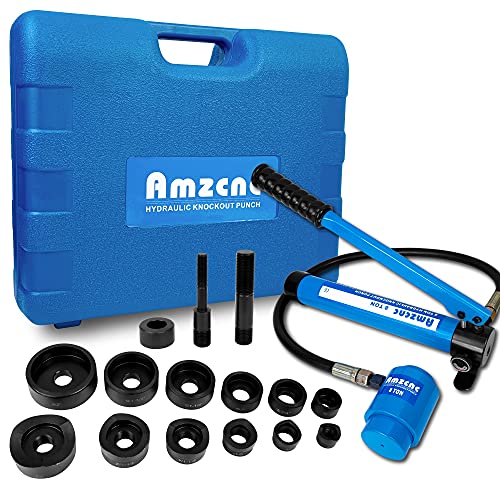 5. AMZCNC SYK-8 Hydraulic Knockout Punch Kit









