What's inside
As an Amazon Associate I earn from qualifying purchases. This post may contain affiliate links at no extra cost to you.
What we cover
Choosing a combo kit for remodel work
A drill and impact driver cover most remodeling jobs: drilling pilot holes, fitting cabinets, driving structural screws, and installing wall anchors. The right kit depends less on the highest advertised torque than on how often you work overhead, what materials you fasten into, and whether you already own batteries from a tool platform.
For a homeowner doing a room or two, a compact 18V or 20V kit is usually enough. Pros working through full-day installs may value larger batteries, faster charging, and a deeper range of compatible tools. Voltage labels are not a useful way to compare brands directly: 18V and 20V Max tools are generally the same nominal battery class.
As an Amazon Associate we earn from qualifying purchases at no extra cost to you.
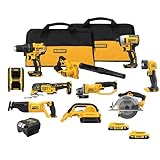


What each tool does—and what it does not
A drill/driver uses a clutch to limit screw depth and a chuck that grips round-shank bits. Use it for drilling holes and for small screws where control matters, such as cabinet hardware. Its clutch helps prevent stripped heads and overdriven screws, but it is not a substitute for choosing the right pilot hole.
An impact driver delivers rotational blows to turn fasteners. It is better suited to long screws and repeated fastening, but it can snap small screws, strip soft material, or drive a fastener too deep if you do not ease off the trigger. Most impact drivers have a hex collet, typically for 1/4-inch hex bits, rather than a standard drill chuck. You can fit hex-shank drill bits, but they may wobble more than bits held in a drill chuck.
Neither tool replaces a rotary hammer for frequent drilling into concrete. For a few small holes in masonry, a hammer drill with the correct masonry bit can work; for repeated holes or larger anchors, a rotary hammer is faster and less punishing.
Combo kit trade-offs
| Kit type | Best fit | Typical compromise |
|---|---|---|
| Compact 18V/20V drill and impact driver | Cabinet installs, trim, punch-list work, and occasional framing | Less runtime and sustained power on large fasteners |
| Full-size drill and impact driver | Frequent drilling, larger bits, and long workdays | More weight and fatigue overhead |
| Brushless combo kit | Regular use and longer jobs between charges | Higher purchase price; not essential for occasional repairs |
| Budget brushed combo kit | Light home remodeling and a tight initial budget | Often less runtime or refinement, and fewer premium platform options |
Features worth paying attention to
Weight matters when you are fastening above shoulder height or drilling overhead. Compare tool weight with the battery installed, not the bare-tool figure. A compact tool with a 2.0Ah battery can be easier to handle than a full-size tool with a heavy 5.0Ah pack. Larger batteries can extend runtime, but they do not turn an undersized drill into a more capable one.
Brushless motors generally use battery energy more efficiently and are common in midrange and premium kits. That can matter if you use the tools all day. For occasional shelf installation or a small bathroom update, a sound brushed kit may be a better value. Check what the box includes: two batteries and a charger are more useful than a bare-tool bargain if you are starting from scratch.
Clutch settings, a two-speed gearbox, and a variable-speed trigger are practical features on a drill. A belt hook and a work light help during installation. Multiple impact-driver modes can make delicate fastening easier, but they do not guarantee a clean result; test the setting on scrap material first.
Choose a battery platform with tools you may actually add, such as a circular saw or oscillating tool. If you already own batteries and a charger in a platform, another compatible kit can be cheaper than switching brands. Compare battery capacity and included charger, not just the tool count.
Which kits to shop
For regular remodel work, start with a brushless 18V drill and impact driver combo kit. Look for a compact drill with a 1/2-inch chuck, two batteries, and a charger. This is a sensible middle ground for mixed drilling and fastening without buying the largest, heaviest tools in a brand’s lineup.
If you work in tight spaces or spend a lot of time installing cabinets and hardware, consider a compact drill and impact driver combo kit. Check whether the drill still has enough capacity for the bits you use. Compact drills can bog down with large hole saws, thick spade bits, or repeated boring in framing lumber.
A budget 18V drill and impact driver combo kit is reasonable for occasional use, especially if the brand offers replacement batteries and the kit includes two packs. The trade-off may be slower charging, more bulk, or less runtime under load. Those limits are manageable for short projects; they become frustrating when the tools run continuously.
Bits, anchors, and avoiding common failures
Match the bit to the material and fastener. Use a sharp twist bit for metal, a wood bit for clean holes in lumber, and a masonry bit for brick or concrete. A dull bit generates heat and wanders; forcing it can overheat the drill or burn the workpiece. For large holes, drill at a suitable lower speed and clear chips rather than leaning hard on the tool.
For screws into framing, pilot holes reduce splitting, especially near board ends. Follow the screw maker’s guidance when available; a pilot hole that is too large weakens the hold, while one that is too small can cause a screw to snap. Start with the drill clutch low enough to avoid stripping the head, then raise it only as needed.
Choose wall anchors for the wall material and expected load. A plastic expansion anchor intended for drywall is not a substitute for a toggle-style anchor or a fastener into a stud when the load is substantial. Drill the specified hole diameter and depth; an oversized hole can let an anchor spin or pull out. When in doubt, locate a stud and fasten into it, or check the anchor’s rated load and installation instructions.