What's inside
As an Amazon Associate I earn from qualifying purchases. This post may contain affiliate links at no extra cost to you.
Choosing between a cordless drill, hammer drill, and impact driver is less about maximum torque and more about matching the tool to the renovation work. A drill handles holes and screws. An impact driver handles stubborn fasteners quickly. A hammer drill adds a pulsing action for masonry. Many home renovators will do best with a two-tool kit, but a single drill may be enough for light furniture assembly, shelving, and occasional repairs.
As an Amazon Associate we earn from qualifying purchases at no extra cost to you.


What we cover
What You Actually Need
A standard cordless drill is the most versatile tool. Its adjustable clutch helps prevent stripped screw heads and crushed drywall, while the variable-speed trigger gives better control when starting a hole. For cabinets, curtain rods, brackets, flat-pack furniture, and wood projects, a drill is usually the first tool to buy. Look for a 1/2-inch chuck if you expect to use larger bits; a 3/8-inch chuck is adequate for most household work.
A hammer drill looks similar but adds a rapid forward pulsing action. That feature helps drill into brick, concrete block, and soft concrete with masonry bits. It does not turn a compact drill into a concrete coring machine. For a few wall anchors, a hammer drill is useful. For repeated holes in a concrete slab or structural concrete, a corded rotary hammer is faster and less frustrating.
An impact driver uses a hex-shaped quick-change chuck and delivers rotational impacts. It drives long screws and lag bolts with less twisting force on your wrist than a drill. It is excellent for deck repairs, framing, cabinet installation, and removing stuck fasteners. It is not the best choice for small screws, delicate hardware, or drilling with ordinary round-shank bits unless you use compatible hex-shank bits.
Drill and Impact Driver Kit Comparison
| Kit type | Best for | Main advantage | Main limitation |
|---|---|---|---|
| Drill only | General household repairs | Most control and broadest bit compatibility | Slower and harder to control with long screws |
| Hammer drill only | Anchors in brick or block | Can drill masonry without a second tool | Usually heavier; hammer mode does not replace a rotary hammer |
| Drill and impact driver kit | Renovation, shelving, framing, and repairs | Separates drilling from fastening for speed and control | Costs more and requires two batteries or careful charging |
| Brushless two-tool kit | Frequent DIY and larger projects | Better runtime, cooler operation, and longer expected service life | Higher purchase price; benefits are limited for occasional use |
Choosing the Right Kit
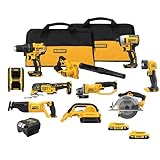
For most renovation work, start with a cordless drill and impact driver kit using an established battery platform. The key benefit is not just the tools in the box; it is being able to use the same batteries with a light, fan, reciprocating saw, or work light later.
Voltage labels are not a perfect performance measure. Most consumer tools sold as 18V or 20V Max use similar battery systems; the “20V” figure is commonly the maximum charged voltage, while 18V is the nominal rating. Pay more attention to battery capacity. A 2.0Ah battery is lighter and fine for hanging shelves. A 4.0Ah or 5.0Ah pack lasts longer for deck screws and large wood bits but adds noticeable weight.
Brushless motors are worthwhile if you regularly drill large holes, drive many fasteners, or work overhead. They generally run cooler and use battery power more efficiently. A cheaper brushed kit is perfectly reasonable for a few weekend projects each year, especially if it includes two batteries and a useful warranty.
Avoid selecting a kit solely by advertised torque. Manufacturers measure torque differently, and peak numbers do not tell you how controllably the tool drives a 1-inch screw. A comfortable grip, a smooth trigger, a bright work light, and a reliable clutch matter more for ordinary home renovation.
Bits, Wall Anchors, and Fasteners
Buy bits for the material, not just a large assortment. A basic set should include brad-point bits for clean wood holes, high-speed-steel twist bits for metal and plastic, and carbide-tipped masonry bits for brick and block. For repeated drilling in masonry, inexpensive bits become dull quickly. Use low speed, moderate pressure, and occasionally clear dust from the hole.
For screws, use a magnetic bit holder and quality Phillips, square, Torx, and slotted bits. A worn Phillips bit cams out and damages the screw head. If the driver repeatedly slips, stop and replace the bit rather than increasing speed. Impact-rated bits are essential in an impact driver because standard bits can twist, fracture, or eject sharp pieces.
Wall anchors fail when the hole is oversized, dusty, or placed in weak material. Plastic expansion anchors are acceptable for light loads in drywall, but they are not a substitute for a stud. For heavier shelves, locate a stud or use a properly rated toggle-style anchor. A rough guide is to keep ordinary drywall-anchor loads well below their package rating—often half the claimed capacity—because the rating depends on wall condition, installation, and load direction.
How to Use the Tools Without Damage
Start screws slowly with the drill clutch set low. Increase the setting only when the clutch slips before the screw reaches its final depth. For drywall, use a stop or careful pressure so the screw head sits just below the paper without breaking it. A broken paper face can reduce holding strength and leaves a weak spot around the anchor.
Use the impact driver for long screws, but begin at low trigger speed and keep the bit aligned with the screw. Stop as soon as the head seats. Continuing to hammer after seating can strip the head, crush soft wood, or snap the screw. For small cabinet screws, the drill��s clutch is usually safer.
When drilling masonry, select hammer mode only for masonry bits. Wear eye protection, keep both hands on the tool, and do not force a small drill to make a deep hole in one pass. For a 1/4-inch anchor hole, drill slightly deeper than the anchor length, then vacuum or blow out the dust before installation. Check for pipes and wiring before drilling into any wall.
A Practical Buying Strategy
If you own no cordless tools, a brushless hammer drill and impact driver kit is the most capable starting point, provided the price fits your budget. If your work is limited to furniture, trim, and wall-mounted accessories, a compact cordless drill kit is cheaper, lighter, and less likely to be overkill.
Whichever kit you choose, budget for a charger, a second battery, suitable bits, and the correct anchors. Those accessories determine whether the tools complete the job cleanly. The best kit is the one with a battery platform you can keep using, a drill that gives you clutch control, and an impact driver you can operate without overdriving every fastener.