What's inside
As an Amazon Associate I earn from qualifying purchases. This post may contain affiliate links at no extra cost to you.
Installing masonry anchors is a small job with a big consequence: an oversized or shallow hole can leave an anchor spinning, pulling out, or sitting proud of the wall. A cordless hammer drill can handle many home and light trade installations, but the right choice depends on the anchor diameter, the masonry, and how many holes you need to make.
As an Amazon Associate we earn from qualifying purchases at no extra cost to you.


What we cover
Choose the right drill for the anchor
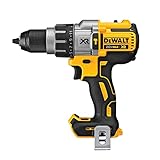
For common plastic plugs and small screw anchors in brick or concrete, a 12V or compact 18V hammer drill is often enough. A full-size 18V or 20V drill is a better fit for repeated holes, larger anchors, and harder concrete. Look for a hammer mode, a chuck that accepts the bit you need, and a clutch you can use when driving screws. A side handle is valuable when drilling larger holes; it gives you better control if the bit binds.
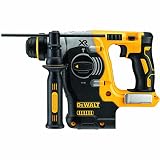
For large-diameter holes, deep holes, or a long run of anchor installations in dense concrete, consider an SDS-plus rotary hammer instead. Its hammering action is more effective than the impact mechanism in a regular hammer drill. The trade-off is a larger, specialized tool and SDS-plus bits. Buying a powerful hammer drill does not make it a rotary hammer.
If you are shopping, compare cordless 18V hammer drills for general-purpose work, or look at cordless SDS-plus rotary hammers for demanding concrete drilling. Check the tool’s stated maximum masonry capacity, but treat it as a limit, not a promise of comfortable drilling at that size.
Which tool suits the job?
| Tool type | Best fit | Main trade-off |
|---|---|---|
| 12V hammer drill | A few small holes in brick or softer masonry | Less reserve for hard concrete and larger bits |
| 18V/20V hammer drill | Mixed home or light trade anchor work | Slower than a rotary hammer in dense concrete |
| SDS-plus rotary hammer | Repeated, deep, or larger holes in concrete | More specialized; needs SDS-plus bits |
Battery voltage alone does not tell you how quickly a drill will bore a hole. A compact drill with a small battery can be convenient, but a larger battery generally lasts longer and may help a tool sustain work. If you already own batteries in a major tool platform, buying a bare tool can save money. For only two or three small holes in brick, a suitable budget hammer drill and a sharp masonry bit are usually adequate; paying for a heavy-duty rotary hammer may not be.
Match the bit to the anchor
Use the diameter specified by the anchor maker. A typical plastic plug may call for a 1/4-inch hole, while larger sleeve or wedge anchors often need a 3/8-inch, 1/2-inch, or larger hole. Do not guess from the screw diameter: the anchor package’s hole size and minimum embedment are the useful numbers. For threaded concrete screws, follow the manufacturer’s bit-size and depth instructions.
Use a carbide-tipped masonry bit rated for hammer drilling. Keep a spare if you expect to hit hard aggregate or drill many holes; a worn bit runs hot, cuts slowly, and can leave a rough, oversized hole. If a bit wanders on a smooth surface, start in rotary-only mode with light pressure, then switch on hammer action once the tip has made a shallow seat.
Drill clean, consistent holes
Measure the required depth and mark the bit with tape, or use a depth stop. Drill perpendicular to the wall, using firm, steady pressure rather than leaning your full weight on the tool. Excess pressure can stall the bit, overheat it, or make the hole crooked. Withdraw the bit occasionally to clear dust, especially in deep holes. Masonry dust slows cutting and can pack tightly enough to block the anchor from seating.
Vacuum or blow out the hole according to the anchor instructions; eye protection is essential, and a suitable respirator is sensible when drilling indoors. Dust left in the hole can prevent a concrete screw from cutting properly or reduce an adhesive anchor’s bond. If the bit suddenly stops, release the trigger and back it out carefully. Do not twist hard against a jammed bit: that can damage the bit, chuck, or wrist.
Avoid common anchor failures
Keep away from the edge of the brick or concrete by the distance specified for the anchor. Drilling too close to an edge can split masonry, particularly with expansion anchors. Check for wiring and plumbing before drilling, and avoid mortar joints when the anchor instructions call for solid brick. If you hit a void, a soft section, or an unexpected obstruction, stop and reassess rather than forcing the anchor into a bad hole.
After drilling, test-fit the anchor before tightening. A plug that drops into the hole without resistance may have an oversized hole; one that will not enter after the dust is cleared may need the correct bit or a little more depth. Do not compensate for a poor fit by overtightening. That can strip the screw, spin the plug, or crack the masonry. For an anchor that must carry a meaningful load overhead or support a safety-critical fixture, follow the anchor maker’s installation and load guidance rather than relying on a drill’s power rating.