What's inside
As an Amazon Associate I earn from qualifying purchases. This post may contain affiliate links at no extra cost to you.
Pine is soft, but it is not impossible to drill cleanly. The usual problems are torn fibers at the exit, a wandering bit on the entry side, and holes that become oversized when a drill is run too fast. The best cordless drill for pine is not necessarily the most powerful one. It should have a controllable trigger, a clutch that works at low settings, and a chuck that holds small bits securely.
As an Amazon Associate we earn from qualifying purchases at no extra cost to you.
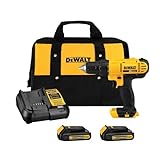

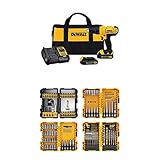

What we cover
What to look for in a cordless drill
For most pine boards, a compact 12V drill is enough. It is lighter, easier to control, and less likely to overpower a small bit. An 18V or 20V drill is useful when you regularly drill holes larger than 1/2 inch, use spade bits, or also drive long screws. More voltage does not automatically produce cleaner holes; it mainly gives you more reserve power.
A two-speed gearbox is more important than a high maximum speed. Use the low range for large bits and controlled starts, and the high range for small twist bits. A useful top speed is roughly 1,500 to 2,000 rpm for small holes. For a 1-inch spade bit in pine, stay around 400 to 700 rpm, depending on the drill and how aggressively it cuts.
Look for a 3/8-inch or 1/2-inch keyless chuck. A 3/8-inch chuck handles the bits used for most household work, while a 1/2-inch chuck is more suitable for large hole saws and heavy-duty drilling. A brushless motor can improve runtime and durability, but it is not required for occasional holes in pine. If the cheaper brushed drill has a smooth trigger and a decent chuck, it can be the better value.
The best drill types for pine boards
| Drill type | Best use in pine | Advantages | Trade-offs |
|---|---|---|---|
| Compact 12V drill | Pilot holes, screws, holes up to about 1/2 inch | Light, controllable, inexpensive kits | Less power for large bits and thick stock |
| 18V or 20V drill/driver | General woodworking and larger holes | More torque, wider bit range, longer runtime | Heavier and easier to overdrive small bits |
| Hammer drill | Occasional masonry plus normal wood drilling | One tool for wood and light concrete work | Bulkier; hammer mode is unnecessary for pine |
| Right-angle drill | Joists, cabinets, and restricted spaces | Fits where a standard drill cannot | More expensive and less versatile as a first drill |
For a first purchase, a 12V cordless drill driver kit is the sensible choice for light work. Choose an 18V or 20V cordless drill driver instead if you expect to use hole saws, spade bits, or long structural screws. A hammer drill is fine if it is already in your tool collection, but leave the hammer function off in wood.
Choose the right bit for a clean hole
For small holes, use a sharp brad-point bit. Its center spur keeps the bit from skating, and the outside spurs score the wood fibers before the cutting edges remove material. This normally gives a cleaner entry than a general-purpose twist bit.
Use a standard twist bit when the hole will be hidden or when you need a broad size range. Keep it sharp and start slowly. Dull twist bits rub instead of cutting, which creates heat, enlarges the hole, and can leave a ragged exit.
For larger holes, a sharp spade bit is fast and inexpensive, but it commonly splinters the back of the board. A hole saw gives a cleaner, more controlled cut for wide holes, although it cuts slowly and can clog with chips. For dowels or visible joinery, a Forstner bit produces a flat-bottomed, clean-sided hole but needs more torque and costs more.
If you need consistently clean woodworking holes, a brad-point wood drill bit set is usually a better upgrade than buying a more powerful drill.
How to drill without tearing the pine
Mark the hole accurately, then clamp the board to a stable surface. Put a scrap board directly under the exit point. The scrap supports the fibers as the bit breaks through and is the simplest way to prevent blowout.
Set the drill to low speed for large bits and use a light, steady feed. Start with the bit square to the surface. Once the cutting edges are engaged, increase pressure only enough to keep the bit cutting. Do not force it until the motor bogs down. Excessive pressure can bend a small bit, burn the wood, or make the exit hole burst.
For a particularly clean hole, drill from one side until the center spur or pilot point just appears on the underside. Stop, turn the board over, and finish from the other side using that small opening as your guide. This avoids asking the bit to tear through the last layer of unsupported fibers.
When drilling a pilot hole for a screw, match the bit to the screw’s solid shank, not the outside diameter of its threads. In soft pine, a pilot hole slightly smaller than the shank is often enough. For a screw with a 1/8-inch shank, a 3/32-inch or 7/64-inch bit may work, but test on scrap because pine density varies.
Common mistakes and useful fixes
A hole that is too large usually comes from a dull bit, a loose chuck, or allowing the drill to wobble. Tighten the chuck firmly by hand and check that the bit runs true before drilling. If the hole is only slightly oversized, the fastener may still work; a loose dowel or wall anchor, however, may fail.
Burn marks mean the bit is rubbing, the speed is too high, or chips cannot escape. Withdraw the bit occasionally to clear chips, especially in deep holes. If the bit still smokes, stop and sharpen or replace it.
Splintering at the exit is not normally a drill-power problem. Use backing wood, a brad-point bit, or the two-sided method. Painter’s tape can reduce minor surface tear-out, but it will not replace support underneath the board.
What is worth paying for
Spend extra on a drill with a smooth variable-speed trigger, a reliable chuck, and batteries shared with tools you already own. Brushless construction and a metal chuck are useful for frequent work, but neither guarantees a clean hole. The cheapest drill is acceptable for a few pilot holes if the bit is sharp and the work is supported. For regular DIY projects, a compact drill kit plus quality wood bits is a more practical combination than a high-torque drill paired with bargain bits.