What's inside
As an Amazon Associate I earn from qualifying purchases. This post may contain affiliate links at no extra cost to you.
Clean holes in wood depend on more than motor power. Bit sharpness, speed control, chuck quality and how well the drill stays aligned all matter. A powerful drill can still tear the exit side of a board or burn a hole if it is used with the wrong bit and speed.
For most home woodworking, a compact 18V or 20V cordless drill with a two-speed gearbox is the best starting point. Choose a brushless model if you drill frequently or use large bits, but a cheaper brushed drill is perfectly adequate for occasional shelves, pilot holes and furniture repairs.
As an Amazon Associate we earn from qualifying purchases at no extra cost to you.


What we cover
What to look for in a cordless drill
A useful drill for clean wood holes should have a variable-speed trigger, a mechanical two-speed gearbox and a clutch. Low gear, usually around 0–500 rpm, provides torque for large bits. High gear, often around 0–2,000 rpm, is better for small holes and screws. A 1/2-inch chuck accepts a wider range of woodworking bits; a 3/8-inch chuck is lighter and sufficient for most small household jobs.
Clutch settings prevent the drill from driving screws too deeply, but they do not control drilling torque. For drilling, use the drill setting rather than a numbered clutch position. A side handle is useful when boring with a 1-inch or larger bit, although it adds size and weight.
Battery capacity affects balance and runtime. A 2.0Ah battery keeps a compact drill light. A 4.0Ah or 5.0Ah pack runs longer but can make a small drill feel top-heavy. If you already own batteries in a tool platform, staying with that platform is usually cheaper than switching brands for a small difference in drilling performance.
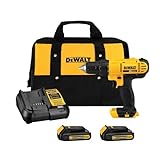
These brushless cordless drills are a good fit for repeated woodworking, deck work and renovation. For occasional use, compare the complete kit price rather than the tool-only price.
Which drill type suits the job?
| Drill type | Best use | Advantages | Limitations |
|---|---|---|---|
| Compact 12V drill | Pilot holes, cabinet hardware, small bits | Light, easy to control, less tiring | Limited torque for large hardwood holes |
| 18V or 20V drill | General softwood and hardwood drilling | Best balance of power, size and runtime | Heavier than a 12V model |
| High-torque drill | Large augers, hole saws and thick hardwood | Strong low-speed performance | Heavier; can twist suddenly if the bit catches |
| Hammer drill | Occasional masonry holes plus wood drilling | Versatile if you also drill brick or block | Hammer mode adds no benefit in wood and often costs more |
A standard 12V cordless drill kit is enough for holes up to roughly 1/2 inch in pine, spruce and other softwoods. For hardwood, a full-size 18V or 20V drill gives more reserve power and is less likely to stall. Do not buy a hammer drill solely for cleaner wood holes. Turn the hammer function off; its impact mechanism can make the drill vibrate and damage the hole entrance.
Use the right bit for a clean hole
Brad-point bits are the best general-purpose choice for clean holes in solid wood. Their center point stops the bit from wandering and their outer spurs score the grain before the cutting edges remove material. A quality set covering 1/8 to 1/2 inch handles most cabinet, shelving and furniture work.
Twist bits work in wood, but the tip can wander and the flutes may tear the exit side. They are acceptable for rough holes or when you already have a set, but they are not the first choice for visible work. For holes larger than about 1/2 inch, use a Forstner bit for a flat-bottomed hole, a spade bit for fast rough work, or an auger bit for deep holes.
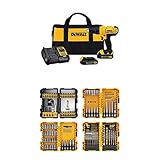
Spade bits are inexpensive and fast, but they commonly splinter the back of a board. Hole saws are useful for cable openings and pipe clearance, though they generate more heat and require a steady drill. These brad-point and Forstner bit sets cost more than basic twist-bit sets but usually produce noticeably cleaner edges.
How to drill clean holes
Mark the center with a pencil, then place the bit’s center spur on the mark. Clamp the workpiece securely. Holding a board by hand is a common cause of tear-out because the bit can grab the wood as it exits.
Use high speed for small bits, generally up to 1/4 inch. Reduce speed for larger bits: medium speed works for many 3/8- to 1/2-inch holes, while large Forstner bits, hole saws and augers usually need low gear. The bit manufacturer’s speed chart is more reliable than a universal rule. If the bit smokes, squeals or leaves a darkened rim, stop and reduce speed or clear the chips.
For the cleanest exit, clamp a scrap board tightly behind the workpiece. The scrap supports the fibers as the bit breaks through. Another method is to drill from one side until the center point just appears on the back, then finish from the opposite side. This takes longer but avoids most blowout on finished surfaces.
Keep the drill square to the work. A simple drilling guide helps with straight holes, especially in hardwood or when installing dowels. Feed steadily without leaning heavily on the drill. Excessive pressure compresses the surface and makes the bit cut unevenly; too little pressure can create heat instead of chips.
Hardwood-specific problems
Dense species such as oak, maple and beech require sharper bits and more patience than pine. Dull bits rub rather than cut, producing heat, burn marks and oversized holes. If a bit needs force to advance, replace or sharpen it. For a hole deeper than the bit’s cutting length, withdraw the bit every few seconds to clear chips.
Large bits can stall even a strong cordless drill. Use low gear, hold the drill with both hands and use the side handle when supplied. A bit that catches can rotate the drill body violently and injure your wrist. For repeated holes larger than 1 inch, a corded drill press or drill press attachment may give better accuracy than a handheld cordless tool.
A practical buying recommendation
Buy a compact 12V drill if your work is mainly pilot holes, handles, hinges and small screws. Choose an 18V or 20V brushless drill for mixed household work, hardwood, hole saws and regular construction. Spend more on a better bit set before paying extra for extreme torque; clean cutting edges have a larger effect on hole quality than headline torque numbers.
If you need masonry capability as well, a 20V brushless hammer drill kit is a sensible combination tool, provided it has a genuine mechanical hammer-off setting. If your work is only wood, the lighter standard drill is usually the better tool.
Finally, match the battery to the job and keep two batteries available if you drill frequently. One can charge while the other works. That convenience often matters more than a small difference in maximum speed or torque.