What's inside
As an Amazon Associate I earn from qualifying purchases. This post may contain affiliate links at no extra cost to you.
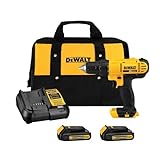
Hardwood cabinet doors and face frames punish sloppy drilling. A weak drill can stall in dense maple, while an overly aggressive setting can pull a bit through the veneer and leave a chipped exit hole. For clean holes, the best cordless drill is usually a compact 12V or 18V/20V drill-driver with a good clutch, variable speed, and enough control to run a sharp brad-point or Forstner bit slowly.
As an Amazon Associate we earn from qualifying purchases at no extra cost to you.


What we cover
What to look for in a cordless drill
Skip the hammer function for cabinet work. Hammer drills are useful for masonry, but the hammering action adds vibration and provides no benefit in wood. A standard 12V cordless drill-driver is often the easiest tool to control. It is lighter, shorter, and less likely to twist your wrist when drilling near a cabinet edge.
An 18V or 20V drill-driver makes more sense for frequent installation work, larger holes, or long runs of screws. It has more reserve power, but the extra weight matters when you are holding the drill overhead or trying to keep a bit perfectly square. Brushless motors generally run cooler and deliver better battery life, though a brushed drill can still make excellent cabinet holes if its chuck runs true and its speed control is smooth.
Look for a two-speed gearbox. The low range should be used for larger bits and controlled boring; the high range is useful for small pilot holes and screws. A keyless chuck that grips straight-shank bits firmly is more important here than headline torque.
| Drill type | Best use | Main advantage | Trade-off |
|---|---|---|---|
| Compact 12V drill-driver | Hinges, pulls, pilot holes, small cabinet hardware | Light and easy to control | Less capacity for large holes |
| 18V/20V drill-driver | Repeated installation and larger holes | More power and longer runtime | Heavier and easier to overdrive |
| Hammer drill | Wood plus occasional masonry | One tool for multiple materials | Usually bulkier; hammer mode is useless in wood |
| Impact driver | Driving cabinet screws, not boring clean holes | Excellent fastening power | Poorer speed control and greater risk of tear-out |
Choose the right bit
For clean holes in hardwood, a sharp brad-point bit is the best general choice. Its center point starts accurately, and the outer spurs score the perimeter before the cutting edges remove material. Use brad points for holes up to roughly 1/2 inch, such as knobs, pulls, shelf-pin holes, and cable pass-throughs.
For larger flat-bottomed holes, use a Forstner bit. It can bore cleanly across the surface and make accurate overlapping holes, but it creates much more resistance than a twist bit. Run it in low gear, keep the drill square, and clear chips frequently. A dull Forstner bit can generate enough heat to scorch the cabinet in seconds.
A regular twist bit is acceptable for small pilot holes, especially in a pinch, but its point can wander on finished wood. A countersink bit is useful when cabinet screws must sit flush. Forstner and brad-point bits are available in woodworking bit sets, but cheap sets vary widely. For occasional cabinet work, a small set of sharp, correctly sized bits is better than a large assortment of mediocre ones.
Speed and clutch settings that prevent damage
Use high speed for small bits around 1/8 to 1/4 inch, but reduce speed as bit diameter increases. For a 1/2-inch brad point, moderate speed is safer; for a 1-inch Forstner bit, use low gear and a light trigger. Exact rpm varies by drill, but the practical rule is simple: if the bit squeals, smokes, or leaves a dark ring, slow down and let it cut rather than forcing it.
Set the clutch low when driving screws into cabinet material. Start around a middle setting and increase only if the screw stops short. The clutch does not control drilling torque when the drill is set to the drill symbol, so switch back to a numbered clutch setting for fastening. A screw driven too deeply can crush fibers, strip a hinge mounting hole, or break through a thin door.
For larger holes, a side handle is worthwhile on an 18V drill. A bit can catch when it exits the back of a panel, and the drill may rotate suddenly. Keep both hands on the tool and remove the battery before changing bits.
How to drill clean holes in hardwood cabinets
Mark the center with a sharp pencil, then make a small indentation with an awl or the tip of the bit. Clamp a scrap block tightly against the exit side whenever you can. The backing block supports the fibers and greatly reduces blowout, especially in cabinet doors and thin face frames.
Place masking tape over the mark if the finish is prone to chipping. Tape is not a substitute for a sharp bit, but it helps hold surface fibers together. Begin slowly until the center point is established, then increase speed only enough to maintain a clean cut. Do not push hard; excessive pressure bends the bit, enlarges the hole, and can split a narrow frame.
When the center point is about to break through, stop and inspect the back. If possible, finish the hole from the opposite side using the center mark left by the bit. This prevents the classic crescent-shaped blowout around the exit. For a through-hole in a door, drilling halfway from each side is usually cleaner than forcing one pass.
When an impact driver belongs in the setup
An impact driver is excellent for long cabinet screws, mounting cabinets to studs, and driving screws where a drill clutch would stall. It is not the first choice for clean boring. Its pulsing impact mechanism makes delicate bit control harder, and a hex-shank bit can wobble more than a quality drill chuck.
If you need both tools, pair a compact drill-driver with an cordless impact driver. Use the drill for every visible hole and the impact driver for structural fastening. For a one-tool purchase, choose the drill-driver unless your work is mostly driving long screws.
When the cheaper drill is fine
You do not need a premium drill for six handle holes or a pair of hinge repairs. A basic brushed 12V drill with a true-running chuck, two speeds, and a usable clutch is sufficient. Spend the savings on sharp bits, a depth stop, and a small clamp. Upgrade to a brushless 18V/20V tool when you drill large holes regularly, install many cabinets, or already own batteries in that platform. The bit, backing support, and drilling technique usually affect the finished hole more than a modest difference in motor power.