What's inside
As an Amazon Associate I earn from qualifying purchases. This post may contain affiliate links at no extra cost to you.
What we cover
Choosing an impact driver for plywood sheathing
For fastening plywood sheathing, a cordless impact driver is useful when you have many screws to install or need to drive them into framing without leaning hard on the tool. Its rapid rotational impacts help keep the bit turning under load. That does not make it automatically better than a drill: an impact driver can overdrive screws, damage plywood faces, and snap small bits if you use too much force.
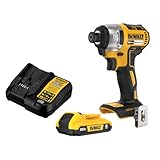
For occasional repairs or a small shed, a basic 12-volt impact driver can be enough. For regular sheathing work, a 18- or 20-volt tool offers more reserve and usually a broader battery lineup. Compare 18-volt cordless impact drivers by their speed settings, trigger control, battery cost, and included bits—not just maximum torque claims.
As an Amazon Associate we earn from qualifying purchases at no extra cost to you.



Features that matter on the job
Speed control: A variable-speed trigger is essential, and multiple speed modes are a real advantage. Lower speed makes it easier to seat a screw without burying the head. Some tools offer a dedicated fastening mode that slows or stops the driver near the end; useful, but still test it on scrap because screw length, wood density, and framing position change the result.
Battery and weight: A compact 2.0 Ah battery keeps the tool lighter overhead. A 4.0 Ah battery can reduce swaps during a large roof or wall job, but adds weight. If you already own batteries in a platform, staying with that brand is often cheaper than buying a bare tool and a new charger system.
Bit holder and lighting: A standard 1/4-inch hex collet accepts common driver bits. A bright work light helps in dim corners, but it will not fix poor alignment. Use a well-fitting bit—typically a quality #2 square or star bit when that matches the screw head. A loose bit cams out, rounds the recess, and can scar the plywood.
Impact driver, drill, or cheaper tool?
| Tool | Best use | Trade-off |
|---|---|---|
| 12-volt impact driver | Small projects and occasional fastening | Lighter and often less expensive; may slow on long screws or repeated heavy work |
| 18- or 20-volt impact driver | Large sheathing jobs and general construction fastening | More capable, but heavier and costlier with batteries |
| Drill/driver | Careful fastening, pilot holes, and mixed drilling work | Offers precise clutch control; may stall more readily on long screws |
| Hammer drill | Masonry drilling when fitted with the right bit | Its hammer function is for drilling masonry, not driving sheathing screws |
A drill/driver with an adjustable clutch is often the better choice if you are installing only a few screws and want fine control. The cheaper option is fine when the job is small, the framing is accessible, and you already own a compatible drill. A hammer drill does not provide a useful advantage for plywood fastening; switch off hammer mode if using one as a regular drill/driver.
Match the driver to the fastener
Choose screws intended for structural wood sheathing and follow the plans, local code, and fastener manufacturer’s instructions. Screw length depends on panel thickness, framing, and the required penetration; do not assume one length suits every assembly. For a common 1/2-inch panel, the screw needs to pass through the plywood and engage the framing adequately, but the project specification should set the actual fastener.
Use corrosion-resistant fasteners when the exposure or project calls for them. Drywall screws are a poor substitute: they are brittle and are not designed for structural sheathing connections. For a larger selection, search for structural wood screws for sheathing, then verify the product’s approved use and dimensions before ordering.
How to drive screws without damaging the panel
Set panels on properly spaced framing and confirm the specified edge and field fastening pattern before driving. Keep the screw perpendicular to the panel and start slowly. Once the head approaches the surface, ease off the trigger. The goal is a seated head that holds the panel firmly—not a deep crater or torn face veneer.
Overdriving is a common failure. A screw head buried below the surface can crush the plywood layers and reduce holding strength; too little drive can leave the head proud and interfere with the next layer. If the driver repeatedly sinks screws too far, choose a lower speed mode, use shorter trigger pulls, or switch to a drill with a clutch. Test the setup on an offcut of the same panel before starting the production run.
If a screw spins without tightening, stop rather than continuing to hammer it. It may have missed the framing, stripped the wood, or entered damaged material. Remove it, locate the framing, and install a replacement at the location required by the plan. Do not simply add screws wherever convenient, especially near panel edges, where splitting and inadequate edge distance can become problems.
What to buy for your workload
For a one-time repair, buy or borrow a basic driver that shares batteries with tools you already own; spending extra for high torque is unlikely to improve the result. For repeated framing or full-sheet work, choose an 18- or 20-volt impact driver with at least two useful speed settings and a comfortable grip. A kit may be better value if you also need batteries and a charger.
Before committing, compare the cost of replacement batteries and check whether the tool’s low-speed control suits your fastening style. A powerful driver can save time, but careful screw selection, a sound bit, and consistent depth matter more than the highest advertised torque number.