What's inside
As an Amazon Associate I earn from qualifying purchases. This post may contain affiliate links at no extra cost to you.
What we cover
The 5 Best Demolition Hammers for Concrete and Tile Removal
For thin-set and tile removal, choose a lighter demolition hammer with adjustable impact and effective vibration control; for breaking a slab, choose a heavier corded breaker with roughly 40 joules or more of impact energy. The right pick depends less on the biggest number on the box than on whether you need to skim material from a surface or fracture concrete through its depth.
Five picks by job
1. Bosch 11335K — best for frequent slab breaking
This corded 35-pound-class breaker is rated at 34 ft-lb (about 46 J) of impact energy. Its substantial force suits thick concrete, trenching, and sustained demolition where a compact tool would make slow progress. The trade-off is weight: it is tiring to control for overhead work or delicate tile removal, and it requires a heavy-duty extension cord and a suitable power supply. Choose it for production slab work, not routine thin-set cleanup.
As an Amazon Associate we earn from qualifying purchases at no extra cost to you.
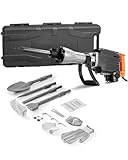
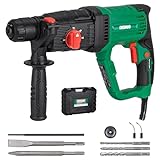


2. Makita HM1810X3 — best for large, demanding jobs
At about 70 pounds and rated at 63 J, the HM1810X3 is in a different class from handheld breakers. Its wheeled design and AVT vibration-control system make it more manageable for floor-level breaking than its size suggests, but it is still a major tool to transport and position. This is the pick for large slabs and extended professional work—not a practical choice for a small bathroom or occasional repair.
3. Bosch 11316EVS — best balance for general concrete work
This corded 25-pound-class breaker provides 12.4 ft-lb (about 17 J) of impact energy, with variable-speed control and vibration reduction. It offers a useful middle ground for breaking concrete, removing masonry, and tackling substantial floor demolition without moving up to a 35-pound tool. It can remove tile, but use a wide tile chisel and low, controlled angles; its mass and force make it easier to gouge a slab or damage a weak subfloor than a lighter tool.
4. Makita HM0870C — best for controlled renovation work
This roughly 12-pound corded demolition hammer is rated at 8.4 J and has variable-speed control and vibration-reducing features. Its lighter weight and more manageable impact make it a better fit than a heavy breaker for vertical work, localized concrete removal, and renovation jobs where control matters. It can handle stubborn tile and mortar with the right chisel, though removing a thick slab with it will take longer.
5. DEWALT D25911K — best for tile and surface cleanup
This 12-pound-class corded tool delivers about 5.5 J of impact energy and includes a SHOCKS vibration-control system. The lower energy is an advantage when the goal is to lift tile, scrape mortar, or chip a limited area without bringing a heavy breaker to bear. It is not the choice for fast slab demolition. Check the exact kit and chuck configuration before buying so the chisels you need are compatible.
Compare the numbers that matter
| Model | Approx. tool weight | Impact energy | Best fit |
|---|---|---|---|
| Bosch 11335K | 35 lb | 34 ft-lb / 46 J | Heavy slab breaking |
| Makita HM1810X3 | 70 lb | 63 J | Large floor-level demolition |
| Bosch 11316EVS | 25 lb | 12.4 ft-lb / 17 J | General concrete and masonry work |
| Makita HM0870C | 12 lb | 8.4 J | Controlled renovation and localized removal |
| DEWALT D25911K | 12 lb class | 5.5 J | Tile, thin-set, and light chipping |
Weights and impact figures are manufacturer-published specifications; included accessories and regional versions can affect listed weight or kit contents. Joules measure energy per blow, not how quickly a job will finish by themselves. Chisel shape, material, operator control, and whether the tool can maintain contact all matter.
Choose by surface, not by “maximum power”
- Tile over a sound slab: Start with a tile or wide scaling chisel in the 5–9 J class. Hold it nearly flat to the surface and let the edge get under the tile; avoid driving the point into the concrete.
- Thick mortar or stubborn tile: Move to a controlled 8–17 J tool if a lighter model stalls. Use short passes and check frequently for damage to the slab, heating pipes, or embedded services.
- Concrete curbs and localized demolition: A 12–25-pound class tool gives more breaking ability while remaining usable in tighter areas. Confirm that you can safely manage its reaction force and weight.
- Thick slab or repeated production work: Consider 35 pounds and above, or a wheeled floor breaker for larger jobs. More mass and impact can speed fracture, but are awkward and potentially destructive for finish removal.
A quick sizing check: if a 12-pound tool removes 100 square feet of tile but struggles to break the underlying slab, that is not a reason to use it harder. Keep the lighter tool for the finish layer and rent or buy a higher-energy breaker for the concrete. Matching separate tools to separate layers can be faster and reduce accidental substrate damage.
Vibration, chisels, and ownership costs
Vibration control reduces some transmitted vibration, but it does not make long sessions risk-free. Take breaks, keep a secure grip, and follow the tool manual’s operating guidance. For floor work, a well-balanced tool with effective vibration reduction can be more comfortable and controllable than a lighter model with a harsh, high-frequency feel. Compare the complete tool and handle system rather than relying on a single vibration feature name.
Budget for consumables and setup, not just the tool. Tile chisels and scaling chisels wear at their cutting edges; pointed chisels can mushroom or deform, especially after misuse. Use the chuck type specified for the hammer, inspect chisels before each session, and replace damaged bits rather than striking them. Corded models avoid battery-runtime limits but need a properly rated cord, kept clear of the chisel and debris. For occasional slab work, rental may cost less than owning, storing, and maintaining a heavy breaker.
After use, unplug the tool, brush dust from vents, wipe it down, and inspect the cord, plug, chuck, and housing. Concrete dust can shorten tool life if it builds up around cooling openings. Do not grease a bit or chuck unless the manual calls for it; the wrong lubricant or excess grease can attract grit.
Bottom line
For tile and thin-set removal, favor the DEWALT D25911K or Makita HM0870C for control and lower tool weight. For a versatile renovation breaker, the Bosch 11316EVS offers a step up in energy. For repeated slab work, choose the Bosch 11335K; for large floor demolition, the much heavier Makita HM1810X3 is the specialist option. If you are unsure what lies beneath the finish, start with the least aggressive tool and expose a small test area before committing to a heavier breaker.