What's inside
As an Amazon Associate I earn from qualifying purchases. This post may contain affiliate links at no extra cost to you.
Composite decking is less forgiving than ordinary lumber when you drive screws. A mismatched bit can cam out, chew up the screw head or leave a ragged opening in the board. The right choice depends on the screw’s drive style and the driver you’re using—not on the decking material alone. For most installations, a fresh, correctly sized bit and a drill or impact driver with adjustable speed matter more than an expensive bit set.
As an Amazon Associate we earn from qualifying purchases at no extra cost to you.



What we cover
Match the bit to the screw
Check the screw packaging before buying bits. Composite-decking screws commonly use Torx-style star drives, but sizes vary; some use square or Phillips drives. A star bit that looks close is not necessarily the right size. If it fits loosely or rocks in the recess, it can slip under load and round the screw head. Use the bit size specified by the screw maker, and seat it fully before driving.
For a job with many screws, buy a small pack of the specified size rather than relying on one bit. A worn tip is more likely to cam out, especially in a partly stripped recess. Keep a spare within reach and replace the bit when its edges look rounded or it no longer holds the screw securely.
Which bit type to buy
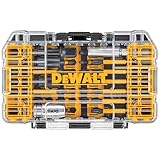
For star-drive deck screws, a standard 1-inch insert bit is inexpensive and works well in a drill or in a magnetic bit holder. An impact-rated 1-inch bit is a sensible choice for an impact driver: it is designed to tolerate repeated impacts, though it will still wear out. If you want fewer bit changes, a longer 2- or 3-inch bit can reach recessed or obstructed fasteners without a holder. Longer bits are less convenient in tight spaces and can wobble more if they are poorly made.
For a small deck repair, a basic bit matching the screw is usually enough. Spending more makes sense when driving hundreds of screws, using an impact driver throughout, or needing a bit that stays put in a magnetic holder. Consider impact-rated deck-screw driver bits if you’re using an impact driver for a full installation.
Bit options compared
| Bit option | Best fit | Trade-off |
|---|---|---|
| Standard insert bit | Drill, occasional repairs, lower-cost jobs | May wear faster under repeated impact use |
| Impact-rated insert bit | Impact driver and larger screw counts | Costs more; still needs replacement when worn |
| Long driver bit | Recessed screws or hard-to-reach spots | Can wobble more and is awkward in confined areas |
| Magnetic bit holder with insert bit | Fast bit changes and holding screws in place | Adds length and may not fit every tight location |
Drill or impact driver?
A cordless drill with a clutch is often easier to control than an impact driver. Start with a low clutch setting and moderate trigger pressure, then increase only if the screw stalls. The clutch can reduce overdriving, but it is not a precise depth stop: screw length, board density and the tool’s settings all affect the result.
An impact driver is useful for long screws or a high screw count, but its fast impacts can drive a head below the surface before you react. Use the lowest practical speed and short trigger pulls as the screw approaches flush. If your impact driver has speed modes, begin in a lower mode. For either tool, the goal is a screw head seated as the decking instructions specify—not buried deeply enough to crush the board around it.
Pre-drilling and clean results
Follow the decking and screw manufacturers’ instructions on pre-drilling, edge distances and fastening pattern. Some approved screw systems are designed to install without a pilot hole; others call for one in particular locations or conditions. Pre-drilling may help reduce splitting near board ends, but an undersized or crooked pilot hole can create its own problems. Do not assume that one rule applies to every composite product.
Keep the driver aligned with the screw. A bit held at an angle puts force on one side of the recess, increasing the chance of cam-out. Clear plastic shavings from the hole and bit as you work; packed debris can stop the screw from seating cleanly. If a screw begins to strip, stop rather than leaning harder on the trigger. A fresh bit and a correctly seated replacement screw are usually easier than trying to rescue a damaged head.
A practical buying checklist
Before ordering, confirm the screw’s drive type and size, whether your tool is a drill or impact driver, and whether you need a short bit or extra reach. A small decking screw bit set can be useful if you have more than one drive size on hand, but a set is unnecessary if all your fasteners use the same recess. Check that replacement bits are sold in the size you need.
If you’re driving screws with a drill, a magnetic 1/4-inch hex bit holder can speed up changes and help keep screws on the tip. It is optional, not a requirement; skip it if the screw is already easy to start or the added length prevents access.
The reliable setup is simple: the exact bit size called for by the screw, a sharp spare, and a tool speed you can control. Pay attention to the first few screws, then keep the same seating depth and alignment across the board. That approach prevents more damaged heads and rough holes than buying the most expensive bit on the shelf.