What's inside
As an Amazon Associate I earn from qualifying purchases. This post may contain affiliate links at no extra cost to you.
What we cover
Choose for the hole, not the word “hammer”
Mounting a bracket to brick, block, or concrete usually calls for a hammer drill, a masonry bit, and an anchor matched to the load. A standard cordless drill can bore small holes in soft brick, but it will be slow in dense concrete and may overheat. For a few light-duty holes, buying the biggest tool on the shelf is unnecessary. For repeated holes, overhead work, or hard concrete, the right drill saves time and helps keep holes to size.
For ordinary bracket work, a 18V or 20V cordless hammer drill with a 1/2-inch chuck is a practical starting point. The hammer mechanism adds short, rapid impacts while the bit rotates. It is not the same as a rotary hammer, which uses a different mechanism and is substantially more effective in hard masonry. If the bracket needs several large holes in concrete, a compact rotary hammer may be a better purchase than a premium hammer drill.
As an Amazon Associate we earn from qualifying purchases at no extra cost to you.
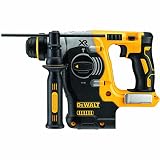


Compare the main options
| Tool | Best for | Trade-off |
|---|---|---|
| Standard cordless drill | Small holes in soft brick; occasional light jobs | Slow in hard masonry; can stall or overheat |
| Cordless hammer drill | Common 1/4- to 1/2-inch anchor holes in brick or block | More vibration and noise than a standard drill; less effective in hard concrete than a rotary hammer |
| Corded hammer drill | Long sessions where access to an outlet is easy | Cord management; usually less convenient on ladders or outdoors |
| Rotary hammer | Frequent holes, larger diameters, or hard concrete | Heavier and costlier; excessive for a couple of small holes |
If you need a cordless tool for regular bracket installation, compare 18V cordless hammer drills with 1/2-inch chucks. Look for a side handle, a hammer-mode setting, and a clutch that works reliably in ordinary drilling mode. Battery capacity matters for a long day, but a larger battery adds weight; a 2.0Ah or 4.0Ah pack is enough for many occasional jobs.
Features that matter on site
A side handle is useful when a bit binds, particularly with larger holes. Hold the drill with both hands and brace yourself; do not depend on a clutch to protect your wrist. A belt hook and compact body help on a ladder, but neither compensates for poor balance. If you already own batteries in a tool platform, staying with that platform may be more economical than buying a different brand’s kit.
Check that the drill has a clear hammer setting and a variable-speed trigger. Start slowly to establish the hole, then increase speed while keeping steady pressure. Hammer mode is for masonry, not tile: percussion can crack tile. Drill through tile with hammer mode off and a suitable tile bit, then switch to a masonry bit and hammer mode only after reaching the masonry behind it.
For hard concrete or a large number of holes, consider a cordless SDS-plus rotary hammer. Its dedicated shank system does not accept ordinary round-shank bits without an adapter, and it is heavier than most hammer drills. The extra weight and cost are worthwhile when a hammer drill takes too long or repeatedly stalls—not for a single small hole in soft brick.
Bits and anchors are part of the system
Use a carbide-tipped masonry bit sized to the anchor maker’s instructions. A bit that is even slightly oversized can leave an anchor loose; an undersized hole can make installation difficult or damage the anchor. Common plastic plugs often use holes around 1/4 inch (6 mm), but do not assume that size works for every plug or load. Follow the packaging, including the specified embedment depth.
For a light bracket in solid brick, a properly sized masonry screw or expansion anchor may be suitable. For heavier loads, hollow block, or questionable masonry, the anchor choice needs more care. A generic plastic plug is not a safe substitute for a rated anchor in a load-bearing application. Check the anchor’s published load rating and the condition and type of masonry. When failure could cause injury or damage, follow the bracket and anchor manufacturer’s requirements or get qualified help.
Shop by the fastening system, not just by a large assortment count: masonry bits and concrete anchors for brackets should match the hole diameter and substrate. Keep bits sharp. A blunt bit produces heat and dust, drills slowly, and is more likely to wander.
Drill straight, clean holes
Mark the hole positions and check for hidden wiring and plumbing before drilling. Use a detector where appropriate, and avoid drilling blindly near outlets, switches, taps, or pipe runs. Wear eye protection and a suitable dust mask; masonry dust is hazardous. A vacuum attachment or dust collection reduces mess, but does not replace protective equipment.
Start the hole with the drill held square to the surface. A small pilot hole can help with accuracy if the bit maker permits it, but many anchor holes can be drilled directly with the correct bit. Keep the bit straight, use moderate pressure, and withdraw it periodically to clear dust. Excess pressure does not make the hammer mechanism work better; it can slow the bit, heat it, and enlarge or damage the hole.
Stop if you hit steel or the bit suddenly stops advancing. Do not force the drill or switch to a larger bit to hide the problem. You may have reached reinforcement, a stone, or an unsuitable spot. Check the bracket layout and anchor instructions before moving the hole, especially near an edge. A hole too close to an edge can split brick or break out concrete.
When a cheaper drill is enough
If you are mounting one small bracket into soft brick and already own a decent standard drill, try a sharp masonry bit at low speed. It may do the job without a new tool. Expect it to be slower, and stop if the drill overheats, the bit wanders, or progress becomes negligible. For a few occasional holes in ordinary masonry, a basic cordless hammer drill is usually the sensible buy; reserve a rotary hammer for hard concrete, larger holes, and repeated work.