What's inside
As an Amazon Associate I earn from qualifying purchases. This post may contain affiliate links at no extra cost to you.
What we cover
What repeated small holes demand
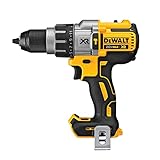
For a run of holes in concrete for wall plugs, cable clips, or light-duty brackets, a compact cordless hammer drill is often the practical choice. It is easier to handle than a rotary hammer and can drill common 1/4- to 3/8-inch holes without the bulk or cost of a larger tool. The trade-off is speed: as the hole count, diameter, or concrete hardness rises, a rotary hammer usually finishes the work with less strain on the tool and the person holding it.
“Repeated” matters. One 1/4-inch hole in a concrete block is easy work for many drills. Dozens of holes, especially in poured concrete or aggregate, expose weak batteries, dull bits, poor side handles, and tools that are being pushed too hard. Pick for the actual bit diameter and hole count, not just the word “hammer” on the box.
As an Amazon Associate we earn from qualifying purchases at no extra cost to you.

Choose the right tool type
| Tool | Good fit | Main trade-off |
|---|---|---|
| Hammer drill/driver | Occasional runs of small holes, typically 1/4 to 3/8 inch, in brick, block, or concrete | Slower in hard concrete; relies on the operator to maintain steady pressure |
| SDS-plus rotary hammer | Frequent holes, harder concrete, or larger diameters; useful when the job includes many anchors | Heavier and more specialized; SDS bits need a compatible chuck |
| Standard drill/driver | Wood, metal, and driving screws | Not appropriate for drilling masonry without a hammer function |
If you expect just a handful of small holes a few times a year, a hammer drill is a sensible buy. Compare cordless hammer drill kits with the batteries you already own; buying into a battery platform can matter more than a small difference in advertised speed. For regular installation work or holes around 1/2 inch and above, look at a cordless SDS-plus rotary hammer instead.
Features worth paying for
Prioritize a side handle, a two-speed gearbox, and a clutch that works smoothly in ordinary drilling mode. The side handle helps control reaction if a bit binds; use it whenever the tool provides one. A hammer drill’s clutch is not a substitute for a depth stop, but an adjustable stop is useful when anchor holes must be consistent. A metal chuck is a practical plus, though a good keyed or keyless chuck matters more than appearance.
Battery capacity affects how long you can work between charges, but a larger pack adds weight. A 2.0- or 3.0-Ah battery is easier to manage overhead; a 4.0- or 5.0-Ah pack can be more convenient for a long run of holes. For repeated drilling, a second charged battery is often more useful than buying the largest battery available. Don’t compare tools on no-load RPM alone: hammer mechanism and bit performance determine progress in concrete.
Bits and technique make a difference
Use a sharp carbide-tipped masonry bit matched to the anchor’s specified hole diameter. A dull or cheap bit can make even a capable drill feel useless. For ordinary plastic wall plugs, follow the plug maker’s diameter and depth instructions; a hole that is too wide may let the plug spin, while one that is too shallow can stop the fastener before it seats. Brush or vacuum dust from the hole before inserting the anchor, unless its instructions say otherwise.
Mark the depth on the bit with tape or use the drill’s depth stop. Start square to the surface, use hammer mode, and apply firm, steady pressure without leaning your full weight on the tool. Let the bit cut. Excess pressure can slow the bit, overheat it, and strain the drill. If progress stalls, withdraw the bit while it is turning to clear dust, then try again. Stop if the bit gets very hot, the motor smells, or the drill repeatedly cuts out; continuing can damage the bit or tool.
Check for wiring, plumbing, and other hazards before drilling. Avoid hammer mode on tile and brittle finishes: drill the finish carefully with an appropriate bit first, then switch to masonry drilling after reaching the substrate. Keep dust out of your lungs and eyes with suitable eye protection and a properly rated dust-control method. Concrete drilling can create respirable silica dust; a household vacuum is not automatically suitable for capturing it.
When to step up—and when not to
A hammer drill is the cheaper, more versatile option if most of its life will be driving screws and drilling wood, with occasional small masonry holes. It also has an ordinary chuck for standard bits, so it can do more general-purpose work around the house. For a short row of holes in softer brick or block, paying extra for an SDS tool may not save enough time to justify it.
Move up to an SDS-plus rotary hammer when the hammer drill is taking a long time per hole, your arms are tiring, bits keep overheating, or the job involves many holes in hard concrete. Rotary hammers use a different impact mechanism and SDS bits that slide into the chuck; they generally transfer impact more effectively and reduce the need to force the tool. They can still bind, so hold them securely and use the side handle.
Don’t solve slow drilling by buying a more powerful drill before checking the basics. A worn bit, incorrect diameter, dust-packed hole, or hammer mode left off can all cause poor results. If the bit is sharp and suitable, the hole is clear, and a compact hammer drill still struggles on the first few holes, that concrete is telling you to use a rotary hammer.