What's inside
As an Amazon Associate I earn from qualifying purchases. This post may contain affiliate links at no extra cost to you.
Installing screws in wood siding does not call for the most powerful impact driver on the shelf. It calls for a driver with controllable speed, a comfortable grip and enough battery life to finish the job without burying screw heads or splitting boards. For most homeowners, a compact 18V or 20V brushless impact driver is a good all-around choice; a basic brushed model can be fine for occasional repairs.
As an Amazon Associate we earn from qualifying purchases at no extra cost to you.



What we cover
What matters for siding work
Look for a variable-speed trigger and at least one lower-speed setting. Siding fasteners are easy to overdrive: the head can crush the wood fibers, tear through a thin board or damage the finish. A slower mode gives you more control near the surface. If the driver has three speed settings, that is useful, but not essential if the trigger responds smoothly.
Compact length helps when working near corners, trim or a ladder, while a belt hook is handy when you need both hands free. Brushless motors generally run longer per charge and need less maintenance, but they cost more. For a short repair or a few dozen screws a year, a brushed driver with a small battery may be adequate.
Torque figures are not a useful way to choose a siding driver on their own. Manufacturers measure and report them differently, and even a modest driver can drive common siding screws too deep. Control, the right bit and a careful final push matter more.
Which type should you buy?
| Driver type | Best for | Trade-off |
|---|---|---|
| Compact 18V/20V brushless | Regular repairs and larger siding jobs | Higher price; extra power still needs a light touch |
| Brushed cordless impact driver | Occasional repairs on a budget | Usually shorter runtime and fewer control features |
| 12V impact driver | Light work and tight spaces | Less runtime and reserve for long or large screws |
| Cordless drill/driver | A handful of screws where control is the priority | Slower in dense wood; may struggle with long fasteners |
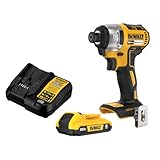
If you are buying a tool specifically for a siding project, a compact brushless impact driver kit is a sensible starting point. Compare kit contents, not just the tool price: a battery and charger can make a bare tool a poor bargain if you are starting from scratch.
Choose the bit and fastener first
Match the bit exactly to the screw drive. A loose Phillips or square bit can cam out, chew up the screw recess and slip into the siding. Use a fresh, correctly sized bit, and keep a spare nearby. For most exterior siding work, choose screws intended for outdoor use and compatible with the siding material; ordinary interior drywall screws are brittle and their coating is not made for weather exposure.
Check the siding manufacturer’s fastening instructions before replacing nails with screws. Wood siding needs room to move with moisture, and fastening through the wrong part of a board or clamping it too tightly can cause buckling or splits. If the screw is meant to hold the board without pinning it rigidly, follow the specified location and installation detail rather than tightening until the head disappears.
Set up to avoid damage
Start with the driver on its lowest speed or assist mode, if available. Hold it straight in line with the screw and apply steady pressure. Drive until the head is seated as specified for that siding, then release the trigger. Do not use the impact mechanism to force a screw far below the surface. If a screw stops advancing, back it out and check for a knot, a dull or incorrect bit, or a fastener that is too long—not just a need for more trigger.
For thin boards, brittle wood or a screw close to an end, predrilling can reduce splitting. Use a drill bit sized for the screw’s shank and test on a scrap offcut if possible. Predrilling takes longer but is often cheaper than replacing damaged siding. A cordless drill/driver with a clutch is also a reasonable choice for a small repair where you want to limit torque; it is less likely to hammer the head in abruptly, though it may take longer to drive a long screw.
Battery, accessories and value
A 2.0Ah battery is lighter and usually enough for a small repair. For a full wall or repeated work, a 4.0Ah battery reduces pauses, at the cost of added weight. A second battery is useful if the job will run for hours, but unnecessary for replacing a few loose fasteners. If you already own batteries in a tool platform, buying a bare tool from that system is usually the best value.
A basic impact-rated driver bit set is worth considering if your current bits are worn or incomplete. Impact-rated bits are designed to tolerate repeated impacts, but they will still wear out; replace one when it no longer seats firmly. A magnetic bit holder can speed up work, though a long holder may wobble more than a short one in tight spaces.
Make the choice by job size
For occasional maintenance, buy the least expensive reputable cordless driver that has a variable-speed trigger, fits your existing battery platform and accepts standard 1/4-inch hex bits. You do not need a premium model to install a small number of siding screws. For frequent exterior work, a compact brushless model with a low-speed mode and a 4.0Ah battery offers a better balance of runtime and control. If you expect to drive long structural fasteners regularly, choose a more capable tool—but do not treat that extra power as a substitute for the right fastener, pilot hole or installation depth.
Before driving into existing siding, check for wiring, pipes and concealed trim details where relevant. Work from stable footing, especially on ladders, and keep the bit fully seated. The best driver is the one you can control at the board: a clean, flush installation beats raw speed.