What's inside
As an Amazon Associate I earn from qualifying purchases. This post may contain affiliate links at no extra cost to you.
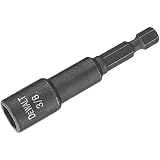
Magnetic nut setters fit hex-head screws and bolts, hold them on the driver, and make overhead or one-handed fastening easier. The best choice depends on the fastener’s head size, how much reach you need, and whether you’re using a drill or an impact driver. For occasional work, a basic nut-setter set is usually enough; frequent use or long fasteners can justify stronger, purpose-built pieces.
As an Amazon Associate we earn from qualifying purchases at no extra cost to you.



What we cover
Choose the right size first
Nut-setter size refers to the width across the hex head, not the screw’s shaft diameter. Common sizes for building and repair include 1/4, 5/16, and 3/8 inch. Check the fastener packaging or measure across opposite flats with a ruler or caliper. A setter that is even slightly too large can slip and round the head; one that is too small will not seat.
Match the drive end to your tool, too. Most nut setters have a 1/4-inch hex shank, which fits standard drill chucks and impact-driver collets. Some sets include adapters or larger shanks, but a 1/4-inch hex is the most versatile choice for ordinary fastening.
A magnetic nut-setter set with common sizes is a sensible starting point if you work with several kinds of hex-head screws. Before buying a large set, check that it includes the sizes you actually use; extra pieces do little good if the needed size is missing.
Which type suits the job?
| Type | Best for | Trade-off |
|---|---|---|
| Short magnetic setter | General repairs and screws in open, easy-to-reach areas | Compact and inexpensive, but limited reach |
| Long magnetic setter | Recessed or obstructed fasteners | Reaches farther, but can wobble more under load |
| Impact-rated setter | Repeated driving with an impact driver | Built for impact loads; costs more than needed for occasional light work |
| Nonmagnetic or retaining setter | Work near metal chips, or situations where a fastener must stay captured | May need a sleeve or other retaining mechanism to hold the screw |
For most homeowners, a short setter is the practical default. A longer one is worth adding when a screw sits behind a flange, inside a narrow channel, or beyond the reach of a standard bit. If the fastener is deeply recessed, measure the clearance before buying: a long setter still needs enough room around the head for its outer diameter.
Drill or impact driver?
A drill works well for occasional installation, especially in thin sheet metal or wood where you can control speed and pressure. Start slowly so the socket seats fully, then drive the fastener without leaning hard on the tool. Excessive speed can make the setter slip before the hex head is engaged.
An impact driver is useful for repeated fastening and longer screws, but it puts sharp rotational loads on the bit. Choose an impact-rated setter for regular impact-driver use. A standard setter may work for a few light jobs, but repeated impacts can twist or crack the shank. Stop if the bit begins to wobble or the corners of the fastener start to deform; more trigger pressure will not fix a poor fit.
For jobs involving an impact driver, consider an impact-rated magnetic nut setter. It is not automatically necessary for a drill or a handful of small screws. Pay for the impact rating when the tool will see frequent hard driving, not just because the label sounds more durable.
Magnet strength and screw retention
The magnet’s job is to keep a screw from falling off while you position it. That is especially helpful when fastening overhead or working with one hand. It does not make an incorrect socket size safe, and it cannot compensate for a fastener that is too heavy or poorly balanced. Some magnetic setters hold screws firmly; others are better at keeping the socket itself aligned than suspending a long screw. If overhead work is routine, look for reviews that specifically describe screw retention rather than relying on the word “magnetic.”
Magnets also collect steel filings and metal chips. Wipe the socket clean when debris builds up, since packed material can stop the head from seating fully. For work around loose steel swarf, a nonmagnetic holder with a mechanical retainer may be easier to manage.
Length, material, and build
A 2- to 3-inch setter is compact enough for most everyday work. Longer versions, often around 6 inches, can reach behind framing or into narrow spaces, but their extra leverage makes a loose fit more noticeable. Use the shortest tool that clears the obstruction. For a genuinely awkward reach, a long impact-rated magnetic nut setter can be more useful than stacking adapters, which adds wobble and can reduce control.
Look for a clearly marked size and a securely attached magnet. A polished finish is convenient for cleaning, but it matters less than a socket that fits squarely and a shank that stays straight. Replace a setter if its opening is visibly rounded, its magnet has loosened, or the shank has developed a bend. A worn setter can damage expensive screws faster than the tool costs to replace.
A practical buying checklist
Before ordering, list the fastener sizes you use, confirm the tool’s shank will fit your drill or impact driver, and decide whether you need reach beyond a short socket. If you usually install one size of roofing or duct screw, buying a single well-fitting setter is cheaper and simpler than purchasing a large assortment. A single magnetic nut setter in your fastener size is often the better value for that kind of repetitive job.
For mixed household projects, a basic multi-size set is fine. You do not need the most expensive option for occasional work in wood or thin metal. Spend more for impact-rated construction if you drive fasteners repeatedly with an impact driver, and for extra length only when the job demands it.
Use it without stripping the head
Seat the setter fully over the hex head before pulling the trigger. Keep the tool aligned with the fastener, use a low speed to start, and reduce pressure as the screw approaches its final position. If the setter slips, stop and inspect the size and fit instead of trying again at higher speed. For thin sheet metal, a clutch or slower trigger control can help prevent overdriving and damaging the material. These small checks do more to protect the fastener than buying a premium setter you do not need.