What's inside
As an Amazon Associate I earn from qualifying purchases. This post may contain affiliate links at no extra cost to you.
Limestone is softer than granite or concrete, but it can still be slow to drill. Its hardness varies, and a bit that cuts cleanly through one block may skate across a dense patch or wander on a smooth face. For most holes, a sharp carbide-tipped masonry bit and a drill with a hammer mode are the practical choice. The right size and drilling technique matter as much as the brand.
As an Amazon Associate we earn from qualifying purchases at no extra cost to you.



What we cover
Choose the right type of bit
For occasional holes for wall plugs, picture hooks or light-duty anchors, a standard round-shank carbide masonry bit is usually enough. It fits a regular drill chuck and costs less than specialty bits. Choose a reputable bit with a carbide tip and a flute design that clears dust; very cheap bits can have poorly aligned tips, which makes them wander and wear quickly.
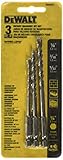
A carbide-tipped masonry bit set is a sensible buy if you need several common hole sizes. Check the set’s diameter range and shank type before ordering. A set that jumps from 6 mm to 10 mm will not help if your anchors call for an 8 mm hole.
For repeated drilling, larger holes or harder limestone, a rotary hammer and SDS-plus bits are a more capable combination. The hammer mechanism is designed to deliver impact through the bit, rather than relying on the drill’s chuck and hammer gears. The trade-off is cost and weight: it is excessive for a couple of small holes in soft stone.
Compare the main options
| Bit and tool setup | Best for | Trade-off |
|---|---|---|
| Round-shank carbide bit in a standard drill | Small holes and occasional DIY jobs | Slow in dense stone; hammer mode may be unavailable |
| Round-shank carbide bit in a hammer drill | Common anchor holes in limestone | Can chip stone if pressed hard or started carelessly |
| SDS-plus carbide bit in a rotary hammer | Frequent drilling, bigger holes or hard patches | Requires an SDS-plus tool and costs more |
| Diamond core bit | Large, clean holes where the finish matters | Higher cost; needs a compatible setup and careful cooling |
Match bit size to the fastener
Use the diameter specified by the anchor maker, not a guess based on the screw. For a typical plastic plug, the package states the drill diameter; a 6 mm plug commonly calls for a 6 mm hole, but products vary. A hole that is too wide may let the plug spin or pull out. Too narrow, and forcing the plug in can crack the limestone or deform the plug.
For a small job, buy the exact size you need rather than a broad set. For more than a few holes, a set of SDS-plus masonry bits is useful only if your drill accepts SDS-plus shanks. SDS bits do not fit ordinary three-jaw chucks unless you use an adapter, and an adapter is a poor substitute for a proper rotary hammer on demanding work.
Drill without chipping or wandering
First check for buried wires and pipes, and make sure the planned hole is far enough from an edge. Limestone can split or lose a corner if a hole is placed too close to an edge, especially with a large bit or an expanding anchor. If the stone is decorative or valuable, test the setup in an inconspicuous spot.
Mark the hole and start slowly with the drill held square to the surface. On polished or smooth stone, a small starter dimple can help keep the tip from skating. Do not punch the surface with a nail or center punch; that can spall the face. Once the tip has engaged, use hammer mode for a carbide masonry bit if the stone is resisting. Apply steady, moderate pressure rather than leaning hard on the drill. Excessive force can overheat the tip, break the carbide, or chip the opening.
Pull the bit out every few seconds to clear dust, especially in deeper holes. Limestone dust packs into the flutes and can make the bit bind. Keep the drill straight as you withdraw it, and stop at the depth required for the anchor, allowing a little extra room for dust at the bottom. A depth stop or a strip of tape around the bit is a simple guide. Wear eye protection and a suitable dust mask; stone dust should not be breathed.
Use hammer mode carefully
Hammer action speeds up drilling, but it is not always the right setting. On soft, friable limestone, a standard drill’s rotation-only mode may make a cleaner hole, especially near an edge or when installing a small anchor. If progress is very slow, switch to hammer mode and let the bit do the work. Avoid using an impact driver for drilling stone: its rotational impacts are meant to drive fasteners, not to provide the axial hammering a masonry bit needs.
For recurring jobs in masonry, a cordless SDS-plus rotary hammer is worth considering. It typically drills more efficiently and puts less strain on the user than a standard hammer drill. For one or two shallow holes, renting or borrowing one is often more sensible than buying.
Know when the bit is done
A sharp masonry bit should cut steadily and produce dust. Replace it if the hole takes much longer than nearby holes, the tip is visibly rounded or chipped, or the bit repeatedly wanders despite a square start. A worn bit creates heat, can enlarge the hole and may leave an anchor with a poor fit. Do not keep drilling through a stalled bit by pushing harder.
For ordinary anchor holes, a fresh carbide bit is the best starting point. Move to SDS-plus when drilling volume, diameter or stone hardness makes the smaller setup frustrating. Save diamond coring for larger openings or finish-sensitive work where a rough hammer-drilled hole is unacceptable.