We research everything we recommend. When you buy through our links, we may earn a commission. As an Amazon Associate we earn from qualifying purchases.
Best Oscillating Multi Tools for Cutting and Detail Work
The best oscillating multi tools compared for flush cuts, grout removal, sanding and detail work, from DEWALT, Milwaukee, Makita, Bosch and Ryobi.
As an Amazon Associate I earn from qualifying purchases. This post may contain affiliate links at no extra cost to you.
⭐ Key Takeaways
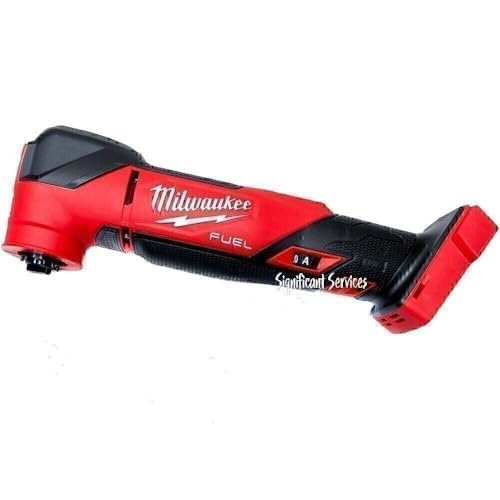
Quick answer: Our top pick is Milwaukee M18 FUEL Oscillating Multi-Tool (2836-20), with DEWALT ATOMIC 20V MAX Oscillating Multi-Tool (DCS354B) as a strong alternative.
An oscillating multi-tool earns its place in the kit by doing the awkward jobs no other tool handles well: undercutting door jambs for new flooring, flush-cutting trim and pipe, raking out failed grout, scraping old adhesive and sanding into corners a detail sander cannot reach. Because the blade moves in a tiny, rapid side-to-side arc, it cuts with control instead of kick, and it can plunge straight into the middle of a board or wall panel.
The five tools below cover the main cordless platforms, from fast-cutting pro models to a homeowner-friendly option. They differ in oscillation angle, accessory system, vibration levels and battery family, and those differences matter more than raw speed numbers. Match the tool to the platform you already own and the kind of cutting you do most, and any of them will handle a long list of remodeling tasks.
As an Amazon Associate, we earn from qualifying purchases.
For most buyers, the Milwaukee M18 FUEL 2836-20 is the strongest all-round pick, pairing a 4.2-degree oscillation angle with low vibration. DEWALT’s compact ATOMIC DCS354B suits tight spaces, the Bosch GOP18V-34N leads on accessory fit with StarlockPlus, and the Makita XMT03Z and Ryobi PBLMT50B serve LXT and ONE+ owners well.
The 2836-20 is built around cutting speed. Its 4.2-degree oscillation angle is the widest in this group, so each stroke moves more material and plunge cuts in nail-embedded wood, drywall and soft metal go noticeably faster. The brushless motor holds that pace under load, and the auto-load mode raises speed automatically when the blade starts working harder.
Control is the other half of the package. A ten-setting speed dial plus the auto-load mode covers delicate sanding through aggressive demolition cutting, and built-in vibration dampening keeps the body calmer than most high-angle tools. The tool-free blade change and a bright LED light round out a tool aimed at remodelers who use it every day.
Specs:
– Platform: Milwaukee M18 18V, tool only
– Motor: POWERSTATE brushless
– Speed: 10,000 to 20,000 OPM with auto-load mode
– Oscillation angle: 4.2 degrees
– Blade change: tool-free
– Extras: LED work light, vibration dampening
DEWALT ATOMIC 20V MAX Oscillating Multi-Tool (DCS354B)
Runner-Up
DEWALT ATOMIC 20V MAX Oscillating Multi-Tool (DCS354B)
Best for: DEWALT 20V MAX owners who value a compact body and fine control over outright cutting speed.
The DCS354B is the compact option here. The ATOMIC body is short and light, which pays off inside cabinets, between studs and overhead, where a full-size tool gets tiring and clumsy. Its 1.6-degree oscillation angle is narrower than the Milwaukee’s, trading raw removal rate for a smoother, more precise cut that suits finish work and careful plunge cuts in drywall and trim.
The dual-grip variable-speed trigger is a genuine usability plus: squeeze harder for more speed, feather it for a gentle start on a marked line. DEWALT’s Quick-Change accessory system swaps blades without a hex key, and the included universal adapter accepts most other brands of blades, so an existing accessory collection is not wasted.
Specs:
– Platform: DEWALT 20V MAX, tool only
– Motor: brushless
– Speed: 0 to 18,000 OPM, dual-grip variable-speed trigger
– Oscillation angle: 1.6 degrees
– Blade change: Quick-Change system, no hex key needed
– Extras: LED light, universal accessory adapter included
Bosch co-developed the Starlock accessory standard, and the GOP18V-34N is the showcase for it. StarlockPlus accessories snap onto a three-dimensional mount with no loose pin and no tools, locking in with almost no play. That rigid connection transfers more of the motor’s energy into the cut and makes swaps take seconds, even with gloves on. Note that StarlockPlus tools do not accept the larger StarlockMax accessories, and older OIS blades need an adapter or do not fit at all.
The brushless motor runs from 8,000 to 20,000 OPM on a simple speed dial, and the 2.8-degree oscillation angle sits in the middle of this group, balancing removal rate and finish quality. Vibration control keeps long sanding and scraping sessions manageable, and the slim grip suits detail work in cabinetry and trim.
Specs:
– Platform: Bosch 18V (AMPShare compatible), bare tool
– Motor: EC brushless
– Speed: 8,000 to 20,000 OPM, variable-speed dial
– Oscillation angle: 2.8 degrees
– Accessory interface: StarlockPlus snap-in, tool-free
– Extras: vibration control, LED light, one 1-1/4 in plunge blade included
Makita XMT03Z 18V LXT Cordless Multi-Tool
Makita XMT03Z 18V LXT Cordless Multi-Tool
Best for: Makita LXT owners who want a dependable, versatile multi-tool without paying for features they will not use.
The XMT03Z is the long-running workhorse of the Makita 18V LXT line. A variable-speed dial spans 6,000 to 20,000 OPM, and the 3.2-degree oscillation angle gives it a more aggressive cut than its mild-mannered reputation suggests. It handles the usual rotation of flooring, grout, drywall and scraping work without fuss, and LXT is one of the deepest cordless platforms in the business.
The slim barrel grip, about 2-3/8 inches around, is easy to hold precisely for detail cuts. Blade changes use a clamp lever rather than a bolt, and Makita includes adapters so blades from other major accessory brands can be mounted. It is a brushed-motor tool and lacks some refinements of newer rivals, but as an add-on to an existing LXT kit it makes a great deal of sense.
Specs:
– Platform: Makita 18V LXT, tool only
– Speed: 6,000 to 20,000 OPM, variable-speed dial
– Oscillation angle: 3.2 degrees
– Blade change: tool-less clamp lever
– Accessory fit: OIS interface with adapters for other brands
– Grip: small-diameter barrel grip for control
Ryobi PBLMT50B ONE+ HP 18V Brushless Multi-Tool
Ryobi PBLMT50B ONE+ HP 18V Brushless Multi-Tool
Best for: Homeowners invested in Ryobi ONE+ who want brushless performance for renovation and repair projects.
The PBLMT50B brings brushless power to the Ryobi ONE+ platform at a homeowner-friendly position in the range. Its 3.6-degree oscillation angle is wider than the Makita’s and close to pro territory, so it cuts wood, drywall and nails at a satisfying pace. A speed dial runs up to 20,000 OPM, giving enough range for both demolition cuts and careful sanding.
Accessory changes are tool-free, an LED light helps in dark corners, and a universal adapter broadens blade choice beyond Ryobi’s own range. For anyone whose garage already runs on ONE+ batteries, it covers the multi-tool role without starting a second battery collection, and it handles typical home renovation work with ease.
Specs:
– Platform: Ryobi 18V ONE+, tool only
– Motor: ONE+ HP brushless
– Speed: up to 20,000 OPM, adjustable speed dial
– Oscillation angle: 3.6 degrees
– Blade change: tool-free
– Extras: LED light, universal accessory adapter
How to choose
Accessory system: Starlock vs OIS. Blades and pads are the ongoing cost of owning a multi-tool, so check compatibility before buying. Starlock and StarlockPlus accessories use a three-dimensional mount that locks without tools and transfers power efficiently, but they only fit Starlock-interface tools. OIS (Oscillating Interface System) is the older open standard used by Makita and many others, and universal-fit blades with a slotted or open-back design fit most OIS tools. Many tools ship with adapters that widen the choice, but heavy users usually do best committing to one system.
Oscillation angle and OPM. Speed in oscillations per minute is only half the story. A wide angle, around 4 degrees, moves the blade further on each stroke and cuts faster but can feel rougher and leave a coarser finish. A narrow angle near 1.6 to 2.8 degrees cuts more gently and precisely. Look for a wide OPM range with a low bottom end, since slow speeds prevent melted plastic, scorched wood and chipped grout lines.
Tool-free blade changes. Every tool here swaps accessories without a separate hex key, and it matters more than it sounds: multi-tool work means constant switching between cutting, sanding and scraping. Lever-clamp and snap-in systems keep momentum up and reduce the temptation to force the wrong blade through a job.
Vibration control. Oscillation is vibration by design, and high-angle tools can leave hands tingling on long jobs. Dampened housings and isolated motor mounts, as on the Milwaukee and Bosch, are worth prioritizing for flooring and demolition work that runs for hours.
Corded vs cordless. All five picks are cordless, and for most buyers that is the right call: the work is usually short, scattered tasks where dragging a cord costs more time than a battery swap. Corded models still suit nonstop grout removal or sanding in a workshop. Either way, a bare tool only makes sense if you already own its batteries.
Dust extraction. Sanding and grout work make fine dust. Some platforms offer extraction hoods or ports that connect the sanding pad to a shop vacuum, which keeps the work visible and the air cleaner. If you plan heavy sanding, check that your chosen platform sells a dust attachment for its multi-tool.
Who should skip
Skip the bare-tool versions if you own no batteries in that platform; a kit with battery and charger, or a corded model, will serve you better. Skip the high-angle pro tools if your work is mostly delicate sanding and finish cuts, where a narrower angle gives a cleaner result. And if your only jobs are cutting door casing twice a year, an entry-level corded tool or even a flush-cut hand saw may be all you need.
FAQ
What is an oscillating multi-tool used for?
It covers small, precise jobs other saws do badly: undercutting jambs and trim, flush-cutting nails, pipe and protruding screws, plunge-cutting drywall and flooring, removing grout and old sealant, scraping adhesive and sanding into corners and details.
Are oscillating tool blades universal?
Not fully. Universal-fit blades with an open-back or slotted mount fit most OIS-style tools, and many tools include adapters. Starlock and StarlockPlus accessories only fit Starlock-interface tools, and StarlockMax blades fit only the largest tools. Check the interface before stocking up on blades.
What OPM range should I look for?
A range topping out near 20,000 OPM with a low end under 10,000 covers nearly everything. High speeds suit wood and drywall cutting, while low speeds give control for metal, plastic, grout and sanding, where heat and aggression cause damage.
Is a cordless oscillating multi-tool powerful enough?
Yes, for the tasks these tools exist for. Modern brushless 18V and 20V models match corded tools for cutting speed in trim, drywall and flooring work. Corded models only pull ahead on marathon sessions such as removing grout from a whole bathroom without pausing.
Final verdict
For a single recommendation, the Milwaukee 2836-20 is the pick: it cuts fastest, controls vibration well and fits the huge M18 range. Bosch’s GOP18V-34N is the precision choice thanks to StarlockPlus, while the DEWALT DCS354B wins on compact size. Makita and Ryobi owners should simply buy into their own platforms with the XMT03Z and PBLMT50B, both capable tools that keep the battery shelf simple.
M
Miller the Driller Editorial Team
We compare specs, warranty terms, long-term owner feedback and street pricing before anything earns a spot. Rankings are never paid.
Affiliate disclosure. As an Amazon Associate we earn from qualifying purchases at no extra cost to you. Prices accurate as of the date shown.
Three wireless routers for small offices compared on device capacity, network separation, wired speed, and coverage, with specs taken from their Amazon listings.
Compare 5 mechanic tool sets for car repairs: a 247-piece DEWALT kit, a 450-piece CRAFTSMAN set, a drawer-box GEARWRENCH set, a 170-piece Crescent set and a 450-piece WORKPRO set.
Four splitting axes and mauls that actually split firewood: a long 36-inch axe for tall users, a shorter 28-inch option, and two 8 lb mauls for knotty rounds.
Learn whether a 20V rechargeable drill battery can be repaired, which faults you can check safely at home, and when replacing the pack is the safer choice.
A specs-based review of the officially licensed Retro-Bit Sega Saturn 2.4 GHz wireless controller: dual receivers, Genesis Mini and Switch support, battery, layout, limits, and FAQs.
Find the best drill battery for Power Wheels ride-on toys for families, with DeWalt, Milwaukee and Ryobi adapters, voltage and safety guidance in this guide.
Find the best hole saw for noching dom pipe: bi-metal saws, deep cups, and the right sizes for clean, tight notches in DOM tube for fabrication shops today.
Find the best diy tile saws for home tiling projects. Compare wet tile saws by blade size, cutting capacity, and features for ceramic and porcelain tile.



 Makita XMT03Z 18V LXT Cordless Multi-Tool
 Ryobi PBLMT50B ONE+ HP 18V Brushless Multi-Tool










