What's inside
As an Amazon Associate I earn from qualifying purchases. This post may contain affiliate links at no extra cost to you.
What we cover
Start with the ceiling, not the anchor
A toggle anchor can hold a fixture in hollow drywall, but it is not a substitute for a joist, a rated electrical box, or a support bracket. Before buying hardware, identify what the fixture is meant to attach to. A lightweight flush-mount fixture may fasten to a ceiling box; a heavy chandelier or fan needs structural support designed for its weight and movement. Do not hang either from a drywall toggle unless the fixture manufacturer and local code explicitly allow that arrangement.
Turn off power at the breaker before working near the electrical box, and verify the circuit is off with a tester. Check the fixture instructions for its weight and mounting requirements. If the existing box is loose, damaged, or not rated for the load, fix the support rather than adding anchors nearby. When you cannot confirm what supports the box, ask a qualified electrician.
As an Amazon Associate we earn from qualifying purchases at no extra cost to you.


Choose the right support
For a fixture with a mounting strap, the best fastening point is usually a sound ceiling box secured to a joist or to an approved brace. If there is no suitable box, locate the joists with a stud finder and mount the appropriate electrical box or support hardware to framing. A ceiling-rated brace can span between joists when the fixture location falls between them.
Toggle anchors are for loads on hollow materials, not for attaching a fixture to a box that should be structurally supported. They can be useful for a light decorative cover or other modest load when the product instructions permit it, the drywall is intact, and the load is within the anchor’s stated rating. Ratings vary by anchor, drywall thickness, installation, and direction of pull. A ceiling load pulls directly downward, so do not assume a published wall rating applies overhead.
Toggle types and trade-offs
| Anchor type | How it works | Useful for | Trade-offs |
|---|---|---|---|
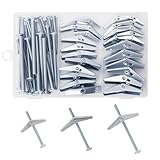
| Classic spring toggle | Folded wings pass through a drilled hole, then open behind the drywall. | Infrequent, low-load fastening where access is only from the room side. | Requires a relatively large hole. If the bolt is removed, the toggle may fall into the ceiling. |
| Strap-style toggle | A metal channel passes through the hole; plastic straps position it while a cap holds it in place. | More controlled installation and repeatable fastening in hollow walls or ceilings. | Costs more than basic toggles and still depends on sound drywall and correct sizing. |
| Metal hollow-wall anchor | A sleeve expands behind the panel as the screw is tightened. | Some light-duty fixtures or accessories where its rating and ceiling use are appropriate. | Can crush or damage weak drywall if overtightened; many types are not reusable. |
| Wood screw into framing | Threads bite directly into a joist or brace. | Preferred structural attachment when the fixture hardware allows it. | Requires finding framing and using a suitable screw length and diameter. |
What to buy
If a toggle is genuinely appropriate, match its specified grip range to the ceiling thickness and its bolt size to the fixture hardware. Measure the drywall if its thickness is uncertain; common ceilings are 1/2 or 5/8 inch, but older or layered ceilings may differ. A toggle that is too short may not open fully, while one that is too long can leave the fixture loose or make assembly awkward. Follow the package’s drill-bit diameter rather than guessing.
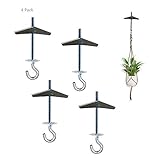
For general hollow-ceiling fastening, compare strap-style toggle anchors with basic spring toggles. Strap toggles are usually easier to position and keep aligned; classic toggles are cheaper and can be fine for a small, nonstructural item. Neither type turns drywall into a reliable support for a heavy fixture.
When framing is available, use a structural wood screw of the size specified for the box, brace, or mounting hardware—not a drywall screw. Drywall screws are brittle and are not intended for overhead structural loads. If the fixture needs an approved ceiling box or brace, look for a ceiling-rated brace and electrical box matched to the fixture and joist spacing.
Tools and drilling
A cordless drill is enough for most anchor holes. Use a sharp bit at the diameter specified by the anchor maker, hold the drill square to the ceiling, and drill at a steady speed without forcing it. A hammer drill is generally unnecessary for drywall; use one only if you are drilling masonry and have selected an anchor designed for that material. An impact driver is useful for driving compatible screws into framing, but it is a poor choice for drilling the toggle’s clearance hole. Its hammering action can enlarge or tear drywall.
Before drilling, check for wires and pipes with an appropriate detector and consider the route of the electrical cable to the box. Keep the hole as small as the anchor requires. A hole that is too large gives the toggle less material to bear against; a hole that is too small may prevent the wings or channel from passing through. Wear eye protection, especially overhead, and keep dust out of the fixture and electrical box.
Install and check
For a spring toggle, thread the bolt through the fixture bracket first, then fold the wings and push them through the correctly sized hole. Pull the bolt gently to seat the wings against the back of the drywall while tightening. For a strap toggle, follow its instructions to insert the channel, set the retaining cap, and remove the straps only after the channel is seated. Do not overtighten: crushing the paper face or making the drywall dimple weakens the attachment.
Stop if the anchor spins, the hole crumbles, the ceiling cracks, or the fixture bracket will not sit flat. Those are signs that the substrate or installation is unsuitable. Do not test a ceiling anchor by hanging from it or applying a sudden tug. If a toggle drops into the cavity, do not assume a replacement in the same enlarged hole will hold; move to sound framing or repair the opening first.
When to call a pro
Use a professional if the fixture is heavy, has a fan or other moving parts, requires new wiring, or has no clearly sound electrical box. The least expensive safe option is often a proper box fastened to framing, not a stronger-looking toggle. For a small accessory on intact drywall, a correctly sized toggle may be a reasonable low-cost choice; for a ceiling-mounted fixture, support and electrical-box ratings come first.