We research everything we recommend. When you buy through our links, we may earn a commission. As an Amazon Associate we earn from qualifying purchases.
Best Wrench Sets for Mechanics, Plumbing and Home Repairs
Compare the best wrench sets for mechanics, plumbing and home repairs, from ratcheting GEARWRENCH picks to combination sets by TEKTON and DEWALT.
As an Amazon Associate I earn from qualifying purchases. This post may contain affiliate links at no extra cost to you.
⭐ Key Takeaways
Quick answer: Our top pick is GEARWRENCH 16-Piece Ratcheting Combination Wrench Set, Metric (9416), with TEKTON Combination Wrench Set, 12-Piece (8-19 mm) with Holder (WCB91201) as a strong alternative.
A good wrench set is one of the first serious tool purchases most people make, and one of the easiest to get wrong. Sets that skip sizes or use soft steel tend to round fasteners and frustrate their owners. The best wrench sets cover the sizes a job calls for, grip fasteners on their flats instead of their corners, and hold up to years of torque without spreading or twisting.
This guide compares five wrench sets that suit different kinds of work: a full-coverage ratcheting set for automotive jobs, straightforward combination sets for general repair, a compact flex-head set for tight engine bays, and a polished metric set built for daily shop use.
As an Amazon Associate, we earn from qualifying purchases.
For most home mechanics, the GEARWRENCH 16-piece ratcheting set is the easiest recommendation: the ratcheting box end speeds up long fasteners, and the metric range covers cars, bikes, and equipment. Buyers who prefer simple, strong combination wrenches should look at TEKTON or DEWALT, while the Amazon Basics flex-head set suits tight engine bays on a budget.
GEARWRENCH built its reputation on the ratcheting combination wrench, and this 16-piece metric set shows why the design caught on. Each wrench pairs a standard open end with a ratcheting box end that keeps turning without lifting off the bolt. The 72-tooth gear needs only a 5-degree swing arc, so it keeps making progress where a plain combination wrench would need repositioning after every short pull.
Its 12-point box end uses off-corner loading that pushes on the flats of the fastener rather than the corners, reducing rounding on older hardware. The wrenches are alloy steel with a bright chrome finish that wipes clean after greasy work, and the set ships in a storage tray that keeps sizes in order in a tool chest drawer.
TEKTON takes the opposite approach to the ratcheting trend: no gears, no moving parts, just carefully shaped combination wrenches. This 12-piece metric set runs from 8 mm to 19 mm with no skipped sizes, which matters more than it sounds. Many budget sets quietly omit sizes like 11 mm or 16 mm, and the missing wrench is usually the one a job turns out to need.
The open end is angled 15 degrees so it can flip and re-seat on a fastener in tight quarters, and the 12-point box end is offset to clear neighboring hardware while leaving room for knuckles. The wrenches are forged from chrome vanadium steel with a polished finish, and a holder keeps the set organized in a drawer, tool bag, or car trunk. TEKTON backs its hand tools with a lifetime replacement promise handled directly through the company.
The V-SERIES is CRAFTSMAN’s step-up hand tool line, and this 12-piece metric combination set is aimed at users who put heavy torque through their wrenches. The handles use an I-beam profile that resists flexing and spreads pressure across the palm better than a thin flat handle, a difference that shows when breaking loose a corroded suspension or exhaust bolt.
Each wrench combines an open end for quick engagement with a 12-point box end for the heavy pull once the fastener is moving. With no gear mechanism to worry about in dirty or high-torque situations, the box end can handle the initial break-loose turn that ratcheting wrenches are not designed for. The chrome finish resists rust, and the set is covered by the CRAFTSMAN full lifetime warranty.
Not every job needs a 16-piece set. This compact Amazon Basics set covers five common SAE sizes and adds a feature the bigger sets do not offer: a flex head that pivots up to 180 degrees. That pivot lets the ratcheting box end reach fasteners tucked behind brackets, hoses, and engine accessories, where a fixed-head wrench could only approach at an awkward angle.
The ratcheting mechanism uses 72 teeth for a 5-degree arc swing, matching far more expensive flex-head sets. The wrenches are chrome vanadium steel with a chrome finish, and the open end handles quick run-down work while the box end does the turning. Five pieces will not cover every fastener in a shop, but as a problem-solver set for a kitchen drawer, glove box, or bike kit, it fills a role the larger sets cannot.
Specs:
– Pieces: 5
– Sizes: 5/16, 3/8, 1/2, 9/16, 11/16 in.
– Box end: Ratcheting, 72-tooth, flexible head pivots up to 180 degrees
– Material: Chrome vanadium steel, chrome finish
– Model: DS-FWS-5S
DEWALT’s 8-piece metric set focuses on the sizes that show up constantly on cars, appliances, and outdoor equipment: 10 mm through 17 mm. The long panel design gives each wrench more reach and leverage than stubby bargain wrenches, which helps in engine compartments and whenever a fastener needs a firm pull.
The box ends use DEWALT’s DirectTorque technology, a shaped contact pattern that grips the flats of the fastener to reduce rounding, and the 12-point design engages at more angles in confined spaces. Size markings are stamped on the handles, and the full polish chrome finish resists corrosion. DEWALT backs the set with a full lifetime warranty, making it a low-risk pick for a first quality set.
Specs:
– Pieces: 8
– Sizes: 10, 11, 12, 13, 14, 15, 16, 17 mm
– Box end: 12-point with DirectTorque fastener contact design
– Design: Long panel for added reach and leverage
– Finish: Full polish chrome
– Model: DWMT73810
How to choose
Combination, ratcheting, or flex-head. A combination wrench pairs an open end with a box end, and it remains the most versatile single design. Ratcheting versions add a gear inside the box end so the fastener turns without lifting the wrench off, a major time saver on long bolts, though the first break-loose turn should still be done with a plain box end or socket. Flex-head models add a pivoting head for fasteners that cannot be reached straight on, at the cost of a bulkier head.
SAE and metric coverage. Most vehicles, bicycles, and machinery built in recent decades use metric fasteners, while older American cars, plumbing fittings, and some lawn equipment still use SAE sizes, so many households own one set of each. Within a set, check for skipped sizes: a set that jumps from 14 mm to 17 mm will eventually leave a job unfinished. Full-coverage sets cost a little more but remove that risk.
Box-end point design. A 12-point box end engages a fastener at twice as many angles, which helps in tight spaces. A 6-point box end grips more securely and is the better choice for damaged or rusted hardware. Many modern 12-point designs use off-corner loading on the flats, narrowing the gap between the two styles.
Steel and finish. Chrome vanadium steel is the benchmark for quality wrenches: hard enough to resist spreading, tough enough to avoid snapping, and able to take a smooth chrome finish that resists rust and wipes clean. Thin wrenches made from unmarked steel tend to flex and round fasteners. A polished finish also makes size stamps easier to read under shop lighting.
Storage: roll-up pouch vs rack. How a set is stored decides whether it stays complete. Roll-up pouches travel well in tool bags and car trunks, with each pocket labeled by size. Rigid racks and trays suit tool chest drawers and make a missing size obvious at a glance. If a set will live in a drawer, choose a tray or rack; if it will move between jobs, a roll-up holder wins.
Who should skip
Skip a full wrench set if the work is mostly furniture assembly and light household tasks; an adjustable wrench and a basic socket set cover those jobs with less cost and drawer space. Skip ratcheting sets if the main work is breaking loose rusted, high-torque fasteners, since plain combination wrenches and sockets handle that abuse better. Skip metric-only sets if the fleet is older American vehicles or the work is mostly plumbing, where SAE sizes dominate. And skip any set if there is no storage plan for it: loose wrenches in a bucket get lost and duplicated.
FAQ
Is a 6-point or 12-point box end better?
For most work, a 12-point box end is the more convenient choice because it seats on the fastener at more angles, which matters in tight spaces. A 6-point end grips the flats more fully and is safer on rusted or partially rounded fasteners. Off-corner loading in a 12-point pattern is a practical middle ground.
Do ratcheting wrenches replace regular combination wrenches?
Not entirely. Ratcheting wrenches are faster for running fasteners down and backing them out, but the gear mechanism is not meant for breaking a seized bolt loose. A practical setup pairs a ratcheting set for speed with plain combination wrenches or sockets for break-loose work.
How many wrenches does a home mechanic actually need?
A metric set covering roughly 8 mm to 19 mm with no skipped sizes handles most automotive, bicycle, and equipment fasteners found at home. Add an SAE set if older American vehicles, plumbing fittings, or lawn equipment are part of the workload. Beyond that, flex-head or stubby wrenches solve specific access problems rather than replacing the core set.
What should be done to keep wrenches in good shape?
Wipe wrenches down after use to remove oil, moisture, and road salt, then store them dry in their tray, rack, or roll-up holder. Chrome finishes resist rust well, but no finish survives being stored wet in the bottom of a toolbox. Keeping sizes in order also makes it obvious when a wrench has been left behind on a job.
Final verdict
The GEARWRENCH 9416 is the strongest all-around pick for metric work: broad coverage, a smooth 72-tooth ratchet, and a tray that keeps the set organized. The TEKTON 12-piece set suits buyers who prefer simple combination wrenches with no sizes skipped, while the CRAFTSMAN V-SERIES fits users who lean on their wrenches hard. The Amazon Basics flex-head set earns its place as a compact problem-solver, and the DEWALT 8-piece set is the compact metric starter pick. Choose by the fasteners on the workbench, and any of these five will serve for years.
M
Miller the Driller Editorial Team
We compare specs, warranty terms, long-term owner feedback and street pricing before anything earns a spot. Rankings are never paid.
Affiliate disclosure. As an Amazon Associate we earn from qualifying purchases at no extra cost to you. Prices accurate as of the date shown.
Three wireless routers for small offices compared on device capacity, network separation, wired speed, and coverage, with specs taken from their Amazon listings.
Compare 5 mechanic tool sets for car repairs: a 247-piece DEWALT kit, a 450-piece CRAFTSMAN set, a drawer-box GEARWRENCH set, a 170-piece Crescent set and a 450-piece WORKPRO set.
Four splitting axes and mauls that actually split firewood: a long 36-inch axe for tall users, a shorter 28-inch option, and two 8 lb mauls for knotty rounds.
Learn whether a 20V rechargeable drill battery can be repaired, which faults you can check safely at home, and when replacing the pack is the safer choice.
A specs-based review of the officially licensed Retro-Bit Sega Saturn 2.4 GHz wireless controller: dual receivers, Genesis Mini and Switch support, battery, layout, limits, and FAQs.
Find the best drill battery for Power Wheels ride-on toys for families, with DeWalt, Milwaukee and Ryobi adapters, voltage and safety guidance in this guide.
Find the best hole saw for noching dom pipe: bi-metal saws, deep cups, and the right sizes for clean, tight notches in DOM tube for fabrication shops today.
Find the best diy tile saws for home tiling projects. Compare wet tile saws by blade size, cutting capacity, and features for ceramic and porcelain tile.


 Amazon Basics Ratcheting Combination Wrench Set, Flexible Head, 5-Piece SAE (DS-FWS-5S)
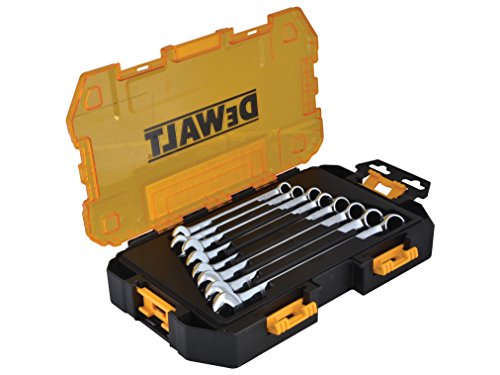 DEWALT Combination Wrench Set, Metric, 8-Piece (DWMT73810)









