What's inside
As an Amazon Associate I earn from qualifying purchases. This post may contain affiliate links at no extra cost to you.
What we cover
What you need for solid brick
Drilling a few small holes in sound brick for light-duty wall anchors is within the reach of many cordless hammer drills. The harder jobs are larger holes, dense engineering brick, repeated drilling, and holes close to an edge. For those, a rotary hammer with an SDS-Plus bit is usually faster and easier to control than a standard hammer drill.
A cordless hammer drill spins the bit and adds a rapid, short hammering action. That action helps a carbide-tipped masonry bit cut brick, but the impact is much lighter than a rotary hammer’s. A rotary hammer drives its bit with a piston, so it removes masonry more quickly and generally asks less pressure from the user. The trade-off is a larger tool, SDS bits, and less versatility for ordinary screwdriving.
As an Amazon Associate we earn from qualifying purchases at no extra cost to you.
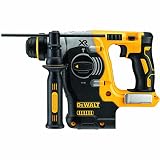

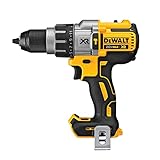

For a typical home project—say, four to eight holes around 6 to 8 mm (about 1/4 to 5/16 inch) deep enough for wall plugs—a good 18V or 20V hammer drill is often adequate. For frequent holes, larger diameters, or tough brick, consider a cordless SDS-Plus rotary hammer instead.
Compare the tool options
| Tool | Best use in brick | Main limitation |
|---|---|---|
| Compact cordless drill, no hammer mode | Small holes in soft brick, if the manufacturer permits masonry drilling | Slow and prone to overheating or stalled progress in solid brick |
| 18V/20V cordless hammer drill | Occasional small and medium anchor holes | Slower and more tiring than a rotary hammer in hard masonry |
| Cordless SDS-Plus rotary hammer | Repeated holes, larger holes, dense brick, and masonry work | More costly, heavier, and less suited to routine screwdriving |
Voltage alone does not tell you how well a drill will handle brick. Look for a proper hammer mode, a side handle, a variable-speed trigger, and enough battery capacity to finish the job. A 2.0 Ah pack is lighter; a 4.0 or 5.0 Ah pack usually lasts longer under load but adds weight. Brushless motors can improve runtime and reduce wear, but they do not turn a hammer drill into a rotary hammer.
What to look for when buying
For occasional DIY work, a cordless hammer drill with a side handle is a sensible all-round choice. The handle matters: masonry drilling can make the tool twist suddenly if the bit catches. Hold it with both hands, keep the side handle fitted, and avoid leaning your full weight into the drill.
Check the chuck’s stated capacity and the drill’s maximum masonry-hole guidance. A standard three-jaw chuck accepts common round-shank masonry bits, but an SDS-Plus chuck is made for SDS bits and does not take ordinary round-shank bits directly. If you already own batteries from a tool platform, a bare tool can save money, provided the battery is compatible and in good condition.
Do not buy on an advertised “maximum torque” figure alone. Torque is useful for driving fasteners, while drilling speed, hammer action, bit quality, and the material all affect how quickly a hole gets made. For a handful of small holes, the cheaper drill may be fine. If you expect to drill dozens of holes or regularly work in dense brick, spending more on an SDS-Plus tool is usually the better trade.
Bits, anchors, and hole placement
Use a sharp masonry bit with a carbide tip, in the diameter specified for your anchor. Match the hole depth to the anchor instructions; as a practical starting point, drill a little deeper than the plug’s length to leave room for dust, without making the hole unnecessarily deep. A depth stop or a strip of tape on the bit helps, though tape is only a visual marker.
Choose an anchor for the load and the wall, not just the screw size. Plastic plugs suit many light fixtures and household fittings; heavier loads may call for a rated masonry anchor or a fastening system specifically approved for brick. Do not assume an anchor’s drywall rating applies to brick. Keep holes away from mortar joints when the fixture’s instructions allow, and avoid drilling close to the edge of a brick, where it can split.
How to drill without wrecking the hole
Check for hidden wiring and pipes before drilling, especially near outlets, switches, taps, and radiators. Wear eye protection and a dust mask. Mark the point, set the drill to hammer mode, and start slowly to keep the bit from skating. Once the tip has established a shallow seat, increase speed and keep the drill square to the wall.
Use steady, moderate pressure. For an ordinary hammer drill, forcing it rarely speeds the job; it can overheat the bit, strain the motor, or widen the hole. Pull the bit out occasionally to clear dust. If the bit stops making progress, let it cool and check that the tip is not worn or clogged. Persistent slow drilling in hard brick is a sign to switch tools, not press harder.
Brick dust can pack into the hole and keep an anchor from seating fully. Vacuum or blow out the dust using a method that keeps it away from your eyes and lungs, then test-fit the anchor. If the hole is oversized, crumbly, or angled, do not rely on a loose plug for a loaded fitting; move to sound masonry or use an appropriate repair and fastening method.
When to choose a rotary hammer
A cordless rotary hammer is worth the extra expense when you have many holes, need holes around 10 mm (3/8 inch) or larger, or find that your hammer drill struggles in the brick. It also makes overhead or repetitive work less punishing, though its weight can be tiring in a different way. For occasional 6 mm holes, the smaller, cheaper hammer drill is usually easier to store and more useful for other home jobs.