What's inside
As an Amazon Associate I earn from qualifying purchases. This post may contain affiliate links at no extra cost to you.
Cedar siding is soft enough that an impact driver can bury a screw before you notice. The right tool gives you better control without giving up the torque needed for long siding screws. For most homeowners, a compact 18V or 20V cordless impact driver with variable-speed control is the practical choice; the driver matters, but screw selection, bit fit and technique matter just as much.
As an Amazon Associate we earn from qualifying purchases at no extra cost to you.



What we cover
What to look for in an impact driver
Prioritize a well-shaped variable-speed trigger, a low-speed mode or selectable power settings, and a comfortable grip. Cedar work rarely calls for maximum torque. A driver that can run slowly and predictably is more useful than one with the highest advertised torque. Compact models also fit more easily near trim and corners, though very small 12V drivers may feel strained with long screws or dense knots.
For occasional repairs or one wall, a corded drill with a clutch can be a reasonable, less expensive choice. It offers straightforward speed control and its clutch can help limit overdriving. An impact driver is more convenient for repeated fastening and tends to handle long screws with less wrist reaction, but its impact mechanism can make delicate work harder to judge. If you already own compatible batteries, buying a tool-only driver can save money; otherwise, compare kit prices, since batteries and a charger add to the initial cost.
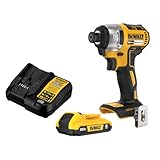
Browse variable-speed cordless impact-driver kits and choose based on control, battery compatibility and service support rather than peak torque alone.
Which setup suits the job?
| Setup | Best for | Trade-off |
|---|---|---|
| Compact 18V/20V impact driver | Many screws, long fasteners, working away from an outlet | Easy to overdrive cedar without a light touch |
| 12V impact driver | Small repairs and tight spaces | May be slower or work harder on long screws |
| Corded drill with clutch | Short jobs and careful, low-speed fastening | Less convenient; may struggle more with long screws |
| Drill-driver pilot hole, then impact driver | Near board ends, trim, or brittle knots | Two steps per fastener |
Choose siding screws and bits carefully
Use exterior-rated screws intended for siding or wood cladding, with a coating or material suitable for the exposure and any treated components. Screw length depends on the siding thickness and the required penetration into framing; follow the siding maker’s instructions and local requirements rather than choosing by guesswork. A screw that is too short may not hold securely, while an unnecessarily long one can split the board or hit wiring and other concealed materials.
Match the bit precisely to the screw drive. A worn or slightly wrong bit can cam out, damaging the head and leaving a sharp, raised burr on the cedar. Keep a spare bit nearby and replace it when it slips. For a damaged or stubborn screw, stop rather than forcing the driver: continued slipping can ruin the head and mark the siding.
For fastening into framing, position screws as specified by the siding manufacturer. Avoid driving too close to a board end, where cedar is more likely to split. If the screw location must be close to an end, or the wood is dry, knotty or prone to cracking, drill a pilot hole sized for the screw’s shank. A wood bit set for pilot holes is useful for those trouble spots, but predrilling every screw is usually unnecessary on a straightforward run of sound boards.
Set the depth with technique, not torque
Start on the lowest speed or power setting. Hold the driver square to the board, seat the bit firmly in the screw and squeeze the trigger gradually. Stop when the head is flush or reaches the position specified by the siding manufacturer. Do not bury the head below the cedar surface: that crushes the wood, weakens the hold and creates a pocket that can collect water.
Test on an offcut of the same siding before starting. Adjust the speed and trigger pressure until the screw seats consistently without sinking. If the tool has several modes, a lower setting is a sensible starting point, not a guarantee of correct depth. Cedar density varies, and a setting that works on one board can overdrive another. Check the first few fasteners closely and repeat the test if the board or screw changes.
Keep the board supported and follow the specified fastening pattern and clearance at edges and ends. If the screw spins without tightening, it may have missed framing or stripped the wood. Back it out, check the location and use the correct fastener and anchoring method; do not assume a spinning screw is secure. If a board cracks, stop and assess whether the split compromises the fastening before covering it with another screw.
Common mistakes and when to spend more
The most frequent problems are overdriven heads, split ends, stripped holes and chewed-up screw drives. They often come from high speed, poor bit fit, placing a fastener too near an edge or continuing to drive after the head seats. A clutch-equipped drill can reduce the chance of overdriving, but it still needs a test and careful use. An impact driver’s repeated blows are helpful when a screw meets resistance; on soft cedar, they can also turn a small mistake into a buried head quickly.
For a few repairs, a basic cordless driver you already own may be fine. Upgrade if the tool lacks controllable low speed, your wrist tires during repeated fastening, or the battery system is already part of your kit. If buying a dedicated driver, compare compact impact drivers with low-speed control. Paying extra for extreme torque is unlikely to improve cedar siding work. Spend instead on a reliable battery platform, a comfortable tool and sharp, correctly matched bits.