What's inside
As an Amazon Associate I earn from qualifying purchases. This post may contain affiliate links at no extra cost to you.
What we cover
What matters in an impact driver for outdoor timber
Outdoor timber work puts an impact driver through repeated long fasteners, knots, treated lumber, and weather-exposed joints. The right tool is not necessarily the one with the highest torque rating. For most decks, pergolas, fences, and sheds, prioritize a brushless motor, a controllable low-speed setting, a comfortable grip, and a battery platform you already own.
Impact drivers use a rotating hammer mechanism to deliver short bursts of torque. That helps drive screws with less reaction at your wrist than a drill can produce, but it does not make every fastener suitable. Use exterior-rated structural screws or the connector manufacturer’s specified fasteners for load-bearing joints. General-purpose deck screws are not a substitute for structural screws or bolts where the plans call for them.
As an Amazon Associate we earn from qualifying purchases at no extra cost to you.


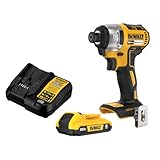

Choosing a size and feature set
A compact 18V or 20V-class driver is enough for most homeowner projects. The labels describe the same nominal battery class, not a meaningful difference in power. Compact tools are easier to use between joists and near framing, and they are less tiring overhead. A larger high-torque driver can be useful for frequent work with long structural screws, but it adds weight and may be harder to control in small fasteners.
Look for at least two speed settings or a variable trigger with predictable control. Some drivers add modes for screws, bolts, or delicate materials. Those can help, but learn what each mode does before using it on a finished surface. A mode that reduces speed or torque can limit overdriving; it cannot replace correct screw length, pilot-hole sizing, or careful trigger control.
Brushless models generally run more efficiently and tend to be a better choice for regular use. Brushed tools can still be a sensible buy for occasional repairs, especially if you already have compatible batteries. Compare the bare-tool price with a kit: a battery and charger can make the kit better value if you are entering a platform, but redundant batteries are wasted money.
Which type fits the job?
| Driver type | Best fit | Trade-off |
|---|---|---|
| Compact 12V impact driver | Light framing, small screws, confined spaces, and occasional repairs | Light and easy to handle, but can bog down on repeated large structural screws |
| Brushless 18V/20V-class driver | Decking, pergolas, sheds, and regular outdoor construction | Good balance of power and control; costs more than basic brushed tools |
| High-torque impact driver | Frequent long or large-diameter fasteners | More bulk and more risk of snapping screws or stripping heads when control is poor |
| Cordless drill/driver | Pilot holes, countersinks, and delicate finish work | Less suited to driving long screws quickly; can twist the wrist if a bit binds |
What to buy
If you are buying a first tool for a full outdoor build, a brushless 18V/20V-class impact driver kit is the safe all-round choice. Choose a kit with a battery around 2.0 to 5.0 Ah: smaller packs keep the tool light, while larger ones can reduce battery swaps during long runs. A second battery is helpful for extended work, but not essential for a small fence or planter.
Browse brushless 18V/20V impact driver kits if you need both the driver and batteries. If you already own a compatible battery platform, compare bare tools instead. A compact 12V impact driver kit is a reasonable lower-cost option for light work and tight spaces, but expect to slow down on large screws.
Whatever the voltage, do not choose on torque claims alone. Brands may test and report torque differently, and published figures do not tell you how smoothly the tool starts a screw. If possible, handle the driver and test its trigger. A tool that feels controllable is more useful than extra power that makes it easy to bury screw heads.
Drive outdoor screws without damaging the joint
Use the bit type and size specified for the fastener, and replace worn bits. A loose or chewed-up bit cams out, damages the head, and can leave a screw half-driven. Keep the bit aligned with the screw; angled pressure increases the chance of stripping. Start slowly, then increase speed once the threads have engaged.
For long structural screws, check the manufacturer’s instructions for pilot-hole requirements, edge distance, and minimum embedment. Dense hardwoods, end grain, and screws near a board edge are more likely to split. A pilot hole can reduce splitting and driving effort, but an oversized hole may weaken the connection. When the instructions call for one, use the specified drill-bit diameter rather than guessing.
Stop when the head seats flush or reaches the specified depth. Continuing to hammer after that point can strip the head, crush softwood fibers, or snap a screw. If a screw stalls, do not keep leaning on the trigger: back it out, check for a knot or misalignment, and drill a pilot hole if appropriate. For joist hangers and other connectors, use the exact approved fastener type and quantity; a generic screw that happens to fit a hole may not provide the rated connection.
Keep a drill for holes
An impact driver is primarily a fastening tool. Its hex chuck accepts 1/4-inch hex-shank bits, but it is not the best choice for accurate, clean drilling. Use a cordless drill for pilot holes, larger-diameter holes, and countersinks. A two-tool setup lets the drill make the hole while the driver installs the screw, cutting down on bit changes and reducing the urge to skip a pilot hole under time pressure.
If you only have room or budget for one tool, a drill/driver is more versatile for mixed drilling and light fastening. For a project with dozens or hundreds of structural screws, an impact driver will usually drive them faster and with less sustained wrist reaction. Match the tool to the work rather than forcing one tool to do every step.
Battery, weather, and jobsite care
Use batteries and chargers approved for the tool platform. Keep batteries dry, out of direct sun when practical, and away from sawdust in the ventilation openings. Most cordless tools are not waterproof; stop work if the tool or pack gets wet, and follow the manufacturer’s drying and inspection guidance before charging or using it.
Wear eye protection: an overdriven screw can throw chips, and a bit can break or slip. Keep fingers clear of the screw path, especially when starting fasteners one-handed. For a one-off small repair, a basic driver or an existing drill may be entirely adequate. For repeated outdoor builds, brushless construction, trigger control, and battery compatibility matter more than chasing the biggest number on a box.