What's inside
As an Amazon Associate I earn from qualifying purchases. This post may contain affiliate links at no extra cost to you.
What we cover
Why PVC trim needs a light touch
PVC trim is easy to drill compared with masonry or metal, but it can still look rough if the bit grabs, melts the plastic, or exits through the back in a ragged plug. The goal is a clean, round hole with enough clearance for the fastener to move as the board expands and contracts.
Use a regular drill or drill-driver, not hammer mode. Hammering can crack or deform the trim, and it offers no advantage in plastic. An impact driver can drive screws, but it is a poor choice for drilling holes: its pulsing action makes it harder to control the bit and can tear the hole. If you have only an impact driver, buy or borrow a drill for the hole-making step.
Choose the right bit
For most holes in PVC trim, a sharp twist drill bit is sufficient. A brad-point bit can make a more precisely located hole because its center spur helps prevent wandering, though it is not necessary for ordinary screw holes. For larger holes, use a hole saw sized to the fitting or clearance you need. A step bit is useful for enlarging a hole in thin material, but it is not the best choice for a deep, full-depth opening.
A basic set of sharp twist drill bits is usually the sensible buy for trim work. You do not need a premium specialty bit for a handful of holes. A dull or damaged bit is more likely to rub and heat the PVC than a sharp, inexpensive one.
| Bit type | Best use | Trade-off |
|---|---|---|
| Twist bit | Common screw and clearance holes | Can wander on a smooth surface unless you mark or center-punch the spot |
| Brad-point bit | Accurate holes in trim, especially near an edge | Costs more than a basic twist bit; avoid forcing it if it catches |
| Hole saw | Larger openings for pipes or fittings | Can bind or melt material if run too fast or pushed hard |
Pick a drill and set the speed
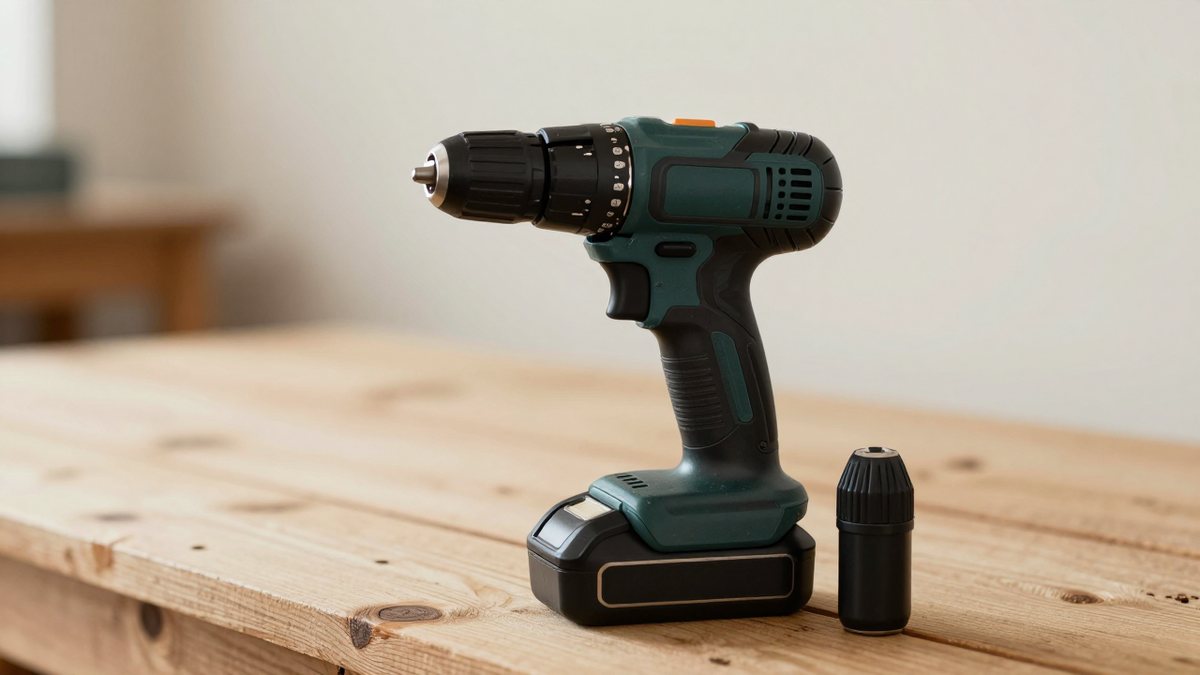
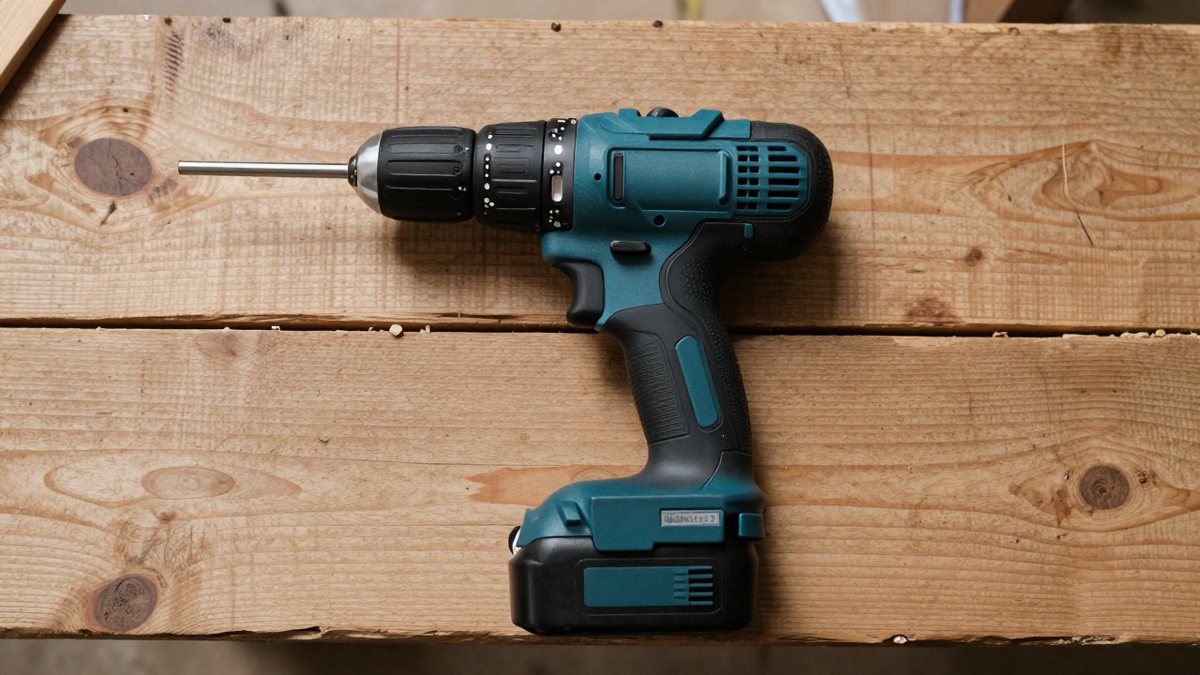
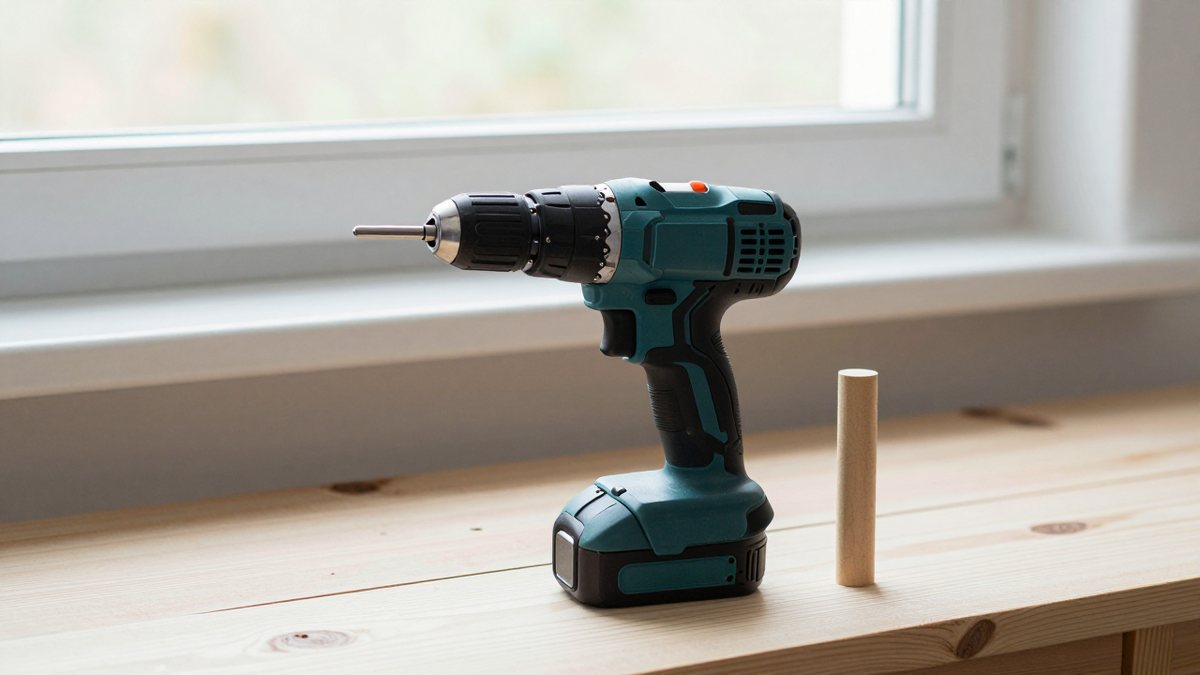
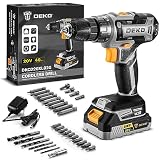
A cordless drill-driver with a variable-speed trigger is enough for this job. A clutch is helpful when you later drive screws, but it does not affect drilling if the tool is set to drill mode. A 12-volt drill is generally adequate for trim; a 18- or 20-volt drill is also fine, but the extra power is not a requirement. If you are buying a tool mainly for household repairs, compare cordless drill-driver kits by battery platform, included battery, and charger rather than voltage alone.
Start at a moderate speed and use light pressure. For a small bit around 1/8 inch, a typical drill can run faster than it should with a large hole saw; with a hole saw, slow down substantially and pause if the cut begins to feel hot. There is no single ideal RPM for every bit and board thickness. Watch the cut: if the plastic softens, smears, or sticks to the flutes, stop and let the bit cool. More pressure is not the fix.
Mark and support the board
Mark the center with a pencil, then make a small starting dimple with an awl or a sharp nail. Do not hit hard; the dimple only needs to keep the bit from skating. If appearance matters, put painter’s tape over the mark and drill through it. Tape can reduce surface scuffing, but it will not prevent tear-out by itself.
Support the board on a flat work surface and clamp it so it cannot shift. Keep clamps clear of the drilling path. If the hole is near an edge, leave enough material around it to avoid splitting or breaking out. The safe margin depends on the hole and board profile; as a practical starting point, keep the hole center at least twice the hole diameter from the edge when the layout allows. PVC is forgiving, but a large hole close to an edge can leave a thin, weak strip.
Drill the hole cleanly
Hold the drill square to the board and bring the bit up to speed before applying steady, gentle pressure. Let the cutting edges do the work. For a deep hole, withdraw the bit occasionally to clear chips rather than forcing it through packed shavings. If the bit starts to chatter, wanders, or squeals, stop, check that the board is secure, and confirm the bit is sharp and straight.
To reduce breakout on the back, clamp a scrap piece of wood snugly behind the PVC if you can reach it. Drill into the backing so the bit is supported as it exits. Without backing, ease off pressure as the tip approaches the far side; a sudden push can pull out a rough ring of material. For a large hole saw, drill from one side until the pilot bit just appears on the back, then finish from that side using the pilot hole to guide the saw. This often leaves cleaner edges than cutting all the way through from one face.
Clear chips with a brush or vacuum and let the bit cool naturally. Do not touch a hot bit or blow chips toward your face. Avoid solvents or heat guns to smooth the hole; they can damage the PVC or leave a distorted edge.
Fit fasteners and finish
For a screw through trim into wood, drill a clearance hole in the PVC so the screw can pass through without binding, then fasten into the framing or other backing. The clearance hole is not the same as the pilot hole in the wood: the pilot should be sized for the screw’s core diameter and the wood species. Follow the trim maker’s guidance for fastener placement and spacing, especially on long boards where movement matters.
Do not overtighten. A screw head driven hard into PVC can dimple or crush the surface, and a hole that is too tight can contribute to buckling as the board moves with temperature changes. If you are fastening to masonry rather than wood, use an anchor rated for the substrate and the load; a wall anchor does not replace proper support for exterior trim.
Deburr a small rough edge with a sharp utility knife or fine sandpaper, using light strokes. Do not enlarge the hole accidentally. If the opening is badly torn, oversized, or close to an edge, consider moving the fastener or replacing the piece rather than relying on a washer to disguise a weak area.
Related guides
More from Amazon
Programs that pair well with the guide above. Offers and eligibility are set by Amazon and may change.
A free business account with business pricing and bulk-buying tools for work, shop or home office.
Create a business accountFree shipping on eligible items, Prime Video and more. Eligible new members can start with a free trial.
Start a Prime free trialAudiobooks and podcasts to listen to on the go. Eligible new members can start with a free trial.
Try Audible freeAd-free music streaming. Eligible new subscribers can start with a free trial.
Try Music Unlimited freeAs an Amazon Associate we earn from qualifying purchases.