What's inside
As an Amazon Associate I earn from qualifying purchases. This post may contain affiliate links at no extra cost to you.
The best Craftsman screwdriver set for most home workshops is a mid-size set with roughly 20 to 30 screwdrivers, including Phillips, slotted, and smaller precision sizes; choose a compact set for occasional repairs or a larger combination set if you regularly work on furniture, appliances, vehicles, or electronics.
As an Amazon Associate we earn from qualifying purchases at no extra cost to you.


What we cover
Quick picks by use case
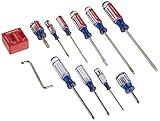
- Best for general household repairs: a Craftsman set with about 20 to 30 full-size screwdrivers, including Phillips and slotted tips from small to large.
- Best for tight budgets and small toolboxes: a compact 6- to 10-piece set covering the most common Phillips and slotted sizes.
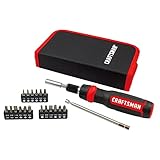
- Best for cars and mechanical work: a larger set with long-shank, stubby, and possibly nut-driver or bit-driver pieces.
- Best for electronics and small hardware: a precision kit with Phillips, slotted, Torx, and other miniature tips.
- Best for a new homeowner: a broad combination set that includes multiple handle sizes, precision drivers, and organized storage.
Craftsman screwdriver sets compared
Craftsman sells screwdriver sets in several configurations rather than one universally best kit. The important difference is not only the number printed on the package. A 10-piece set may cover the everyday sizes better than a 20-piece set filled with duplicate tips, while a precision kit can solve problems that a large full-size set cannot.
| Set type | Typical piece count | Useful tip coverage | Approximate weight | Best match |
|---|---|---|---|---|
| Compact household set | 6–10 pieces | Phillips #1, #2; slotted 3–6 mm | 1–2 lb | Occasional furniture, outlets, hinges, and cabinet work |
| General-purpose set | 17–26 pieces | Phillips #0–#3; slotted 2.4–6.5 mm; selected specialty sizes | 2.5–4.5 lb | Home maintenance and a first serious tool collection |
| Mechanic-oriented set | 30–41 pieces | Multiple Phillips and slotted sizes, long-shank and stubby drivers, often Torx or nut drivers | 4–7 lb | Vehicles, shop equipment, appliances, and frequent use |
| Precision set | 6–32 pieces | Phillips #000–#1, slotted 1.5–3 mm, Torx and other small tips | 0.3–1.5 lb | Electronics, eyeglasses, small appliances, and delicate fasteners |
These are configuration ranges, not a claim that every Craftsman set contains every listed tip. Check the individual package or manufacturer specification before buying, particularly when a project requires Torx, security Torx, square-drive, or metric nut-driver sizes.
What to look for in the best Craftsman screwdriver set
Tip and size coverage
For ordinary household work, Phillips #2 is the most important tip, followed by Phillips #1 and #3. A useful slotted range starts around 3 mm and extends to approximately 6 or 6.5 mm. Smaller Phillips #0 and slotted tips help with light hardware, while larger #3 Phillips and wide slotted drivers are useful for heavy brackets and equipment.
Do not count duplicate tips as meaningful coverage. Two Phillips #2 screwdrivers can be useful if one has a short shaft and the other has a long shaft, but they do not replace a missing Phillips #1 or small slotted driver. If you work on modern appliances, bicycles, vehicles, or electronics, add Torx coverage rather than assuming a traditional Phillips-and-slotted set is complete.
Handle comfort and control
Craftsman’s larger-handled drivers are generally easier to control than miniature precision drivers, especially when loosening a tight screw. Look for a handle with a shaped grip, a nonslip surface, and a defined place for the thumb and forefinger. A very soft rubber coating can feel comfortable but may collect dust or deteriorate faster when exposed to oils and solvents.
Handle diameter matters. A narrow handle gives better access in cramped spaces but produces less turning torque. A thick handle is preferable for long screws and stubborn fasteners. A set with several handle sizes is more useful than one in which every driver has the same bulky grip.
Shaft length and access
Standard shafts around 3 to 4 inches long handle most household tasks. Long shafts, commonly 6 inches or more, reach recessed screws and work around obstructions. Stubby drivers with shafts near 1 to 2 inches fit inside cabinets, under dashboards, and behind appliances.
A set containing only standard-length drivers may leave you reaching for pliers or an improvised tool in confined spaces. Conversely, a very large set can consume drawer space without adding much value if your work is limited to furniture and basic maintenance.
Storage
A molded tray is useful when the set remains in a toolbox drawer, but it is less convenient if you carry tools between rooms or job sites. A rack makes sizes visible and helps prevent a small driver from disappearing. Cases protect precision tips and keep specialty pieces together, although a case with tight slots can become frustrating when drivers have thick handles.
Before buying a large kit, measure the drawer or toolbox compartment where it will live. A 41-piece set that cannot be stored with the rest of your tools is less practical than a 20-piece set that stays organized and accessible.
Decision matrix: which configuration fits you?
| Your situation | Recommended configuration | Why | What to avoid |
|---|---|---|---|
| Budget under about $25 and occasional use | 6–10 full-size pieces | Covers the common Phillips and slotted sizes at a low entry cost | A tiny precision-only kit |
| New homeowner or apartment renter | 17–26-piece general-purpose set | Provides broader size coverage without excessive storage | A set with many duplicate #2 drivers |
| Frequent mechanical or automotive work | 30–41-piece set with long, stubby, and specialty drivers | Improves access and reduces the need for adapters | Short household-only sets |
| Electronics or small hardware | Precision set with Torx and sub-3 mm tips | Matches smaller fasteners and reduces the risk of damaging heads | Using full-size drivers on miniature screws |
| Limited toolbox or workshop space | Compact set plus one specialty kit | Places tools where they are most useful instead of storing duplicates | Buying a large set solely for its piece count |
Durability and ownership realities
The tip is usually the first part to show damage, especially when a driver is used in a screw that is partially stripped or when the driver is used as a pry bar. Phillips tips can round over at the corners; slotted tips can bend or chip if they are too narrow for the slot. Handle cracks and loose shafts are less common under normal use but can result from striking a screwdriver that is not designed for hammering.
Clean drivers after work involving oil, adhesive, drywall compound, or corrosive residue. Wipe the shaft and tip with a dry cloth, then use a lightly damp cloth for stubborn dirt. Dry the tool before storage. Avoid leaving precision drivers in a damp toolbox, where small tips can corrode and become difficult to turn.
Use the largest tip that fully fills the fastener recess. For a Phillips screw, the correct size should sit deeply with minimal side-to-side movement. Press firmly in line with the screw while turning slowly. This simple technique protects both the fastener and the driver.
Warranty considerations
Craftsman hand tools are commonly sold with a limited lifetime warranty, but coverage, exclusions, and the claim process can vary by product category and purchase documentation. Confirm the warranty attached to the exact screwdriver set before buying. A warranty is most valuable for manufacturing defects or breakage during normal use; it should not be treated as protection against worn tips caused by misuse, corrosion, prying, or excessive force.
Keep the receipt or order record and retain the model information from the packaging. If warranty convenience is important, compare the stated replacement process as well as the warranty duration. A set with a slightly higher price may be worthwhile if its storage, availability, and replacement policy better fit how often you use it.
How much set do you actually need?
Suppose you expect to use a screwdriver set for 20 household tasks each year over five years: that is approximately 100 uses. A $20 compact set costs about $0.20 per use, while a $50 larger set costs about $0.50 per use over the same period. The larger set becomes the better value only if its extra sizes, shaft lengths, or specialty tips prevent separate purchases or save enough time on your projects.
For most people, the best Craftsman screwdriver set is therefore the smallest configuration that covers the fasteners they actually encounter. Choose a compact set for basic maintenance, a mid-size set for a versatile home toolbox, and a larger or precision-focused configuration only when its additional access and tip coverage solve a specific problem.