What's inside
As an Amazon Associate I earn from qualifying purchases. This post may contain affiliate links at no extra cost to you.
What we cover
Best Budget Impact Driver for DIY and Woodworking
The best budget impact driver for most DIY and woodworking jobs is a brushless 18V or 20V-class model with at least two speed modes, a variable-speed trigger, and a battery platform you already own. If you’re starting from scratch, compare the cost of a tool-and-battery kit—not just the bare tool—because battery value can outweigh a small difference in torque.
For occasional furniture assembly and cabinet work, a compact 12V driver can be easier to control and quieter in use. For deck screws, framing, or repeated long fasteners, choose an 18V/20V-class model with a lower-speed setting and a comfortable grip. The right budget pick depends less on headline torque than on how predictably it drives screws without damaging the workpiece.
As an Amazon Associate we earn from qualifying purchases at no extra cost to you.


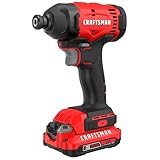
Choose by the work you actually do
| Situation | Best fit | What to prioritize | Typical tool-only weight |
|---|---|---|---|
| Small shop, shelves, occasional furniture | Compact 12V impact driver | Light weight, variable trigger, two or more modes | About 1.5–2.0 lb |
| General DIY and regular woodworking | Compact 18V/20V-class brushless driver | Low-speed control, short head length, established battery platform | About 2.0–2.8 lb |
| Decking, renovation, long structural screws | 18V/20V-class driver with high-output mode | Fastener capacity, cooling, secure belt hook, larger battery option | About 2.3–3.2 lb |
| One or two jobs a year, no compatible batteries | Value kit from a platform with useful companion tools | Kit price, included battery capacity, charger and warranty terms | Varies by kit |
Weights are approximate bare-tool ranges; battery weight can add roughly 0.5–1.5 lb depending on voltage class and capacity. Check the specific model’s published figures before buying, since compact and high-output versions differ.
What matters more than maximum torque
Fastening control and speed modes
Impact drivers deliver rotation in short pulses, which helps with stubborn fasteners but can make a small screw suddenly sink too far. A variable-speed trigger is essential; a low-speed mode, assist mode, or selectable fastening setting is even more useful for woodworking. These controls reduce the chance of snapping a screw, stripping its recess, or burying the head below the surface.
For cabinet hardware, pocket-hole screws, and small brass or steel screws, begin with the lowest setting and finish by hand if the head needs precise alignment. For larger construction screws, use a pilot hole when the wood is dense, the screw is close to an edge, or splitting would be costly. An impact driver is not a torque-controlled drill: even a gentle trigger pull can produce a sudden change in force.
Noise and vibration
Impact drivers are loud because their hammer-and-anvil mechanism produces repeated impacts. Low-cost models are not necessarily quieter, and ear protection is sensible during sustained driving. A lower speed setting may make work easier to manage, but it does not turn an impact driver into a quiet tool. If you mostly assemble furniture indoors, a drill-driver may be a better primary tool; reserve the impact driver for long screws and repetitive fastening.
Bit retention and fit
Most impact drivers use a 1/4-inch hex collet. A good collet should hold the bit securely while still allowing quick changes. Pull the sleeve forward, seat the bit fully, then release it and tug the bit to confirm it has locked. Use impact-rated bits for repeated driving: ordinary bits can twist or break under impact loads. A worn or poorly fitting bit is more likely to cam out and damage a screw head than a modest difference in driver power is.
Low-cost options worth comparing
These established tool families are useful starting points; exact features, included batteries, and model specifications vary by generation and kit. Compare the specific model number available in your region rather than assuming every tool in a platform has the same controls.
| Product family | Voltage class | Why it can suit budget buyers | Check before choosing |
|---|---|---|---|
| DeWalt 20V MAX impact drivers | 18V nominal / 20V MAX | Broad battery ecosystem and compact options | Whether the particular model has multiple modes; kit battery size |
| Makita 18V LXT impact drivers | 18V | Large tool lineup for users already on LXT batteries | Mode selection, bare-tool cost, and included charger in the kit |
| Milwaukee M12 impact drivers | 12V | Compact size for cabinets, shop fixtures, and lighter fastening | Battery capacity and whether the lower power suits your longest screws |
| Ryobi 18V ONE+ impact drivers | 18V | Can be economical when adding to an existing ONE+ collection | Exact model’s speed controls, tool length, and kit contents |
Use this as a platform comparison, not a claim that every model is equally capable. A well-equipped older brushless kit can be a better buy than a newer bare tool if you need batteries and a charger. Conversely, a bare tool is usually the sensible purchase when you already have compatible batteries in good condition.
Battery value: a quick cost-per-use check
Suppose a kit costs $150 and includes a battery and charger, while a bare tool costs $90. If you expect 60 substantial DIY sessions over five years, the kit’s initial cost is $2.50 per session; the bare tool is $1.50 per session, but only if you already own a compatible battery and charger. If you must buy those separately, compare the complete system cost. The battery is also an asset for other tools on the same platform, so its value is not limited to the driver.
For woodworking, a compact battery keeps the tool nimble during cabinet installation. A larger-capacity battery can reduce interruptions on a deck or renovation, but adds weight and can make overhead work tiring. One small battery for control and one larger battery for sustained work is often a more useful combination than buying the biggest battery available.
Durability and ownership realities
On a budget impact driver, the first problems often come from consumables and handling rather than the motor: worn bits, damaged screw recesses, a dirty or sticky collet, and batteries that have been stored discharged or left in excessive heat. Brushless models avoid brush replacement, but they are not immune to wear, impact damage, or battery aging.
- Keep the collet clean. Sawdust and grit can interfere with bit seating; disconnect the battery and use a soft brush or dry compressed air.
- Replace rounded or twisted bits promptly. Continuing with a poor fit increases cam-out and can damage both the fastener and the workpiece.
- Don’t use the tool as a drill. For clean holes, use a drill-driver and the correct bit; an impact driver’s pulsing action is made for driving, not precise boring.
- Avoid using full speed to start small screws. Start slowly, keep the bit aligned with the screw, and release the trigger as the head approaches the surface.
- Store batteries indoors and follow the maker’s charging and storage guidance. Heat, deep discharge, and long-term neglect shorten battery life.
Bottom line
For a first impact driver, buy the most controllable brushless 18V/20V-class kit that fits your total budget and has a battery platform you’ll use again. Choose a compact 12V model if your work is mostly light, indoor, and close-up. If you already own compatible batteries, a bare tool with multiple speed modes may be the best budget impact driver for your situation. In every case, prioritize a usable low-speed setting, reliable bit retention, and impact-rated bits over the biggest torque number on the box.