What's inside
- Best Corded Impact Driver: The Right Choice for Long, High-Torque Jobs
- First, match the tool to the fastener
- Specifications that matter more than a headline torque number
- Choose by the work you do
- How to compare corded models head-to-head
- Setup and ownership details that affect results
- Bottom line
- Related Guides
- Best Corded Impact Driver: The Right Choice for Long, High-Torque Jobs
- First, match the tool to the fastener
- Specifications that matter more than a headline torque number
- Choose by the work you do
- How to compare corded models head-to-head
- Setup and ownership details that affect results
- Bottom line
- Related Guides
As an Amazon Associate I earn from qualifying purchases. This post may contain affiliate links at no extra cost to you.
What we cover
- Best Corded Impact Driver: The Right Choice for Long, High-Torque Jobs
- First, match the tool to the fastener
- Specifications that matter more than a headline torque number
- Choose by the work you do
- How to compare corded models head-to-head
- Setup and ownership details that affect results
- Bottom line
- Related Guides
Best Corded Impact Driver: The Right Choice for Long, High-Torque Jobs
The best corded impact driver for a workshop is a genuine 1/4-inch hex impact driver with variable speed, a lock-on switch, and a cord long enough to reach the work without an extension; choose a corded impact wrench instead when the job involves sockets, large fasteners, or stubborn bolts. Corded impact drivers are a niche category, so verify that a listing is truly corded and offers impact action—not merely a corded drill or screwdriver—before buying.
First, match the tool to the fastener
An impact driver accepts 1/4-inch hex-shank bits and excels at driving screws and other compatible hex fasteners. An impact wrench has a square-drive anvil—commonly 1/2 inch—for sockets and is the more appropriate tool for automotive hardware and larger nuts or bolts. A regular corded drill may provide more controlled drilling, but it does not deliver the same repeated rotational blows.
As an Amazon Associate we earn from qualifying purchases at no extra cost to you.

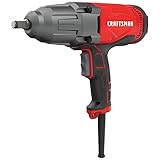


Many well-known professional impact-driver lines, including Milwaukee M18, DeWalt 20V MAX, and Makita 18V LXT, are cordless. They are not corded alternatives just because a charger plugs into the wall. Corded impact-driver availability is limited and changes over time; rather than treating uncertain listings as comparable products, use the specifications below to judge a model you can actually source and confirm.
Specifications that matter more than a headline torque number
| Check | Useful target for workshop fastening | Why it matters |
|---|---|---|
| Drive | 1/4-inch hex collet | Fits common driver bits; it does not accept ordinary sockets without an adapter. |
| Speed control | Variable trigger; multiple speed modes are a plus | Lower speed helps prevent cam-out, snapped screws, and damage to softer materials. |
| No-load speed | Compare the stated RPM across models; about 2,000–3,000 RPM is a common impact-driver range | Higher speed can move repetitive work along, but does not by itself mean more usable torque. |
| Impact rate | Compare impacts per minute (IPM) only alongside torque and control | Impact rate describes blow frequency, not a guarantee that a tool will remove every stuck fastener. |
| Cord reach | At least 8–10 ft; longer is convenient at a fixed bench | A short lead adds strain and can pull the tool off a work surface. Check whether the cord is replaceable. |
| Duty and handling | Look for a stated duty rating, manageable weight, and a lock-on switch if appropriate | Continuous power does not mean the motor or gearbox is rated for uninterrupted operation. |
Manufacturers do not always measure or report torque under identical conditions. Treat torque figures as within-brand comparisons, not a reliable cross-brand ranking. A very high advertised figure is less useful than a trigger you can feather and a tool that can sustain the duty cycle your job requires.
Choose by the work you do
| Workshop situation | Best fit | What to prioritize |
|---|---|---|
| Cabinet assembly and repeated wood screws | Variable-speed 1/4-inch hex impact driver | Low-speed control, balanced grip, common replacement bits |
| Long fastening runs at a fixed bench | Corded driver with adequate lead and rated duty cycle | Comfort, cord strain relief, cooling, and a lock-on switch where safe |
| Large bolts or socket work | Corded impact wrench with the correct square drive | Drive size, torque range, socket compatibility, and fastener limits |
| Delicate materials or occasional mixed tasks | Variable-speed drill/driver, or a driver with selectable modes | Clutch or controlled low-speed operation; impact action can overdrive small screws |
| Work away from outlets or across a large site | Cordless impact driver | Battery platform, spare-battery cost, and charging access |
How to compare corded models head-to-head
For repetitive fastening
Favor an adjustable trigger and speed settings over the highest advertised RPM. Driving identical screws into scrap of the same material is a useful comparison: begin at low speed, note how easily the tool starts the screw straight, and check whether it stops cleanly before the head strips. This simple bench check reveals control differences that a torque number cannot.
For removal work
Confirm the drive interface first. A 1/4-inch hex impact driver can remove suitable hex fasteners with the right bit, but a socket adapter adds leverage and stress and is not a substitute for a wrench-rated square-drive tool. For seized, large, or safety-critical fasteners, use a correctly sized impact wrench and socket rather than forcing a driver beyond its intended use.
For extended sessions
Check the manual for duty-cycle limits, ventilation requirements, and whether the tool is intended for continuous operation. A cord removes battery changes, not heat buildup. A heavier motor, poor balance, or a short cable can make a supposedly convenient workshop tool tiring over a long shift.
Setup and ownership details that affect results
- Use impact-rated bits. They are designed for repeated shock loading. Replace bits with rounded tips; worn bits slip, damage screw heads, and can injure the workpiece.
- Start with a pilot hole when the material calls for it. Dense hardwood and screws near an edge are more prone to splitting. Choose the pilot-hole diameter for the screw core and wood species rather than relying on impact force to push through.
- Keep the tool aligned. Press straight into the fastener, use the correct bit size, and reduce trigger pressure as the head seats. Impact action can conceal a poor fit until the head is damaged.
- Inspect the cord and strain relief. Unplug before inspection or cleaning. Do not use a tool with cracked insulation, a loose plug, or a damaged lead; have repairs made by a qualified service provider.
- Clear dust without blocking cooling vents. Workshop dust can accumulate around ventilation openings. Follow the manufacturer’s cleaning instructions and avoid opening the housing unless the manual permits it.
In regular use, bits and the collet are common wear points; cords, switches, and brushes may also need service depending on the motor design. Before purchase, check whether replacement parts and authorized repair are available. A low upfront price can be a poor value if a damaged cord or worn collet makes the whole tool disposable.
Bottom line
For frequent wood-screw work at a stationary bench, choose a verified corded 1/4-inch hex impact driver with variable speed, a practical cord length, and a documented duty rating. For sockets and high-torque bolt removal, buy a corded impact wrench with the appropriate square drive instead. If no corded impact driver available in your market clearly documents those essentials, a reputable cordless driver—or a corded drill for controlled fastening—may be the safer, better-supported purchase.