What's inside
As an Amazon Associate I earn from qualifying purchases. This post may contain affiliate links at no extra cost to you.
A screw guide attachment holds a screw on the end of a driver bit while you position it and start driving. It’s useful when one hand would otherwise have to hold the screw—overhead, inside a cabinet, or while fastening a long board. It does not replace a clutch, a pilot hole, or the right bit, and the wrong guide can make a job slower by slipping or blocking access.
As an Amazon Associate we earn from qualifying purchases at no extra cost to you.


What we cover
Choose a guide for the job
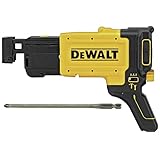
For occasional household repairs, a basic magnetic bit holder is often enough. It attracts steel screws and adds reach, but it may not keep a screw centered, particularly if the screw is long or the work is vertical. For repeated fastening, look for a guide with a sliding sleeve that supports the screw near its head. The sleeve helps control wobble as the screw starts, then retracts as the head approaches the work.
A sleeve-style guide is a better fit for decking, sheathing, and other jobs involving many screws. For tight corners, a compact magnetic holder or a right-angle attachment may fit where a long sleeve cannot. If you already own an impact driver, check that the guide has a 1/4-inch hex shank rated for impact use. A standard drill can turn most guides, but that does not mean the guide is suited to impact-level shock.
Screw guide options compared
| Type | Best for | Trade-off |
|---|---|---|
| Magnetic bit holder | Occasional screws, quick repairs, and short fasteners | Inexpensive and compact, but provides little support against wobble |
| Sliding-sleeve guide | Repeated driving and starting screws one-handed | Better alignment, but adds length and can limit access |
| Adjustable or multi-bit guide | Users switching between common bit types | Convenient, though moving parts can collect dust or develop play |
| Right-angle guide | Fastening in restricted spaces | Solves access problems, but is bulkier and can reduce control |
What to look for before buying
Match the guide to the bits you actually use. Many holders accept standard 1-inch insert bits; others are designed around longer power bits. Check the product description for the shank and bit compatibility rather than assuming every holder accepts every bit securely. A loose fit can let the bit wobble, chew up the screw recess, or fall out when you pull the tool away.
Consider screw length and head style, too. A short guide may control a typical 1- to 2-inch wood screw but provide little support for a 3-inch fastener. Phillips and square-drive screws are common candidates for a guide; Torx screws often stay on a well-fitting bit without much help. A magnetic holder generally works with ferrous steel screws, not stainless steel or nonmagnetic fasteners. Test the setup before climbing a ladder or reaching overhead.
For a low-cost starting point, compare magnetic screw guide bit holders. If you regularly drive screws in a row, a sliding-sleeve screw guide is usually the more useful upgrade. For confined spaces, consider a right-angle drill or driver attachment, but check its rated use and clearance before buying.
How to use a screw guide without damaging the screw
Seat the correct bit fully in the screw recess. A bit that is too small or worn will cam out, whether or not a guide is fitted. Set the screw into the guide, position the point where it needs to go, and start at low speed with firm pressure along the screw’s axis. Once the threads bite and the screw is stable, increase speed as needed. Keep the tool straight; a guide can steady the screw, but it cannot correct a crooked approach.
On a drill, use the clutch for small or finish-sensitive screws. Start with a low setting and increase it only if the screw stalls before seating. On an impact driver, use a lower-speed mode if available and ease off as the head reaches the surface. Impacts can drive a screw past flush quickly, split thin stock, or strip a recess. A guide does not limit torque.
When fastening near a board edge or into hardwood, drill a pilot hole if the screw maker or material calls for one. A guide helps with starting; it does not prevent splitting. For wall anchors, first drill the correct hole diameter and depth for the anchor, then use the driver and bit specified for the fastener. Do not try to use a screw guide to compensate for a hole that is oversized or full of loose dust.
Common failures and fixes
If the screw drops out, check whether the guide uses a magnet and whether the screw is magnetic. A sleeve-style guide may retain a screw mechanically and work better with nonmagnetic fasteners, but verify the design. If the screw leans, check for play between the bit, holder, and guide, and begin at lower speed. If the guide catches on the work, its sleeve may be too wide for the space; switch to a short holder or drive without a guide where you can safely hold and control the screw.
If the bit slips out of the screw head, stop rather than forcing it. Replace a worn bit, confirm the drive type, and keep the tool aligned. A guide that adds too much length can make it harder to feel when the bit is seated, so remove it for delicate finish work or screws in awkward positions. Clean dust from sliding sleeves and magnetic tips; debris can keep a sleeve from retracting or weaken its hold.
The practical choice
Buy a magnetic holder if you drive screws now and then and mostly want a quick way to keep steel screws on the bit. Choose a sleeve guide for repeated one-handed starts, overhead work, or long screws that tend to wobble. Pay more only when the extra support or access solves a problem you encounter often. For occasional jobs, a basic holder, a sharp matching bit, and sensible speed control are usually enough.