What's inside
As an Amazon Associate I earn from qualifying purchases. This post may contain affiliate links at no extra cost to you.
Drilling close to a brick edge is less about brute force than keeping the hole straight and avoiding a cracked corner. A sharp carbide-tipped masonry bit, a drill with a hammer mode, and a measured setback handle many jobs. But brick type, hole size, and how close you need to get all affect the choice. If the hole must sit very near an edge, a smaller pilot hole and careful technique matter more than buying the most expensive bit.
As an Amazon Associate we earn from qualifying purchases at no extra cost to you.



What we cover
How close is too close?
There is no universal minimum distance: brick strength, hole diameter, mortar condition, and the load all matter. As a practical starting point, keep the hole center at least 2 inches from a brick edge for a small wall anchor, and farther away for a larger hole or a heavy fixture. That is a cautious rule of thumb, not a structural guarantee. If the center must be closer, avoid the brick edge when possible: move the bracket, use a different sound brick, or drill into a mortar joint only if the fastener instructions allow it.
Don’t confuse distance from the edge with distance from the hole’s outer rim. A 1/4-inch hole centered 2 inches from the edge leaves about 1 7/8 inches of brick between the hole and edge. A larger hole leaves less material and creates more splitting risk. Loose, spalled, or visibly cracked brick is a poor place to anchor anything important.
Choose the bit for the hole and drill
For common wall plugs and light-duty anchors, a carbide-tipped masonry bit matched to the anchor’s specified diameter is usually the right buy. A standard round-shank bit fits a regular drill chuck; an SDS-Plus bit requires an SDS-Plus rotary hammer. Don’t buy an SDS bit for a standard chuck, or assume an ordinary smooth-shank bit will fit an SDS tool.
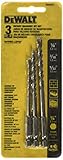
A carbide-tipped round-shank masonry bit set is a sensible choice for occasional holes in brick. Sets are convenient, but check that they include the exact diameters your anchors call for; the largest assortment is not necessarily the best value. For repeated holes, a single replacement masonry bit in the needed size can cost less than replacing a full set.
Hammer mode helps a masonry bit cut brick, but it also makes the tool vibrate and can aggravate weak edges. A standard cordless drill with hammer mode is adequate for a few small holes. For many holes or larger diameters, an SDS-Plus rotary hammer is faster and requires less pushing. Use the lightest tool that gets the job done; a powerful hammer drill is not a substitute for a safe edge distance.
Bit and tool options
| Setup | Best for | Trade-off near an edge |
|---|---|---|
| Carbide masonry bit, drill mode | Small holes in soft brick; controlled starting | Slower, but less impact may help limit chipping |
| Carbide masonry bit, hammer mode | Occasional anchor holes in sound brick | Faster; excess pressure or vibration can chip a weak edge |
| SDS-Plus masonry bit and rotary hammer | Many holes or larger holes in masonry | Efficient, but easy to overdo on a small, fragile corner |
Drill without breaking the corner
First check for cables and pipes, then mark the hole center and confirm the anchor’s required diameter and depth. If possible, practice on a spare brick of similar type. Set the drill to a low speed and start in drill-only mode. Hold the bit square to the wall, use light pressure, and let the carbide tip establish its path before switching to hammer mode. Starting with hammering can make the bit skate or chip the surface.
Once the hole is established, use hammer mode only if needed. Keep the drill steady; leaning hard on it can bind the bit, widen the hole, or break out material behind the face. Withdraw the bit every few seconds to clear dust, especially in a deep hole. Stop if the bit suddenly wanders, the brick begins to crack, or the edge starts shedding chunks. A pilot hole one size smaller can improve control, but only enlarge it if the anchor and bit instructions permit; it does not make an unsafe edge location safe.
Use eye protection and a dust mask. Masonry dust is harmful to breathe, and brick dust can make a hole look deeper or cleaner than it is. Vacuum or blow out dust using a method appropriate for the anchor. A dusty hole can prevent a plug from seating properly and weaken the fastener.
Match the hole to the anchor
Follow the anchor maker’s stated bit diameter, embedment depth, and edge-distance guidance. A hole that is too large can let a plastic plug spin; one that is too shallow may leave the screw proud or reduce holding strength. Don’t compensate for a loose hole by forcing in a larger screw unless the anchor is designed for it. For a light picture or small accessory, a basic masonry plug may be enough. For a shelf, railing, or other load-bearing fixture, use an anchor rated for the load and substrate, and keep the required distance from edges and neighboring holes.
If you need a large hole close to an edge, the safest low-cost fix is often to relocate the mounting point rather than buy a specialized bit. If relocation is impossible and failure could cause injury or damage, get advice from a qualified installer. Drill bits make holes; they cannot restore strength to a cracked brick.