What's inside
As an Amazon Associate I earn from qualifying purchases. This post may contain affiliate links at no extra cost to you.
What we cover
What matters when drilling metal studs
Metal studs are thin, so drilling them usually takes less force than boring through lumber. The challenge is controlling the bit: it can skate on the smooth steel, catch as it breaks through, or enlarge the hole if the drill twists. A good cordless drill needs variable speed, a usable clutch, and a three-jaw chuck that grips small bits securely. You do not need a hammer drill; its hammering action is for masonry and adds no benefit in sheet steel.
For ordinary nonstructural steel studs, a sharp 1/8-inch bit is a sensible starting point for pilot holes. Use a bit sized for the screw or fastener when making the final hole. Stud thickness varies, and heavier-gauge steel is tougher than common light framing, so do not assume every wall drills the same. Check for wiring and plumbing before drilling, and follow the wall-system manufacturer’s guidance for structural or fire-rated assemblies.
As an Amazon Associate we earn from qualifying purchases at no extra cost to you.
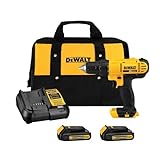


Drill types compared
| Drill type | Best use | Trade-off |
|---|---|---|
| Compact 12V drill/driver | Occasional holes, overhead work, tight spaces | Light and easy to control, but less reserve for large bits or long sessions |
| 18V or 20V drill/driver | Regular framing, installations, and mixed household work | More versatile power; heavier and often larger |
| Hammer drill/driver | Metal studs plus occasional masonry drilling | Useful extra mode, but heavier; turn hammer mode off for steel |
| Impact driver | Driving screws, not making clean holes | Fastening tool; its pulsing action can damage small drill bits or make holes wander |
For a drill you will use mainly on metal studs, choose a variable-speed drill/driver rather than an impact driver. A 12V cordless drill/driver is enough for occasional small holes and is comfortable above shoulder height. If you also drill larger holes, work through multiple rooms, or want one tool for general renovation, an 18V cordless drill/driver gives more headroom.
Features worth paying for
A two-speed gearbox is useful: the low range offers better control, while the high range drills small holes quickly. For a bit around 1/8 inch, begin at a moderate speed and increase only if the bit cuts cleanly. Press firmly enough to keep the bit engaged, but do not lean hard on the drill. Excess pressure can bend a small bit, distort thin steel, or make the drill lurch when the bit breaks through.
Check the chuck’s minimum capacity if you often use small bits. Most standard keyless chucks accept common 1/8-inch bits, but a sloppy chuck or poorly seated bit can wobble and oversize the hole. A side handle is unnecessary for typical stud work; a comfortable grip and responsive trigger matter more. Battery size is a trade-off: a small pack keeps the drill light, while a larger pack lasts longer but adds weight. For a few dozen pilot holes, battery capacity is rarely the deciding factor.
A drill-and-battery kit can be good value if you do not already own batteries in that platform. If you do, buying a bare tool may cost less. Compare the total price of the tool, battery, and charger rather than judging by the drill price alone.
Bits and technique that prevent mistakes
Use a sharp high-speed-steel bit, or a titanium-coated HSS bit, for ordinary thin steel. The coating does not make a dull bit sharp again. Cobalt bits are generally unnecessary for light studs, though they can be useful for harder or thicker steel. Avoid using a masonry bit. Its blunt carbide tip is made for brittle materials and tends to skate rather than cut sheet metal.
Mark the hole, then make a small dimple with a center punch if you have one. This gives the bit a place to start. Set the drill to low gear if the bit is wandering or catching, keep it square to the stud face, and ease off as the bit breaks through. If the bit squeals, smokes, or polishes the steel without cutting, stop: it may be dull, running too fast, or receiving too little pressure. Let the bit cool before touching it.
Do not use the drill’s clutch as a substitute for controlling a hole saw or a large step bit. Those tools can grab thin steel and rotate the drill suddenly. For a larger opening, clamp or stabilize the work where possible, use the appropriate bit, and keep both hands on the drill. Wear eye protection; metal chips are sharp.
Choosing fasteners for the finished job
Drilling a pilot hole does not by itself make an attachment secure. For a light item, a sheet-metal screw rated for the stud and load may be suitable. For shelves, cabinets, or anything carrying a meaningful load, use a fastening system specifically rated for metal studs and the expected load, or arrange for attachment to blocking. Plastic drywall anchors installed only in the gypsum board do not become stronger just because a stud is nearby.
Match the hole diameter to the fastener instructions. An oversized hole gives the screw less steel to grip; an undersized hole can make a screw difficult to drive and may strip or distort the stud. When installing several fasteners, test the first one before drilling the rest. If the screw spins without tightening, stop and choose a compatible fastener or a different attachment point rather than forcing it.
Which drill is the sensible buy?
For a few small holes in light-gauge studs each year, the least expensive reputable 12V drill/driver is usually adequate. Spend more for an 18V or 20V drill/driver if you regularly do renovation work, need longer runtime, or use larger accessories. Choose a hammer drill only if you also need to drill masonry; leave hammer mode off for metal. An impact driver can complement a drill for driving screws, but it is not the better tool for clean holes in studs.
Whichever drill you choose, a sharp bit, a steady start, and the correct fastener matter more than a high torque number. Buy for the work you actually do: extra power is useful when it expands the jobs the tool can handle, but it cannot compensate for a dull bit or an incorrectly sized attachment.