What's inside
As an Amazon Associate I earn from qualifying purchases. This post may contain affiliate links at no extra cost to you.
A cordless drill can make clean holes in acrylic sheet, but the drill itself is only part of the setup. A sharp bit, low speed, gentle feed pressure and support under the sheet matter more than extra torque. For occasional holes in thin acrylic, a basic drill with a variable-speed trigger is usually enough. Paying more makes sense if you also need better speed control, frequent drilling or one battery platform for other tools.
As an Amazon Associate we earn from qualifying purchases at no extra cost to you.


What we cover
What matters in a drill
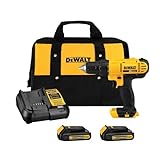
Choose a drill with variable speed and a clutch. Variable speed lets you start slowly and keep the bit from grabbing; the clutch is useful for driving screws, though it should not slip while drilling. A two-speed gearbox is handy, but the trigger still needs to give you control in its low-speed range.
For acrylic, high torque is not a buying priority. A compact 12-volt drill is easier to handle for small jobs and has ample power for ordinary sheet. An 18- or 20-volt drill is a practical choice if you already own batteries in that system or also drill wood and metal. Brushless motors can improve runtime and tool life, but they do not automatically make cleaner holes.
Avoid using an impact driver for the hole itself. Its hammering action can catch the bit and shock the brittle sheet. A drill-driver is the better tool; use the impact driver only for nearby fastening, with care not to overtighten screws into acrylic.
Drill types at a glance
| Option | Best for | Trade-off |
|---|---|---|
| Basic cordless drill-driver | Occasional holes and general home use | Fine if speed control is smooth; inexpensive models may have a jumpy trigger |
| Compact 12-volt drill-driver | Small sheets, cabinets and light work | Less runtime and power for demanding jobs, but usually plenty for acrylic |
| 18- or 20-volt drill-driver | Frequent use or a shared battery platform | More weight and cost than acrylic drilling alone requires |
| Impact driver | Driving compatible screws | Not the right choice for drilling acrylic holes |
If you need a drill for occasional household jobs, compare variable-speed cordless drill-drivers by trigger feel, chuck capacity, battery availability and overall weight—not just voltage.
Pick a bit for the hole
A sharp, standard twist bit can work for small holes if you keep the speed and pressure modest. Acrylic-specific bits have a geometry intended to reduce grabbing and cracking, making them a better choice for repeated work or holes near an edge. A step bit is useful for enlarging holes in thin sheet, but it needs steady support and should not be forced as its diameter increases.
Use a bit slightly larger than the fastener when the acrylic needs room to expand or when the panel may move. For example, a 4 mm screw generally should not be fitted into a tight 4 mm hole in a panel that will see temperature changes. Follow the panel or fixture maker’s clearance guidance where available. Keep holes well away from edges; a useful starting point is a hole center at least two hole diameters from the edge, with more distance for larger holes or stressed panels.
Shop for drill bits made for acrylic or plastic sheet if clean edges matter. A dull bit is a poor bargain: it takes more force, makes more heat and is more likely to catch as it breaks through.
How to drill without cracks
Leave the protective film on both sides if possible. Put the sheet on a flat sacrificial backing board, then clamp the sheet and backing securely. Keep clamps away from the hole and do not overtighten: point pressure can start a crack before drilling begins. Mark the center with tape or a fine marker; avoid punching a deep center mark into the acrylic.
Set the drill to its low gear and use a slow, steady trigger. Start with the bit perpendicular to the sheet and let it cut without leaning heavily on the drill. Back out periodically to clear chips, especially in thicker material. Reduce pressure as the bit approaches the back surface. If the hole is large, drill a smaller pilot hole first, then enlarge it gradually with a suitable bit. Do not force a large twist bit through in one pass.
Heat can soften acrylic, smear chips and leave a rough hole. If chips stop clearing or the bit starts to squeal, pause and let the sheet and bit cool. Do not use a hammer setting. A drill that is difficult to control at low speed is a reason to use a different drill or a drill press, not to press harder.
Common failures and fixes
Cracks at breakthrough: The bit grabbed, the sheet was unsupported, or the feed pressure stayed high at the exit. Backing board support and easing off near the back face help. Chipped edges: Check that the bit is sharp, keep the sheet flat against its support and avoid a fast final push. Cloudy or melted holes: Reduce speed, clear chips and take breaks. Loose or stressed fasteners: Leave clearance rather than forcing a screw into a tight hole, and use washers or suitable fittings to spread the load.
What to buy for your job
For a few small holes a year, the least expensive variable-speed drill-driver you can control comfortably is adequate; buying a premium brushless kit just for acrylic is hard to justify. Put some of that budget toward a sharp bit and clamps. For regular sheet work, a drill with a smooth low-speed trigger and a reliable chuck is worth the upgrade. If you already have batteries, staying on that platform often makes more sense than buying a new battery system for a marginal gain.
Choose a compact drill if you value light weight and mostly work with thin sheet. Choose a larger battery platform if the same tool will drill framing lumber, metal or masonry with the correct bits and settings. For cleaner, repeatable holes in a workshop, a drill press can offer better perpendicular control than any handheld cordless drill. Whatever you choose, keep the work supported, the bit sharp and the pressure light.