What's inside
As an Amazon Associate I earn from qualifying purchases. This post may contain affiliate links at no extra cost to you.
What we cover
Choose for the holes you actually drill
A drill bit set is useful only if its bits match the material and the drill doing the work. A twist bit meant for wood and metal will not drill brick efficiently; a masonry bit will make a ragged hole in wood. Before buying, list the common jobs: pilot holes for screws, holes through steel plate, or holes for wall plugs in brick or concrete. A compact set that covers those jobs is usually better value than a large case full of sizes you rarely use.
For occasional household repairs, a basic set of high-speed steel bits plus a few carbide-tipped masonry bits may be enough. If you work with metal regularly, better-ground bits and a wider size range are worth paying for. Look for clearly marked sizes and a case that holds each bit securely; loose bits are easy to lose and hard to identify.
As an Amazon Associate we earn from qualifying purchases at no extra cost to you.


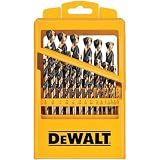

Know what each bit is for
Standard twist bits are the general-purpose choice for wood and metal. High-speed steel (HSS) bits are adequate for wood, plastic, and mild steel. Black oxide is a surface treatment, not a different cutting material, and can help with wear and corrosion. Cobalt-alloy bits tolerate more heat and are a better choice for repeated drilling in stainless steel or other tough alloys, but they cost more and can be brittle if bent or used carelessly.
For masonry, use carbide-tipped bits made for brick, block, or concrete. A regular drill can handle small holes in softer brick, but a hammer drill makes the job faster in dense masonry. A rotary hammer with an SDS bit is a different system for heavier concrete work; ordinary round-shank masonry bits generally do not fit it. Check the drill chuck and bit shank before buying.
Woodworkers drilling larger, clean holes may want brad-point bits or spade bits rather than a standard twist bit. Brad points locate accurately and reduce wandering. Spade bits are quick and inexpensive for rough holes, though they can splinter the exit side unless you clamp a backing board behind the work.
Compare common set types
| Set type | Best for | Trade-off |
|---|---|---|
| HSS twist-bit set | Wood, plastic, and occasional mild steel | Not suited to masonry; budget bits dull sooner in metal |
| Cobalt twist-bit set | Frequent drilling in steel and stainless steel | Higher cost; avoid side-loading or overheating the bits |
| Carbide masonry set | Brick, block, and light concrete drilling | Not a substitute for wood or metal bits; slow without hammer action in hard material |
| Mixed-material set | General household repairs with varied materials | May include only a few useful sizes of each bit type |
What to buy for typical jobs
For a home kit that will see wood, sheet metal, and occasional brick, look for a mixed set with HSS twist bits and carbide masonry bits, or buy those two categories separately. A mixed wood, metal, and masonry bit set keeps the initial purchase simple, but inspect the size range: some kits provide many wood bits and only two or three masonry sizes.
If steel is a regular part of the work, choose a cobalt drill bit set in the sizes you use most. Cobalt does not mean you can drill at full speed indefinitely. Use a center punch to stop the bit wandering, apply steady pressure, and use cutting fluid on steel when appropriate. For a single small hole in mild steel, a basic HSS bit is often fine; replace it when it stops cutting cleanly rather than buying premium bits for one-off work.
For hanging shelves or installing wall anchors in masonry, choose a carbide-tipped masonry bit set that includes the diameters required by your anchors. Match the hole diameter to the anchor packaging, not to the screw diameter. A hole that is too wide can let the anchor spin; one that is too narrow can prevent it seating fully.
Use the bits in a way that prevents damage
Speed and pressure matter. In metal, use lower speed than you would in wood, especially with larger bits. A hot, blue-tinted bit has likely overheated and may have lost its temper. Pull the bit out occasionally to clear chips, keep it aligned, and avoid forcing it if it stalls. In wood, high speed is usually fine, but back the work with scrap to reduce splintering as the bit exits.
When drilling masonry with a hammer drill, start slowly to locate the hole, then use hammer action if the material calls for it. Keep the bit straight and clear dust from the hole; accumulated dust can make drilling slow and leave too little room for an anchor. Do not use hammer action on ceramic tile, glass, or delicate materials. Drill through tile in ordinary rotary mode with a tile-appropriate bit, then switch bits and use hammer action only after reaching masonry behind it, if suitable.
Clamp the work whenever possible. Small metal pieces can spin violently if caught by a bit, and long wood stock can shift. Wear eye protection: metal chips and masonry dust are sharp, and masonry drilling can produce fine dust. For repeated work in concrete, use dust control and a suitable respirator rather than treating a household dust mask as full protection.
Check the case before you commit
Count the useful sizes, not just the total number of pieces. A set with 30 bits may include duplicates or driver accessories rather than a practical spread of drill diameters. Check whether the sizes are printed on the case and whether it includes the diameter you need for common anchors. If you already own a cordless drill, confirm that the bits have shanks compatible with its chuck; most standard twist and round-shank masonry bits fit a keyed or keyless chuck, while SDS bits require an SDS tool.
Replace a bit when it is chipped, badly worn, or no longer cuts without excessive pressure. Sharpening can extend the life of some twist bits, but small inexpensive bits may not be worth the time. For occasional DIY work, a modest HSS set and a few masonry bits are a sensible start. Spend more where the material, workload, or need for clean, repeatable holes makes the difference noticeable.