Key takeaways
- A working driller's guide to lubricating cordless tools without contaminating clutches, chucks or brushless motors.
What's inside
As an Amazon Associate I earn from qualifying purchases. This post may contain affiliate links at no extra cost to you.
Most cordless drills I get handed to look at do not have a dead motor. They have a chuck full of concrete dust, a hammer mechanism running dry, and somebody’s WD-40 soaked into the clutch pack. Lubricating cordless tools is one of those jobs that sits in the gap between “the manual says nothing” and “the internet says spray everything,” and the wrong answer costs you a tool. I have thrown out more drills killed by lubricant in the wrong place than by honest work.
So here is what actually needs grease, what needs a light oil, what needs to stay bone dry, and how often. I am not going to pretend I stripped down twelve named models on a bench with a torque meter. This is shop practice, the kind you pick up when you own the repair bill.
As an Amazon Associate we earn from qualifying purchases at no extra cost to you. Product prices and availability are accurate as of the date shown and are subject to change.


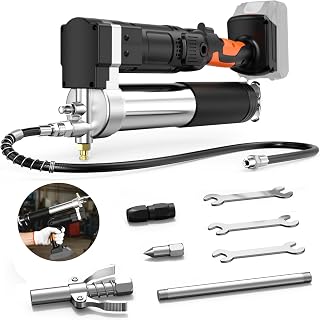


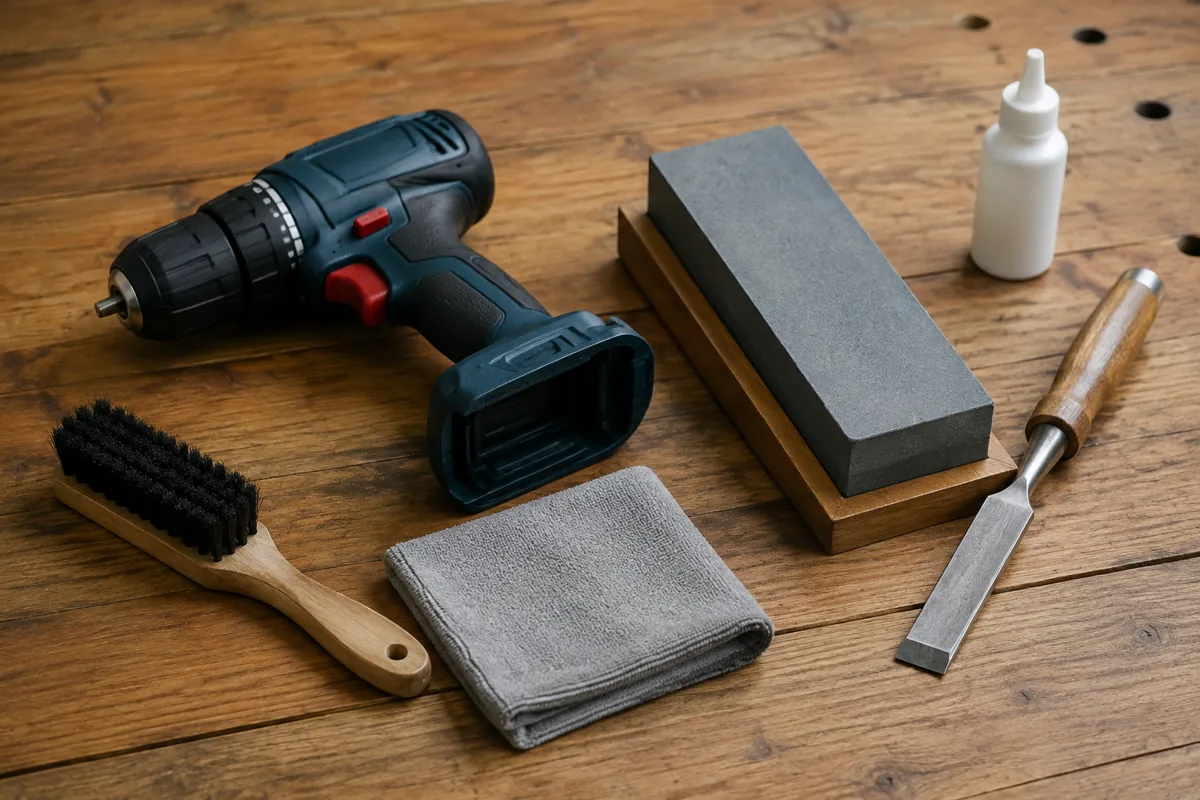
What Goes Where: The Short Version
Cordless tools are not one lubrication problem, they are four. The gearbox wants heavy grease and almost never needs your attention. The chuck jaws want a trace of light oil and regular cleaning. The impact or hammer mechanism wants purpose-made grease on a schedule. The electricals and the clutch want nothing at all, ever.
| Part of the tool | What it wants | How often |
|---|---|---|
| Planetary gearbox | Heavy lithium or moly grease, sealed at factory | Rarely, only on teardown |
| Keyless chuck jaws and threads | A trace of light machine oil after cleaning | Monthly in dusty work |
| SDS hammer chuck and bit shanks | Purpose-made hammer drill grease | Every bit change or weekly |
| Impact driver anvil and hammer | Manufacturer grease on strip-down | Annually at most |
| Clutch ring, trigger, switch, brushes | Nothing. Keep dry and clean | Never oil |
| Battery and tool terminals | Dry contact cleaner only | When dirty |
That table is the whole article if you are in a hurry. The rest is why, and the mistakes I keep seeing.
Why Lubricating Cordless Tools Goes Wrong
The single most common failure I see is penetrating oil used as a lubricant. Penetrating sprays are designed to creep, dissolve, and then largely evaporate. Creep is exactly the property you do not want inside a cordless tool. Spray it at a stiff chuck and it wicks straight down the spindle into the clutch pack and the gearbox, where it thins out the heavy grease that is supposed to be carrying tooth load. The tool feels wonderful for a week. Then the grease has migrated, the gears run half dry, and you get that gravelly noise on high speed under load.
The second mistake is quantity. Grease does not cushion better because there is more of it. A packed gearbox churns instead of shearing cleanly, which means heat, and heat in a brushless tool means the controller starts pulling power back on you. If you ever open a gearbox, aim to coat the tooth flanks and leave the cavity mostly air. Roughly a third full is the practice I follow.
The third mistake is aerosol anywhere near vents. Motor windings, Hall sensors and the switch assembly are designed to be cooled by dusty air, not to be coated in an oil film that then glues that dust down. If you have already done it, the fix is not more spray. It is compressed air at moderate pressure and patience.
Light machine oil for chucks and pivots
Get a small needle-point oiler with a plain non-detergent light machine oil, the sort sold for sewing machines and air tools. The needle is the point: it puts one drop exactly where you want it instead of misting a whole tool. One bottle will outlast several drills, and it is the only oil that should come near a cordless tool.
The Keyless Chuck: Your Real Maintenance Job
Nine times out of ten, when someone tells me their drill is losing bits, the chuck is not worn. It is contaminated. Masonry dust and gypsum are abrasive and slightly hygroscopic, and once they pack into the jaw slides the jaws stop closing squarely. You get bit wobble, then rounded shanks, then a chuck that will not grip a small drill bit at all.
My routine: open the jaws fully, hold the drill nose down, and blow the jaw slots out with compressed air. Nose down matters, otherwise you are just relocating the grit deeper. If it is properly gummed, run the jaws fully open and closed a few times while blowing, then put a single drop of light oil on each jaw slide with the needle oiler, work it back and forth, and wipe the outside dry. Nose down again so nothing runs back toward the spindle.
Do not grease keyless chuck jaws. Grease holds dust like flypaper, and a dusty chuck is the failure you are trying to prevent. Also check the chuck retaining screw if yours has one; a chuck that starts unscrewing itself in reverse is usually a loose screw, not a lubrication problem.
Hammer Drills, SDS And Impact Mechanisms
This is where lubrication genuinely earns its keep. An SDS style rotary hammer works by driving a piston against an air cushion, and both the bit shank and the tool’s chuck need a purpose-made hammer grease. Not chassis grease, not bearing grease. Hammer grease is formulated to stay put under impact and to tolerate the temperature the mechanism reaches. A pea-sized amount smeared on the flutes of the shank at every bit change is the habit to build. It costs seconds and it saves the chuck bushings, which are not a cheap repair on a decent Milwaukee FUEL or Makita LXT rotary hammer.
Standard hammer drills, the ones with a ratcheting clutch behind the spindle, are a different animal. Those ratchet plates are usually greased at the factory and should be left alone unless you are already inside the tool. If a hammer drill has gone quiet in hammer mode, it is more often worn ratchet teeth than dry ones.
Impact drivers and impact wrenches have a hammer and anvil running in grease inside the front housing. That grease does degrade, and on a tool that lives on structural screws or lug nuts it is worth replacing at long intervals. But it means pulling the front housing, and it means using the manufacturer’s specified grease, because those mechanisms run hot and generic grease can separate. If you are not comfortable in there, this is a legitimate service-center job rather than a driveway job.
- ✔ Purpose-made hammer grease dramatically extends SDS chuck and bit-shank life
- ✔ A single drop of light oil restores a sticky keyless chuck in seconds
- ✔ Compressed air and a rag solve most “it needs oiling” complaints for free
- ✘ Penetrating spray migrates into the clutch and thins gearbox grease
- ✘ Over-greasing a gearbox causes churn, heat and power fade
- ✘ Any aerosol near motor vents turns cooling dust into abrasive paste
Hammer drill and SDS bit grease
If you own an SDS rotary hammer, buy the grease the manufacturer sells for it or a tube clearly labeled for hammer drill bit shanks. Small tubes are fine because you use a trace at a time. Keep it in the tool case, not on the shelf, or you will not use it.
A Maintenance Routine That Actually Gets Done
Complicated schedules get ignored. Mine is three tiers. End of every dusty day: blow out the chuck and the vents, wipe the tool, wipe the battery contacts with a dry rag. Every month or so: work the chuck jaws with one drop of light oil each, check the chuck screw, check for play at the spindle by rocking a long bit and watching the nose. Once a year or when something sounds wrong: hammer grease topped up on rotary hammers, and a decision about whether the impact mechanism goes to service.
Two things that are not lubrication but belong in the same routine. First, storage temperature. Grease stiffens in an unheated shop and a cold tool will feel rough and draw more current on the first few triggers; give it thirty seconds of no-load running before you lean on it. Second, batteries. Terminals want a dry brush or contact cleaner, never oil, because oil on a high-current contact means resistance and heat. And store packs part charged in a temperate spot rather than in the truck bed.
One more technique note, because dry-running is often mistaken for a lubrication fault. If a drill screams and the bit polishes the hole instead of cutting, that is speed and pressure, not grease. Big bits want low gear and firm steady feed. Twist bits in metal want a pilot hole, low speed, and cutting oil on the workpiece, not on the tool. A cordless drill that is bogging under a hole saw needs a sharper saw and low gear, and no amount of internal lubricant will substitute.
Lubricating Cordless Tools FAQ
Can I use WD-40 on my cordless drill? Only on the outside, and only sparingly, as a rust wipe on bare metal like a chuck body or a bit. Do not spray it into the chuck, the vents, the clutch collar or the trigger. It creeps, it thins the heavy grease inside, and it leaves a residue that collects dust. Use light machine oil where you actually want lubrication.
Do brushless tools need lubrication at all? The motor does not, since there are no brushes to service, but everything mechanically downstream still does. Gears, bearings, chuck jaws and hammer mechanisms wear on brushless DeWalt XR, Milwaukee FUEL and Makita LXT tools exactly as they do on brushed ones. Brushless changes the motor maintenance, not the gearbox.
How do I know if my gearbox needs regreasing? Listen and feel rather than guess. A dry or contaminated gearbox sounds gritty rather than whirring, runs noticeably hot in the nose after light work, and often develops play you can feel by rocking a long bit. That is a strip-and-inspect job, not a spray-and-hope job, and most sealed gearboxes will outlast the tool’s usefulness if you never let solvent into them.
Keep the outside clean, keep grease only where the manufacturer put it, keep solvents out entirely, and a decent cordless drill will grind through years of work without you ever opening it. If you need the small consumables for the routine above, the needle oiler and a tube of hammer grease together cost less than one repair.
Check prices on Amazon →