Key takeaways
- A veteran driller's take on choosing a cordless hammer drill for concrete, and the point where a percussion drill stops making sense and SDS-Plus takes over.
What's inside
As an Amazon Associate I earn from qualifying purchases. This post may contain affiliate links at no extra cost to you.
Concrete does not care what your drill cost. I have watched a new brushless hammer drill sit in a garage slab and polish a hole instead of cutting one, then watched a beat-up rotary hammer finish the same hole in under a minute. If you are shopping for a cordless hammer drill for concrete, settle one question first: do you need a hammer drill at all, or a rotary hammer? Those terms get swapped around constantly online, and they describe very different machines.
A percussion hammer drill vibrates the bit forward with two ridged cam plates, and it only cuts if you lean on it. A rotary hammer drives the bit with a piston, so it hits just as hard whether you lean or not. One is a drill that can do masonry. The other is a masonry tool that happens to drill.
As an Amazon Associate we earn from qualifying purchases at no extra cost to you. Product prices and availability are accurate as of the date shown and are subject to change.

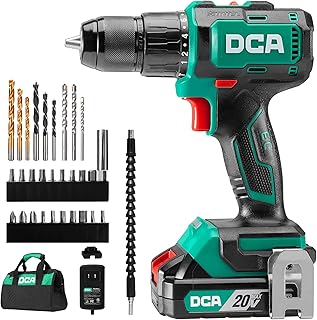


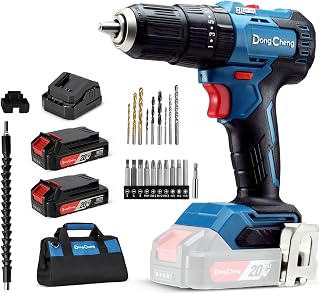


| Tool class | Comfortable hole size in cured concrete | When I reach for it |
|---|---|---|
| Compact brushless hammer drill | Up to about 1/4 in. | Block, brick, mortar joints, light Tapcon work |
| Full-size two-speed hammer drill | 1/4 in. to 3/8 in. | Slab anchors a few at a time, general remodel duty |
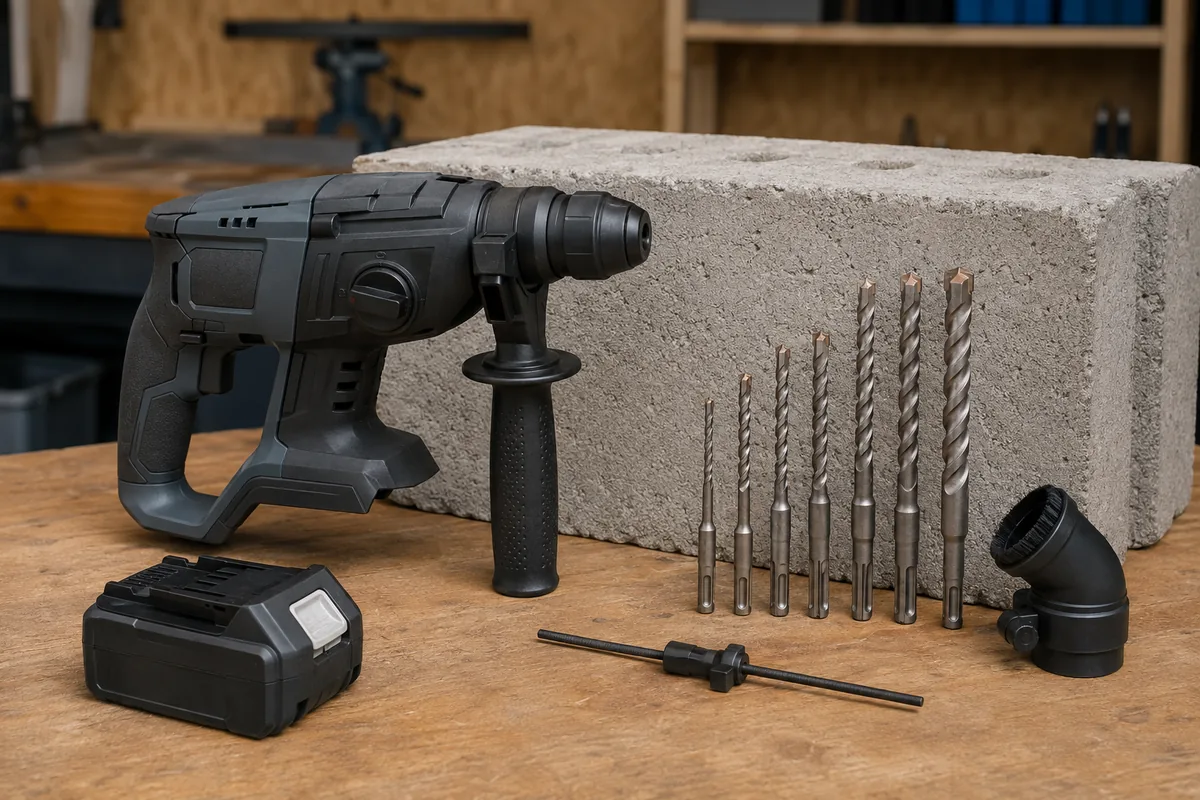
| Cordless SDS-Plus rotary hammer | 1/4 in. to 3/4 in. | Anchors in slab all day, repeat production holes |
| Corded or SDS-Max class | 3/4 in. and up | Structural anchors, through-holes, chipping |
Sizing a cordless hammer drill for concrete to the work you actually do
Before you read another spec sheet, write down every concrete hole you drilled last year with its diameter. Most remodelers end up with 3/16 in. and 1/4 in. holes for Tapcons, a few 3/8 in. holes for shelf and ledger anchors, and maybe two 1/2 in. wedge anchors under a post base. That list is a percussion hammer drill’s entire world, right up to the top edge of it.
A two-speed brushless model from a serious platform, DeWalt XR, Milwaukee FUEL, Makita LXT or the Bosch 18V line, will drill 1/4 in. holes in cured slab all afternoon if you feed it right. It will also drill 1/2 in. holes slowly, unhappily, and at real cost to your wrist and your carbide. Around 3/8 in. the math flips, and at 1/2 in. a cordless SDS-Plus rotary hammer finishes the same hole in a fraction of the time under a fraction of the pressure.
Whatever you buy, insist on a 1/2 in. all-metal chuck, a two-speed gearbox and a real side handle. A hammer drill sold without one was not designed with concrete in mind. An electronic anti-rotation clutch earns its keep as well, because a 1/2 in. bit binding on aggregate will try to take your wrist with it.
Brushless Two-Speed Cordless Hammer Drill Kit
If concrete is five percent of your drilling, this is the honest answer. Stay on the battery platform you already own, take the two-battery kit, and put the savings into good carbide instead of a bigger tool.
Hammer drill or rotary hammer: where I draw the line
Diameter first, hole count second. Under 3/8 in. and under a dozen holes, the hammer drill wins on weight, price and versatility. Past 1/2 in., or more than twenty holes in a day, the rotary hammer wins so decisively the argument stops being interesting. In between, ask how hard the concrete is. Old block and soft mortar are forgiving. A modern slab full of river rock stops a percussion drill cold every time the carbide finds a stone.
Rotary hammers also bring a chisel mode, so one tool pops tile, cleans out a footing or chases a shallow trench. No percussion drill will ever do that.
- ✔ Handles wood, steel and light masonry
- ✔ Lighter and cheaper than any rotary hammer
- ✔ Runs inexpensive round-shank carbide
- ✔ Probably already in your combo kit
- ✘ Needs your body weight to cut
- ✘ Slow and brutal past 3/8 in.
- ✘ Burns runtime fast in concrete
- ✘ No chiseling and no rebar recovery[/afk_cons>
Bit choice, speed and feed pressure
Start with hammer mode off, or feather the trigger, so the tip does not skate across a troweled surface. A divot from a center punch gives the carbide something to bite. Once it bites, switch hammer on, drop into high gear and bury the trigger. Percussion drilling is a speed game because those cam plates only strike while the chuck spins fast, so half throttle makes almost no progress. A rotary hammer is the opposite and prefers moderate, steady rpm.
Feed pressure should be just enough to keep the bit engaged. Listen instead of watching. A cutting bit makes a busy rattle and throws gray dust, while a dull or overheated bit squeals higher, throws less and eventually smokes. Carbide past red heat is done, and quenching a hot bit in water only cracks the braze holding the tip on.
On anything deeper than an inch, pull the spinning bit most of the way out every half inch to clear the flutes. Packed dust is the most common reason a hole slows and a bit dies young. Match bit diameter to the anchor manufacturer’s callout exactly, drill a little past your embedment so debris has somewhere to go, then blow the hole clean before setting anything. If the drill starts ringing and stops making dust, you found rebar. Move over an inch, or bring in a rotary hammer with a rebar-cutting bit.
Cordless SDS-Plus Rotary Hammer
Once 1/2 in. anchors show up on your list regularly, this upgrade pays for itself in bits and elbows. Stay on your existing batteries and look for rotation-only and chisel-only modes.
Batteries, dust and heat
Masonry is the heaviest sustained load you will put on an 18V or 20V tool. I treat 5.0Ah as the floor and prefer high-output or pouch-cell packs, which hold voltage better when the motor pulls hard. Expect a fraction of the holes you get in wood, keep a spare on the charger, and warm cold packs in the cab in winter. If the tool shuts down, that is thermal protection working, so give it five minutes rather than another squeeze.
Concrete dust is respirable crystalline silica, which is why drilling it is a regulated activity. A dust shroud tied to a vacuum is the cheapest health insurance in the trade, and it keeps the hole clean at the same time. If you are drilling overhead without one, a fitted respirator is not optional in my book.
SDS-Plus and Masonry Bit Sets
Sharp carbide beats extra voltage most days. Buy four-cutter heads in your common anchor sizes and retire any tip that has gone rounded or blue.
Frequently Asked Questions
Can I drill concrete with a regular cordless drill? With a masonry bit and patience you can start a shallow hole in soft block or a mortar joint. A driver drill has no percussion, so in cured concrete the carbide polishes the aggregate instead of fracturing it. Past surface depth in a slab, you need hammer action.
What do I need for 1/2 in. wedge anchors? Wedge anchor hole diameter matches the anchor, so you are drilling 1/2 in. A full-size hammer drill will get there, but with more than three or four to set, rent or buy a cordless SDS-Plus rotary hammer and be done before lunch.
Is 18V enough, or should I move to a higher-voltage platform? An 18V or 20V rotary hammer with a high-output pack handles SDS-Plus work up to roughly 3/4 in. comfortably. Higher-voltage lines buy sustained speed and larger capacity, which matters for production anchor setting and very little for weekend projects.
Buy for the holes you actually drill, not the one big job you are imagining. For most people that is a two-speed brushless hammer drill for daily work, sharp carbide in the sizes their anchors call for, and a rotary hammer rented now or bought later on the same batteries.
Check prices on Amazon →