What's inside
As an Amazon Associate I earn from qualifying purchases. This post may contain affiliate links at no extra cost to you.
Electrical and HVAC work rewards a compact impact driver more than a powerful one. Most jobs involve cabinet screws, self-tapping sheet-metal screws, conduit straps, junction boxes, disconnect covers, and anchors in tight spaces. A short tool is easier to control around finished walls and equipment, while moderate torque reduces the chance of stripping a screw or crushing thin metal.
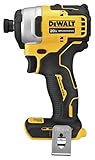
The best choice is usually a brushless 12V or compact 18V/20V impact driver with a short head, a usable speed selector, and a good work light. Maximum torque matters less than clutch-like electronic control, battery size, and how comfortably the tool fits between ductwork and framing.
As an Amazon Associate we earn from qualifying purchases at no extra cost to you.

What we cover
What to Look For in a Compact Impact Driver
Length is the first specification to check. A tool measuring roughly 5.5 to 6.5 inches from the back of the battery to the bit holder can fit between studs, behind air handlers, and inside electrical cabinets more easily than a full-size model. A small difference of half an inch is noticeable when the driver is held at an awkward angle.
Weight matters during overhead work. Bare-tool weights around 1.5 to 2.0 pounds are comfortable for repeated fasteners. Add a compact battery and the working weight may reach 2.2 to 2.8 pounds. Larger batteries extend runtime but make the tool more tiring when mounting duct, fastening cable tray, or driving screws above shoulder height.
Look for three electronic speed modes or a variable-speed trigger with a predictable low-speed range. A driver that immediately jumps to full speed is difficult to use on small electrical screws. Around 1,000 to 1,500 rpm is usually enough for starting a screw; higher speeds are useful for long wood screws but increase the chance of damaging sheet metal.
Impact drivers do not have a mechanical clutch like most drills. They deliver increasing force until the fastener stops, then the hammer mechanism transfers impact energy. This is excellent for stubborn screws, but it can snap small screws, strip Phillips recesses, or pull a self-tapping screw through thin steel. Electronic modes help, but trigger control remains important.
12V Versus Compact 18V and 20V Tools
| Type | Best use | Advantages | Limitations |
|---|---|---|---|
| 12V brushless | Electrical trim work, controls, cabinets, light HVAC fastening | Smallest size, low weight, good control | Less runtime and reserve power for long or large fasteners |
| Compact 18V/20V | General electrical and HVAC installation | More torque, longer runtime, broader tool ecosystem | Heavier and often bulkier around equipment |
| Full-size 18V/20V | Heavy structural fastening and construction | Highest output and battery capacity | Usually excessive for service work; easier to overdrive fasteners |
A 12V brushless impact driver kit is a sensible buy when the work is mostly electrical boxes, access panels, thermostat hardware, small anchors, and short screws. It is also easier to carry on a service belt. The cheaper brushed versions can work, but they tend to be louder, less efficient, and less refined at low trigger speeds.
Choose a compact 18V or 20V platform if you also install equipment, drive 3-inch structural screws, fasten into wood framing, or need to drill occasional large holes with an adapter. A compact 18V or 20V brushless impact driver is often the best all-around option for a contractor already using that battery system.
Matching the Driver to the Job
For electrical boxes and cover plates, use the lowest speed setting and a short bit. Start the screw by hand for a turn or two if the threads must align with a captive nut or tapped hole. Driving too quickly can cross-thread the screw, especially on thin metal boxes. Stop as soon as the head seats; impact action is not a substitute for a torque-controlled screwdriver.
For conduit straps and cable clamps, a compact impact driver is fast and convenient, but use a light trigger. Overdriving can deform the strap, pinch cable insulation, or pull a plastic anchor out of drywall. For masonry, use a proper hammer drill and masonry bit to make the hole. The impact driver is generally for driving the screw or anchor afterward, not for drilling the hole itself.
HVAC work creates two different fastening demands. Sheet-metal screws and equipment panels need control, because thin galvanized steel strips easily. Long screws through brackets into wood framing need more torque. Keep a short 1/4-inch hex bit holder for standard screws and a magnetic nut-setter for hex-head sheet-metal screws. A 5/16-inch nut setter is common in HVAC, while 1/4-inch and 3/8-inch sizes cover many electrical and mechanical fasteners.
Bits, Batteries, and Accessories
Use impact-rated driver bits. Standard bits can twist, chip, or break when the hammer mechanism engages. A impact-rated driver bit set with magnetic nut drivers is more useful for installation work than a large assortment of low-quality bits.
Phillips screws are particularly prone to cam-out. Keep the bit firmly in line with the screw, apply forward pressure, and replace a rounded bit immediately. Torx and square-drive screws generally tolerate impact driving better. For anchors, match the bit and screw to the anchor manufacturer’s instructions. A driver that spins too aggressively can expand a plastic anchor before it reaches the proper depth.
For most service calls, one compact battery and one spare are enough. A 2.0Ah battery keeps the tool light; a 4.0Ah pack provides longer runtime but adds bulk. Cold batteries may show reduced output, and repeatedly running a pack until it shuts off shortens its useful life. Brushless tools usually provide better runtime, but a brushed tool can be a reasonable low-cost choice for occasional home use.
A Practical Buying Decision
Buy the 12V class when access, low weight, and delicate fastening are more important than raw power. Buy a compact 18V/20V model when it must share batteries with drills, saws, or lights, or when the work includes long structural screws. Skip the largest impact driver unless you regularly install heavy brackets or large fasteners.
Also consider the included charger, battery warranty, belt hook, and light placement. A light below the bit holder illuminates the screw better than one mounted far back on the handle. A removable belt hook is useful in attics and lifts but can snag in tight cabinets. Finally, keep a drill or hammer drill available: an impact driver is a fastening specialist, not a replacement for controlled drilling.