What's inside
As an Amazon Associate I earn from qualifying purchases. This post may contain affiliate links at no extra cost to you.
What we cover
Best Impact Drivers for Cabinet Installation and Face-Frame Screws
Cabinet installation rewards control more than brute force. An impact driver is useful for driving long cabinet screws, fastening face frames, and installing cleats, but an overly powerful tool can strip screw heads, pull a cabinet out of alignment, or bury a screw below the surface. The best choice is a compact cordless impact driver with a variable-speed trigger, multiple power settings, and a smooth low-speed range.
For most cabinet work, a standard 18V or 20V impact driver is more tool than you need, but that extra capacity is helpful when driving 2-1/2- to 3-inch screws into studs. The important part is being able to limit the output. A tool with three speed modes is generally easier to use on cabinet screws than a basic single-speed model.
As an Amazon Associate we earn from qualifying purchases at no extra cost to you.
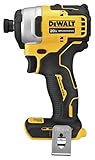


What to Look For in a Cabinet Impact Driver
Compact size matters inside sink bases, wall cabinets, and narrow face-frame openings. Look for a tool with a short head length, preferably around 5 to 6 inches from the back of the tool to the bit holder. A bulky impact driver can force your wrist into an awkward position and make it harder to keep the bit straight.
A controllable trigger is more important than maximum torque. You should be able to start a screw at a slow crawl, then increase speed once the threads have engaged. This prevents the bit from walking across a hinge plate or slipping out of a small trim-head screw.
Selectable speed modes are useful, but they do not replace technique. The lowest setting is appropriate for face-frame screws and hinge adjustments. Medium power works for cabinet-to-stud screws when the pilot hole is correct. High power is mainly for long structural screws or drilling large holes with an adapter, not for ordinary cabinet assembly.
A 1/4-inch hex quick-change chuck accepts common driver bits and nut setters. Choose a model with a bit holder that does not release bits when the tool is shaken or reversed. A belt hook and a bright work light are small conveniences that become useful when working from a ladder or inside a dark cabinet.
Battery size affects balance. A compact 1.5Ah or 2.0Ah battery makes the tool lighter for overhead installation. A 4.0Ah or larger pack provides longer runtime but can make a small driver noticeably top-heavy. If you already own batteries in a cordless platform, staying within that system is usually the best value.
Which Impact Driver Type Fits the Job?
| Type | Best use | Advantages | Limitations |
|---|---|---|---|
| Compact 12V impact driver | Face frames, hardware, light cabinet assembly | Light, easy to control, less tiring | Less reserve for long screws into studs |
| Brushless 18V/20V multi-speed driver | General cabinet installation and remodeling | Good runtime, strong but adjustable, broad accessory support | Heavier and often more expensive |
| Basic single-speed impact driver | Occasional construction and general fastening | Lowest purchase price, plenty of torque | Easy to overdrive small screws and delicate materials |
A compact 12V impact driver kit is a good choice if your work is mostly face frames, drawer hardware, and cabinet interiors. It is also the least tiring option for several hours of overhead work. It may struggle with a 3-inch cabinet screw driven through a thick mounting rail, especially if the battery is partly discharged.
For remodeling or frequent installation, a brushless 18V or 20V multi-speed impact driver is the better all-around purchase. The cheaper option is fine if you install one kitchen every few years and already have a drill for longer fasteners. You do not need the highest-torque model in a tool lineup for cabinet work.
Driving Face-Frame Screws Without Damage
Face-frame screws are commonly 1-1/4 to 2 inches long, with small heads designed to sit flush or nearly flush. Clamp the cabinet faces together before driving. A clamp keeps the frames aligned and prevents the screw from pulling one cabinet forward as it tightens.
Drill a pilot hole when the screw is close to an edge, when the wood is hard, or whenever the screw must be precisely positioned. For many hardwood face frames, a 1/8-inch pilot hole works well with common cabinet screws. Softwood may tolerate direct driving, but a pilot hole still reduces splitting and makes the joint easier to control.
Start in the lowest speed mode and use a fresh, correctly sized bit. Stop when the head is flush. Do not rely on the impact mechanism to tell you when the screw is tight; impacts can continue driving after the screw has seated. If you need a clean, repeatable depth, a drill with an adjustable clutch is often better than an impact driver.
A cabinet installation screw and face-frame screw assortment is worth buying instead of using general-purpose construction screws. Cabinet screws typically have a smaller head, sharper threads, and finishes intended for interior woodworking. Match the screw length to the material; a screw that exits the back of a 3/4-inch face frame is a costly mistake.
Common Failure Modes
Stripped recesses usually result from a worn bit, the wrong bit size, or excessive speed. Replace bits as soon as the tip rounds over. Phillips bits are particularly prone to cam-out; a square-drive or Torx-style cabinet screw generally stays engaged better.
Overdriven screws can crush plywood veneer, dimple melamine, or pull a face frame out of square. Reduce the speed setting and finish the last few turns slowly. On finished panels, use a washer-head or trim-head screw intended for the surface rather than forcing a large construction-screw head into it.
Loose cabinet joints are not fixed by more torque. Check that the cabinets are clamped, level, and shimmed correctly. A screw can feel tight while the cabinet remains out of alignment if the joint was not held in position during fastening.
Bits and Accessories That Matter
Keep several fresh driver bits nearby, along with a magnetic bit holder for hard-to-reach screws. A 2-inch bit is convenient, but a longer bit can improve visibility inside a cabinet. Use impact-rated bits when driving with an impact driver; ordinary bits can snap under repeated torsional shock.
For long screws into studs, predrill through the cabinet rail with a clearance hole, then use a smaller pilot hole in the stud. This prevents the screw from binding in the cabinet material and pulling the cabinet out of position. If most of your work involves delicate hardware or repeated depth control, pair the impact driver with a cordless drill with an adjustable clutch. The impact driver handles stubborn structural fasteners; the drill handles precision work.