What's inside
As an Amazon Associate I earn from qualifying purchases. This post may contain affiliate links at no extra cost to you.
Limestone is softer than granite, but it can still be slow to drill. Dense, hard limestone can wear down an unsuitable masonry bit, while softer or crumbly stone may break around the hole. For most home jobs—mounting a railing, shelf, or light fixture—a cordless hammer drill is the practical choice. The best one is usually a 18V/20V-class drill with a side handle, a two-speed gearbox, and enough control to drill without forcing the bit.
As an Amazon Associate we earn from qualifying purchases at no extra cost to you.
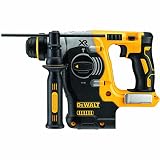


What we cover
Choose the right drill for the job
A hammer drill combines rotation with short, rapid impacts. That action helps a carbide masonry bit cut into stone. A standard cordless drill can work in soft limestone for small holes, but it will be slower and may stall or overheat if pushed. A rotary hammer uses a stronger impact mechanism and is the better tool for repeated large holes, though it costs more and can be rough on fragile stone.
For occasional holes up to about 3/8 inch (10 mm), a compact 18V/20V hammer drill is generally enough. For frequent holes, larger anchors, or diameters around 1/2 inch (13 mm) and above, look for a full-size model with a side handle and a higher-capacity battery. If the job involves many holes wider than 1/2 inch, compare a small cordless rotary hammer instead of buying a more powerful drill.
What matters in a cordless hammer drill
Side handle: This is useful even on small holes. A bit can bind suddenly in a hard seam, twisting the drill in your hands. A side handle gives you better control and reduces the chance of wrist injury.
Two speeds and a clutch: Use the lower speed for larger bits and steadier cutting. The clutch is mainly for driving screws, but it can help prevent overdriving fasteners after drilling. Do not use a screw-driving clutch setting to drill masonry; select drill mode and hammer mode as appropriate.
Battery capacity: A 2.0Ah battery keeps a compact drill light and is often fine for a few small holes. A 4.0Ah or larger battery is more comfortable for a longer run of holes, but adds weight. More battery capacity does not make a dull bit cut better.
Chuck and bit fit: Most hammer drills use a 1/2-inch keyless chuck that accepts round- or hex-shank bits. Check the bit’s stated maximum diameter and the drill’s manual. Hammer drills are not a substitute for an SDS-plus rotary hammer: SDS bits have a different shank and will not fit a standard chuck.
Which tool fits the work?
| Tool | Best use in limestone | Main trade-off |
|---|---|---|
| Compact cordless hammer drill | A few holes, usually up to 3/8 inch | Lighter and easier to control; slower in dense stone |
| Full-size cordless hammer drill | Regular drilling and holes near 1/2 inch | More capable, but heavier and more tiring overhead |
| Cordless rotary hammer | Many holes or larger holes in hard limestone | Faster and more forceful; costs more and can chip soft stone |
If you are buying a drill for occasional masonry and general household work, start with a cordless 18V hammer drill. A compact model is a sensible lower-cost choice for light work; it may simply take longer in dense limestone. For a heavier schedule, compare full-size cordless hammer drills with a side handle. A rotary hammer makes sense when the hole count or diameter justifies the extra weight and expense.
Pick the bit and anchor together
Use a masonry bit with a carbide tip, sized to the anchor manufacturer’s instructions. A general-purpose twist bit is not designed for stone and can dull quickly. For clean holes in exposed limestone, a sharp, good-quality carbide bit matters more than buying the highest-torque drill. A carbide-tipped masonry bit set is useful for common small anchor sizes, but check the set’s diameter range and shank type before ordering.
Match the anchor to the load and stone condition. Plastic expansion plugs are often adequate for light indoor fixtures in sound stone. For heavier loads, use an anchor rated for masonry and follow its required hole diameter and depth; a wedge or sleeve anchor can exert substantial outward force and may be unsuitable near an edge or in fractured limestone. For uncertain or crumbly stone, test a discreet location and choose an anchor designed for that material rather than assuming a larger plug will hold better.
Drill without damaging the stone
Mark the hole, check for wiring or pipes, and start with the drill held square to the surface. Begin at low speed with light pressure so the bit does not skate. Once it has a shallow seat, increase speed and engage hammer mode if the stone is dense. Let the bit do the work; leaning hard on the drill can overheat the tip, stall the motor, or enlarge the entrance.
For a small hole in soft or fragile limestone, try drilling without hammer action first. Hammering can spall the surface or create a loose, oversized hole. If progress is very slow, switch on hammer mode and reduce pressure. Withdraw the bit periodically to clear dust, especially in deeper holes. Stop if the bit gets hot, the drill repeatedly stalls, or the stone begins to crack. Wear eye protection and a suitable dust mask; stone dust is not something to breathe.
Spend where the job needs it
For two or three small holes, a budget cordless hammer drill and a sharp masonry bit are usually enough. There is little reason to buy a rotary hammer for one light-duty installation. Step up to a full-size drill when you expect repeated holes, need a side handle, or are working in dense stone. Choose a rotary hammer for sustained drilling or large diameters—but use care around edges and brittle surfaces. In limestone, control and the right bit often prevent more failures than extra power.