What's inside
As an Amazon Associate I earn from qualifying purchases. This post may contain affiliate links at no extra cost to you.
What we cover
Why use an impact driver for wood framing?
An impact driver is useful for driving long structural screws and ledger-style fasteners into framing lumber. Its rapid rotational blows help keep a bit turning when resistance rises, so you’re less likely to twist your wrist than with a drill. It’s compact and handy overhead, too.
It is not a substitute for every framing tool. A circular saw cuts lumber; a drill makes clean holes for bolts and larger bits; and a framing nailer is usually faster when the plans call for nails. For ordinary stud walls built with common framing nails, an impact driver may add little. It earns its place when the job includes structural screws, retrofit work, or lots of fastening in tight spots.
As an Amazon Associate we earn from qualifying purchases at no extra cost to you.


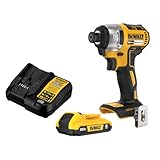

What to look for when buying
Use a current 18V or 20V-class cordless platform. These labels describe similar nominal voltage classes, not a direct measure of power. If you already own compatible batteries, staying on that platform often matters more than a small difference in advertised torque. A compact 2.0Ah battery keeps the tool light; a 4.0Ah pack is useful for sustained work but adds weight.
Check the speed controls and trigger. Framing fasteners vary: a short screw into a stud is different from a long structural screw near a board edge. A low-speed setting gives more control at the start and helps avoid burying a screw head or splitting dry lumber. A variable-speed trigger is valuable, but it takes practice to feather it accurately.
Look for a 1/4-inch hex collet and a comfortable grip. Most impact drivers use this quick-change interface. Use impact-rated bits, not ordinary drill bits or screwdriver bits; standard bits can snap under repeated impacts. A belt hook, work light, and selectable modes are useful details, but don’t pay extra for features you won’t use.
Impact driver buying comparison
| Option | Best fit | Trade-off |
|---|---|---|
| Basic 18V/20V-class impact driver | Occasional framing and general fastening | Usually the best value; may have fewer speed or mode settings |
| Compact impact driver | Overhead work, corners, and cramped framing | Often lighter, but check that it has enough control for the fasteners you use |
| Premium multi-speed driver | Frequent work across different screw sizes and materials | More control and features, but not necessary for a small framing project |
| Drill/driver | Hole drilling and tasks needing a clutch | Can drive screws, but may struggle more with long fasteners and can react sharply if a bit binds |
For a first cordless tool, a kit with two batteries and a charger can be more practical than buying a bare tool and accessories separately. If you already have batteries, a bare cordless impact driver may cost less. Compare the tool’s controls, length, and weight with the battery attached rather than choosing by peak torque claims alone.
Choose the fastener before the driver
For structural connections, follow the framing plan and the fastener manufacturer’s instructions. Structural screws are not interchangeable with general-purpose deck or drywall screws: their dimensions, material, and tested ratings differ. Don’t replace specified nails or bolts with a screw simply because it is convenient, and don’t assume a longer screw automatically makes a stronger connection.
Check the required length, diameter, spacing, edge distance, and whether a pilot hole is needed. Dense, dry, or split-prone lumber may call for predrilling, especially near an end or edge. A pilot hole that is too small won’t prevent splitting; one that is too large can reduce holding strength. Use the screw maker’s sizing guidance, and keep the lumber supported and aligned as you drive.
A set of impact-rated driver bits is a sensible purchase if you don’t already have the correct tip. Match the bit to the fastener head. A worn or mismatched bit cams out, damages the recess, and can leave a screw only partly seated. Keep a spare bit nearby; framing work is a poor place to keep forcing a rounded tip.
Driving screws without damaging the framing
Mark the layout and clamp or hold boards flush before fastening. Seat the bit fully, start the driver at low speed, and keep the tool in line with the screw. Once the threads bite, increase speed as needed. Stop when the head reaches the specified position; driving until the driver hammers for several seconds can strip the head, crush fibers, or pull the screw too deep.
If a screw stalls, don’t keep leaning on the trigger. The bit may be slipping, the screw may be too long for the material, or the lumber may be unusually dense. Back it out, inspect the bit and fastener, and check alignment. If the wood splits, stop and assess whether the fastener location, edge distance, or pilot-hole requirement is wrong. A split can compromise the connection even if the screw appears tight.
Keep hands clear of the bit and support long boards so they cannot twist when the screw pulls in. Wear eye protection: chips and damaged bit fragments can fly. Impact drivers are loud, especially in enclosed spaces, so hearing protection is sensible during repeated fastening.
When a drill is the better choice
Use a drill/driver when you need a clean, accurately sized hole, a larger bit, or clutch control for delicate work. For lag screws or substantial structural fasteners, a drill can work with the right setup, but it may bind abruptly. An impact driver is often more comfortable for driving compatible screws, while a drill is more versatile for boring. Many builders keep both; occasional DIYers can buy one tool first and add the other when the work demands it.
If you’re buying your first tool for a framing project, compare a cordless drill-and-impact-driver combo kit with a driver-only kit. The combo is worthwhile if you’ll drill pilot holes or use hole saws. If the job is mainly driving specified structural screws and you already own a drill, a standalone driver is usually enough.