What's inside
As an Amazon Associate I earn from qualifying purchases. This post may contain affiliate links at no extra cost to you.
What we cover
What the job demands
Ledger screws fasten a deck ledger or other structural member to a house rim joist. Driving them means pushing a relatively large fastener through the ledger and into framing, often overhead or from a ladder. An impact driver helps because its short rotational blows keep the screw moving without the steady reaction torque that can twist a drill out of your hand.
It is not a substitute for choosing the right fastener or confirming the framing. Use ledger screws rated for the connection and follow the manufacturer’s required spacing, edge distances, and installation instructions. A driver cannot make a bad connection safe. If you find rot, a damaged rim joist, masonry, or uncertain framing, stop and get qualified advice before fastening.
As an Amazon Associate we earn from qualifying purchases at no extra cost to you.



What to buy
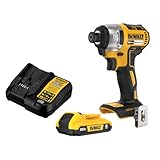
For occasional deck work, a standard 18V or 20V-class cordless impact driver is usually enough. Look for a brushless model if you expect frequent use, a compact head for tight access, and a variable-speed trigger you can control near the end of the drive. A tool with selectable speed or assist modes can help reduce overdriving, but careful trigger control matters more than a long list of modes.
Choose a cordless impact driver kit if you need batteries and a charger as well as the tool. If you already own batteries in a platform, a bare tool is generally the less expensive choice. A compact 12V driver may handle a few screws in softwood, but an 18V/20V-class tool gives more reserve for long screws, dense lumber, and repeated driving.
Impact driver options compared
| Type | Best fit | Trade-off |
|---|---|---|
| Compact 12V impact driver | A small repair or a few screws in accessible framing | Less reserve under sustained load; may slow or overheat sooner |
| 18V/20V-class brushed driver | Occasional deck or framing work on a budget | Usually bulkier or less efficient than comparable brushless tools |
| 18V/20V-class brushless driver | Repeated structural fastening and general DIY use | Higher purchase price; unnecessary if it will be used only once |
| High-torque impact wrench | Large hex-head fasteners when the fastener maker permits it | Can be harder to control and is not automatically better for ledger screws |
Bits and fasteners matter as much as the driver
Match the bit to the screw head exactly. Many structural ledger screws use a manufacturer-specific star or hex drive; check the package, and use the included bit if supplied. A loose bit can cam out, round the recess, or damage the screw head before the fastener is fully seated. Keep a spare bit nearby because worn tips slip more readily.
Buy screws intended for ledger or structural connections, not general-purpose deck screws. Length and diameter depend on the ledger, siding or sheathing layers, and rim-joist material. Some fasteners require a pilot hole in certain materials or near edges; others are designed for direct driving. Follow the screw maker’s instructions rather than assuming all structural screws install the same way. A structural ledger screw is a better starting point than choosing a long screw by appearance.
How to drive without damaging the connection
Mark locations from the approved layout and keep the screws centered in the framing. Confirm the rim joist is where you think it is; siding, trim, and sheathing can hide its edges. Set the driver square to the screw, start at low speed, and keep firm pressure behind the tool. Once the head approaches the ledger surface, ease off the trigger and finish slowly. Stop when the head is seated as directed—driving it deeply into the wood can crush fibers and reduce holding strength.
If the screw stalls, do not keep hammering at full trigger. Back it out, inspect the bit and hole, and check for a knot, misalignment, or a pilot hole requirement. A hot battery, repeated stalls, and a smoking or unusually hot tool are signs to pause. Have a charged spare battery available for a long installation; cold conditions and larger screws can cut runtime noticeably.
When a drill is the better tool
A drill/driver is useful for pilot holes and for delicate work where you want smooth, continuous rotation. It can also drive screws if the manufacturer allows it, but large fasteners can produce substantial reaction torque. Use the side handle where provided, hold the tool securely, and stop if it binds. A cordless drill/driver is a sensible buy if you need one tool for drilling and only occasional fastening; for repeated ledger screws, an impact driver is typically easier to control.
Common failures to avoid
Rounded screw heads usually point to the wrong or worn bit, a driver held at an angle, or insufficient pressure. A screw that spins without tightening may have missed the framing or stripped its grip; remove it and assess the hole rather than counting it as installed. Cracked ledger edges can result from poor spacing, a fastener too close to an edge, or skipping a required pilot hole. Finally, do not use an impact driver’s power as a reason to overtighten. A correctly specified screw, installed straight and seated to the maker’s instructions, matters more than maximum torque.