We research everything we recommend. When you buy through our links, we may earn a commission. As an Amazon Associate we earn from qualifying purchases.
Best Mobile Bases for Drill Presses: Five Bases Compared
Compare the best mobile bases for drill presses by capacity, footprint range and caster layout, from the Shop Fox D2057A to the Bora PM-1050.
As an Amazon Associate I earn from qualifying purchases. This post may contain affiliate links at no extra cost to you.
⭐ Key Takeaways
Quick answer: Our top pick is Shop Fox D2057A Adjustable Mobile Base, with VEVOR Mobile Base, 1,500 lb Capacity, Four Swivel Wheels as a strong alternative.
If you want one answer up front: the Shop Fox D2057A is the strongest default in this group, because it is the adjustable steel base whose fit range, 20 x 20 inches to 29-1/2 x 29-1/2 inches inside, covers the stand footprints of most floor-standing drill presses, and because its maker’s documentation is published in full, manual revisions included. If the press is heavy enough that a 400-pound class base is out of the question, the considered alternative is the VEVOR mobile base, a four-swivel-wheel design rated at 1,500 pounds. The Bora Portamate PM-1100 is the kit pick, corner hardware and casters that bolt to a plywood platform the buyer cuts to any outline. The Bora Portamate PM-1000 is the wide-footprint budget adjustable, and the Bora PM-1050 is the current compact adjustable, sized in one-inch increments for benchtop presses on stands and smaller floor models.
One boundary before the picks, because this category sells two different things under one shelf label. Every base in this guide is a universal shop base, not a drill-press-specific part: none is made by a drill press maker, none bolts to a particular press, and each fits any machine whose footprint and weight fall inside its published range, which is why the fit checks below are measurements, not model lists. Capacity figures in this class are the whole load, press, stand, vise and workpiece together, and they are not interchangeable between documents, as the first pick’s own manual history shows. One maker note belongs up front as well: Bora appears three times in this guide, with a plywood-platform kit, a wide-footprint adjustable base and a compact adjustable base, three different products bought for different reasons; the other two sellers appear once each.
As an Amazon Associate, we earn from qualifying purchases.
What to Look for in a Mobile Base for a Drill Press
Shop Fox D2057A Adjustable Mobile Base
VEVOR Mobile Base, 1,500 lb Capacity, Four Swivel Wheels
Bora Portamate PM-1100 Mobile Base Kit
Bora Portamate PM-1000 Universal Mobile Base
Bora PM-1050 Universal Mobile Base
Which Mobile Base Fits Your Press
Checks and Safety Notes
Frequently Asked Questions
Conclusion
Product and ASIN Reference
Quick Answer
Buy the Shop Fox D2057A if one base has to carry a typical floor-standing drill press: the widest documented fit range in the mid-capacity class, an all-steel adjustable frame, and a manual published in full by the maker. Buy the VEVOR base if the press and stand together run past the 400-pound class, because its 1,500-pound rating and four swivel wheels are built for heavy machines in tight shops. The PM-1100 kit covers odd and oversized footprints by bolting its corners to a plywood panel cut to the machine, the PM-1000 is the budget adjustable with the widest rectangle range of the three Bora designs, and the PM-1050 is the compact current model that adjusts in one-inch increments and adds about an inch of height.
Quick Comparison
Base
Tier
Format
Capacity
Footprint range
Shop Fox D2057A
Mid-range
Adjustable steel base, two fixed and two swivel casters
700 lb per the 2013 manual; 1,000 lb per the current revision
20 x 20 in to 29-1/2 x 29-1/2 in
VEVOR Mobile Base
Premium
Adjustable steel base, four swivel wheels
1,500 lb
20 x 24.5 in to 28 x 33.5 in
Bora Portamate PM-1100
Mid-range
Kit: corners and casters, buyer-supplied plywood platform
400 lb
Set by the plywood panel, up to 60 x 48 in per the maker
What to Look for in a Mobile Base for a Drill Press
Capacity first, and count the whole load. The rating on a mobile base covers everything the casters carry: the drill press itself, the stand under a benchtop model, the drill press vise bolted to the table, and the workpiece. Benchtop presses commonly weigh in the range of a light machine, floor-standing presses run considerably heavier, and a stand adds its own share, so a base rated at 400 pounds is a benchtop-and-stand or light floor-model base, not a universal answer. Leave headroom rather than running at the figure: a base at its limit rolls reluctantly, steers badly and wears its casters fast. Read the rating in the maker’s current manual rather than in a listing headline, because the two can disagree; the Shop Fox pick below carries a 700-pound figure in its maker’s 2013 manual and a 1,000-pound figure in the current manual revision, and the working rule with any such conflict is to plan to the lower number.
Footprint range and shape decide fit. Measure the footprint of what actually touches the floor, which on a benchtop press is the stand’s base, not the press head, and on a floor model is the press’s own cast iron base. Adjustable bases publish a minimum and maximum inside dimension, square and, on some models, a rectangle range for long, narrow stands. The five here start at 12 x 12 inches on the two compact Bora bases and at 20 x 20 inches or 20 x 24.5 inches on the Shop Fox and VEVOR, so the small bases fit stands the large ones cannot close down to, and the large ones take floor presses the small ones cannot open up to. A footprint outside every published range is the kit’s territory: the PM-1100’s corners bolt to a plywood panel, so the panel, and therefore the footprint, can be any outline the buyer cuts.
Caster layout decides steering. Four-caster bases come in two layouts. Two fixed casters and two swivel casters, the Shop Fox layout, tracks straight on a long push across the shop and steers from the swivel end, which suits a press that parks against a wall and rolls out in a straight line. Four swivel wheels, the VEVOR layout, let the machine crab sideways and rotate in its own length, which suits a tight shop where the press has to be threaded between benches. The trade is effort at distance: an all-swivel base wanders on a long roll and asks for two hands and corrections. Wheel diameter matters with layout: the 3-inch wheels on the Bora bases are the practical minimum for crossing expansion joints, floor cracks and the threshold strip at a garage door, and a wheel that stops dead at a joint tips its load forward, which on a top-heavy drill press is the failure that matters.
The lift and park mechanism decides drilling stability. A mobile base earns its place in two states: raised on its casters for the move, and parked for the work. The parked state is the one a drill press cares about, because a press left floating on casters drifts under drilling torque, vibrates at speed and can walk across a smooth floor. The Bora bases park through foot-operated levers that drop the machine onto fixed feet, non-skid on the PM-1050, so the press sits on pads rather than wheels while it drills. The Shop Fox design raises and lowers its swivel casters on screw lifts, settling the frame onto its feet when parked. The working rule follows from the mechanism: the move ends with the base fully lowered and every lever set, and a press that rocks in its parked state is not ready to drill, whatever the base’s rating says.
Height added is a real dimension. A base lifts the machine by roughly its frame and caster height. The low-profile Bora designs publish the smallest additions, about one inch on the PM-1050, while taller bases add more. An inch sounds trivial until it is added to a floor press whose table already sits at the top of a shorter operator’s comfortable reach, or to a benchtop press on a stand that was built to a finished height. Check the sum, press table height plus base height, against the operator before ordering, and remember that the added height also raises the machine’s center of gravity during the move, which is when a tall, narrow press is least stable.
Floors, thresholds and the route matter. A mobile base is only as mobile as the worst yard of its route. Sawdust ridges, extension cords, floor drains and the lip between a garage slab and a driveway all stop small wheels, and each stop is a jolt through a machine whose weight sits high. Sweep the route, move the press slowly with a hand on the column, and never pull a press toward you by its table. Bases parked on sloped floors want a chock as well as their own feet, and a press that lives on the base permanently wants its parked position marked on the floor, so the return trip ends in the same place every time.
1. Shop Fox D2057A Adjustable Mobile Base
Top Pick
1. Shop Fox D2057A Adjustable Mobile Base
Model: D2057A
Tier: Mid-range
Format: Adjustable steel mobile base, two fixed and two swiveling casters with a screw lift
Capacity: 700 lb per the maker’s 2013 manual; 1,000 lb per the current manual revision; plan to the lower figure
The Shop Fox D2057A is the default pick: the long-running adjustable base from Woodstock International, sold under the Shop Fox brand and documented in a full owner’s manual the maker publishes. The fit range is the argument. The manual’s inside dimensions run from 20 x 20 inches to 29-1/2 x 29-1/2 inches, which covers the cast iron base of most floor-standing drill presses and the larger shop stands, and the frame adjusts on steel rails and corner brackets rather than a fixed perimeter, so a footprint anywhere inside that span locks down. The caster layout is two fixed and two swiveling, the straight-tracking arrangement the buying guide recommends for a press that parks against a wall, and the swivel pair lifts and lowers on screw jacks, so the parked press settles onto its feet instead of floating on wheels. The honest complication is the capacity figure, and it is disclosed rather than smoothed over: the maker’s manual as revised in 2013 rates the base at 700 pounds, while the current manual revision, hosted by the maker’s retail arm and dated December 2025, rates it at 1,000 pounds. Both figures come from the maker’s own documents for this model; the frame’s fit range is identical in each. Plan a purchase to the lower figure, 700 pounds, which still covers a floor press, its vise and workpiece with headroom, and treat the higher figure as unconfirmed headroom rather than working capacity. Within that discipline it is the considered tool of the five, the base whose documentation a buyer can read end to end before ordering.
2. VEVOR Mobile Base, 1,500 lb Capacity, Four Swivel Wheels
Runner-Up
2. VEVOR Mobile Base, 1,500 lb Capacity, Four Swivel Wheels
Model: GZB88095 per the listing data
Tier: Premium
Format: Adjustable steel mobile base, four swivel wheels
The VEVOR base is the heavy pick: an adjustable steel base rated at 1,500 pounds, the highest capacity in this guide, built for the presses and press-and-stand combinations that run past the 400-pound class entirely. The adjustment range runs from 20 x 24.5 inches to 28 x 33.5 inches per the listing, a rectangular span that suits floor presses with long bases and wide stands, and the four swivel wheels are the layout’s point: the machine can be rotated and crabbed sideways in a tight shop instead of only rolling in the arc a fixed-caster base allows. The base itself weighs 44.7 pounds per the listing data, the heaviest here, which reads as frame stock rather than trim. The limits are documentation and age. The listing data behind this pick comes from a crawl some months old, the maker publishes no manual for it in the sources reviewed, and no warranty term is stated, so the Specs block records the gap and the checks section sets out the confirm-on-the-listing step this pick wants. Buyers whose press genuinely needs the capacity, and who confirm the live offer and the listing’s stated range before ordering, get the only base in the group with real headroom over a heavy floor press.
3. Bora Portamate PM-1100 Mobile Base Kit
3. Bora Portamate PM-1100 Mobile Base Kit
Model: PM-1100
Tier: Mid-range
Format: Mobile base kit, four corner assemblies and casters; plywood platform supplied by the buyer, not included
The PM-1100 is the kit pick, and its format is the argument: the box holds four corner assemblies with casters and the hardware to join them, and the platform itself is a plywood panel the buyer cuts and supplies, a minimum of 3/4 inch thick per the maker’s manual. Because the panel is cut to the machine, the footprint can be any size or outline the press needs, and the maker’s comparison data lists footprints up to 60 x 48 inches, far past every fixed base here; an irregular stand, a press on a cabinet, or a machine with a splayed base that no rail system closes around all fit this design. Capacity is 400 pounds per the maker, the casters are 3-inch hard plastic, two fixed and two swiveling per the manual, and foot pedals lift the panel onto the casters for the move and drop it back for work. The kit itself weighs 11 pounds per the manual, since the panel is the buyer’s lumber. The costs of the format are the honest limits: the plywood is not included, so the purchase is hardware plus a panel the buyer cuts, drills and finishes, and the finished base is only as rigid as that panel. One further check belongs to this pick and is set out in the checks section: the listing crawl behind it showed no featured offer in its summary area, so the live offer wants confirming before ordering. Buyers with an odd footprint and a sheet of plywood in the rack have found their pick.
4. Bora Portamate PM-1000 Universal Mobile Base
4. Bora Portamate PM-1000 Universal Mobile Base
Model: PM-1000
Tier: Budget
Format: Adjustable low-profile mobile base with foot-operated lift levers
The PM-1000 is the wide-footprint budget adjustable: Bora’s long-running low-profile design, rated at 400 pounds, whose published range is the widest of the three Bora bases here. The maker’s comparison data puts its adjustment from 12 x 12 inches up to 32 x 32 inches square, or a 17 x 48 inch rectangle, which reaches long, narrow stands and wide floor-press bases that the compact PM-1050 below cannot open to, and its casters are 3-inch hard rubber per the same data, a step up in floor manners from the kit’s hard plastic. The lift is foot-operated, so the press drops onto its feet for drilling and rises for the roll without the operator kneeling at each corner. The documentation is the limit: the listing data behind this pick comes from a crawl some months old, publishes no item weight and no warranty term in the data reviewed, and the Specs block records both gaps, so the checks section’s confirm-on-the-listing step applies to this pick in full. Within those cautions it is the budget answer for a press whose footprint is wide or long rather than heavy, bought for its range rather than its rating.
The PM-1050 is the current compact adjustable: Bora’s low-profile base for the 400-pound class, first listed in November 2020, and the most completely documented of the three Bora picks. Its adjustment runs from 12 x 12 inches to 26 x 26 inches square, or up to 16 x 36 inches as a rectangle, set in one-inch increments per the listing, which makes it the natural fit for a benchtop drill press on its stand and for smaller floor models. The running gear is 3-inch hard rubber wheels, the parking gear is steel locking foot levers with non-skid feet, and the frame is alloy steel at 12.5 pounds per the listing data. The low profile is the design’s second argument: the maker puts the added machine height at about one inch, the smallest lift here, which keeps a stand-mounted benchtop press at the working height its stand was built to. The warranty is a one-year limited term per the listing data. One check belongs to this pick as it did to the kit above: the listing crawl behind it showed no featured offer in its summary area, so confirm the live offer on the listing before ordering, as the checks section sets out. Buyers with a benchtop press on a stand, or a compact floor press inside the 26-inch square, have found their pick.
Specs
Model: PM-1050
Tier: Budget
Format: Adjustable low-profile mobile base with steel locking foot levers and non-skid feet
Capacity: 400 lb per the listing
Footprint range: 12 x 12 in to 26 x 26 in square, or up to 16 x 36 in rectangle, in 1-inch increments per the listing
Wheels: 3-inch hard rubber per the listing
Height added: About 1 inch per the listing
Item weight: 12.5 lb per the listing data
Package dimensions: 26 x 26 x 1.57 in per the listing data
Warranty: One-year limited warranty per the listing data
Which Mobile Base Fits Your Press
For a typical floor-standing drill press on a cast iron base, parked against a wall and rolled straight out for long work, the Shop Fox D2057A is the default: the documented 20 x 20 to 29-1/2 x 29-1/2 inch range covers that footprint class, the fixed-and-swivel layout tracks straight, and its capacity, planned to the lower of its two manual figures, still carries press, vise and workpiece with headroom. For a heavy press, a press on a massive stand, or any combination that runs past the 400-pound class, the VEVOR base is the pick, on capacity and on its four swivel wheels for tight quarters. For an irregular footprint, a press on a cabinet, or a machine too large for every rail range here, the PM-1100 kit earns its place, because its plywood platform is cut to the machine rather than the other way around. For a wide or long footprint inside the 400-pound class, the PM-1000’s 32-inch square and 17 x 48 inch rectangle ranges reach what the compact base cannot. For a benchtop press on a stand, or a compact floor press, the PM-1050 is the fit, bought for its one-inch increments and its inch of added height. Two honest boundaries close the section. None of the five is a substitute for bolting down a press that its own maker requires to be floor-mounted, and none makes a top-heavy press safe to move carelessly: the base solves the rolling, not the balance. A press used only at one bench, in a shop with the room to leave it there, needs none of them.
Checks and Safety Notes
Three checks belong with any of the five. First, the recall check: no mobile base in this guide, and no mobile base from Shop Fox, Bora or VEVOR, appears in the CPSC recall database. The nearest action involving any seller here is a different product entirely: in November 2026 the CPSC announced Sanven Technology’s recall of Vevor-branded BMX bicycles, models SS24001 and SS24002, for a missing chain guard, a bicycle hazard with no connection to shop equipment; the VEVOR base in this guide is not covered, and the notice belongs here only as the standing reminder that a brand-level headline is not a product-level recall, and that the exact model is what a two-minute search at saferproducts.gov settles before ordering. Second, the offer check: the listing data behind the VEVOR base, the PM-1000 and the PM-1050 comes from crawls some months old, and the summary areas of the PM-1100 and PM-1050 crawls showed no featured offer available, so data of that kind does not by itself establish whether a live offer stands; confirm the seller, the model and the offer on the listing ordered. The Shop Fox pick rests on the maker’s own manuals and a tracker record whose price tracking was current at the time of this check. Third, the setup check: weigh or look up the press and stand before trusting a capacity figure, and use the lower figure wherever two documents disagree, as the Shop Fox manuals do. Set every foot lever or screw lift fully before drilling, confirm the parked press does not rock, chock the base on any sloped floor, keep feet out of the roll path, push the press from low on its column rather than pulling it by the table, and sweep the route before the move, because a 3-inch wheel stopped by a cord or a floor joint jolts a top-heavy machine exactly where it is weakest.
Frequently Asked Questions
Will a mobile base fit a benchtop drill press?
Yes, with one measurement: what the base carries is the stand, not the press head. A benchtop press sits on a stand or a bench, and the footprint that matters is the stand’s base on the floor. Stands for benchtop presses commonly fall inside the 12 x 12 inch starting range of the two compact Bora bases here, the PM-1000 and the PM-1050, and the load to check against the 400-pound rating is press, stand, vise and workpiece together. A benchtop press that lives permanently on a fixed bench needs no base at all; the base earns its cost under a stand, in a shop where the press parks in one place and works in another. Measure the stand’s footprint in both directions before ordering, since a stand wider than 26 inches square or longer than the rectangle range belongs to the PM-1000 or the PM-1100 kit instead.
Can you drill accurately with the press on a mobile base?
Yes, provided the base is parked, and parked is a specific state, not just stopped. On the Bora bases it means the foot levers are down and the machine’s weight rests on the fixed feet, non-skid on the PM-1050; on the Shop Fox it means the screw lifts have settled the frame onto its feet. A press left raised on its casters drifts under drilling torque, vibrates at speed and can creep on a smooth floor, and none of the five should be drilled from in that state. The parked check takes seconds: push the column and look for rock, and check that no caster still carries the load. A press that rocks parked wants its feet adjusted or its floor shimmed before it wants a workpiece. Depth accuracy and hole position then depend on the press and its vise, exactly as they do on a fixed installation.
How much capacity headroom should a mobile base have?
More than the arithmetic minimum, because the rating has to cover the worst load, not the usual one. Add the press, the stand under a benchtop model, the drill press vise and the heaviest workpiece the bench handles, then choose a base whose rating clears that sum with room to spare; a base run at its limit rolls reluctantly, steers badly and wears its casters and levers fast. Where two documents disagree on a rating, plan to the lower figure: the Shop Fox D2057A in this guide carries 700 pounds in its maker’s 2013 manual and 1,000 pounds in the current revision, and the working capacity to plan around is 700. Buyers whose honest total lands anywhere near a 400-pound rating should step up to the Shop Fox or the VEVOR rather than trusting the margin, because the workpiece figure is the one that grows over a press’s life.
What plywood does the PM-1100 kit need?
A panel the buyer supplies, because the kit is hardware only: four corner assemblies, casters and joining hardware, with no platform in the box. The maker’s manual sets the panel at a minimum of 3/4 inch thick plywood, cut to the machine’s footprint, and the corners bolt through it, so the panel’s size and outline are the base’s size and outline; the maker’s comparison data lists footprints up to 60 x 48 inches on this design. A flat, void-free panel matters more than the species: a panel that flexes under the load lets the corners work against each other, and a warped panel makes the parked press rock. Cut the panel square, seal the edges against shop spills, and bolt the corners to the manual’s pattern. Buyers without a panel in the rack should price the lumber into the comparison, since the other four bases here arrive complete.
Conclusion
The five picks divide first by footprint and only then by capacity, because a mobile base is bought to fit a specific machine before it is bought to carry a weight. The Shop Fox D2057A is the considered default, an adjustable steel base with the fullest published documentation here and a capacity to be planned at the lower of its maker’s two manual figures. The VEVOR base is the heavy answer, 1,500 pounds on four swivel wheels, bought with its thinner documentation in view. The PM-1100 kit covers the footprints no rail system reaches, on a plywood panel the buyer cuts. The PM-1000 is the wide-range budget adjustable, and the PM-1050 is the compact current model that adds about an inch of height. Measure the stand or press base in both directions, weigh the whole load, plan to the lower rating wherever documents disagree, and confirm the offer on the listing before ordering.
M
Miller the Driller Editorial Team
We compare specs, warranty terms, long-term owner feedback and street pricing before anything earns a spot. Rankings are never paid.
Affiliate disclosure. As an Amazon Associate we earn from qualifying purchases at no extra cost to you. Prices accurate as of the date shown.
Three wireless routers for small offices compared on device capacity, network separation, wired speed, and coverage, with specs taken from their Amazon listings.
Compare 5 mechanic tool sets for car repairs: a 247-piece DEWALT kit, a 450-piece CRAFTSMAN set, a drawer-box GEARWRENCH set, a 170-piece Crescent set and a 450-piece WORKPRO set.
Four splitting axes and mauls that actually split firewood: a long 36-inch axe for tall users, a shorter 28-inch option, and two 8 lb mauls for knotty rounds.
Learn whether a 20V rechargeable drill battery can be repaired, which faults you can check safely at home, and when replacing the pack is the safer choice.
A specs-based review of the officially licensed Retro-Bit Sega Saturn 2.4 GHz wireless controller: dual receivers, Genesis Mini and Switch support, battery, layout, limits, and FAQs.
Find the best drill battery for Power Wheels ride-on toys for families, with DeWalt, Milwaukee and Ryobi adapters, voltage and safety guidance in this guide.
Find the best hole saw for noching dom pipe: bi-metal saws, deep cups, and the right sizes for clean, tight notches in DOM tube for fabrication shops today.
Find the best diy tile saws for home tiling projects. Compare wet tile saws by blade size, cutting capacity, and features for ceramic and porcelain tile.


 4. Bora Portamate PM-1000 Universal Mobile Base
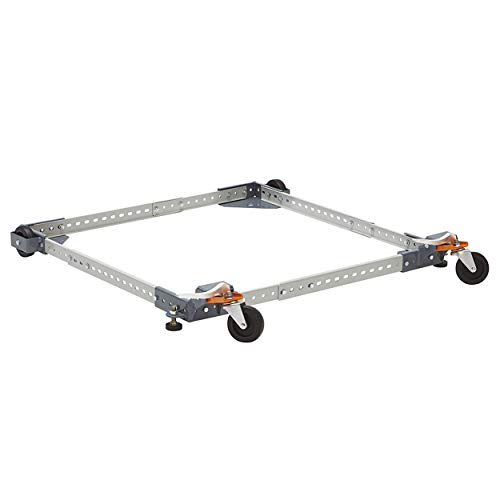 BORA Universal Mobile Base for Shop Equipment and18.81 x 6.14 x 3.85 inches12.9 poundsCheck on Amazon









